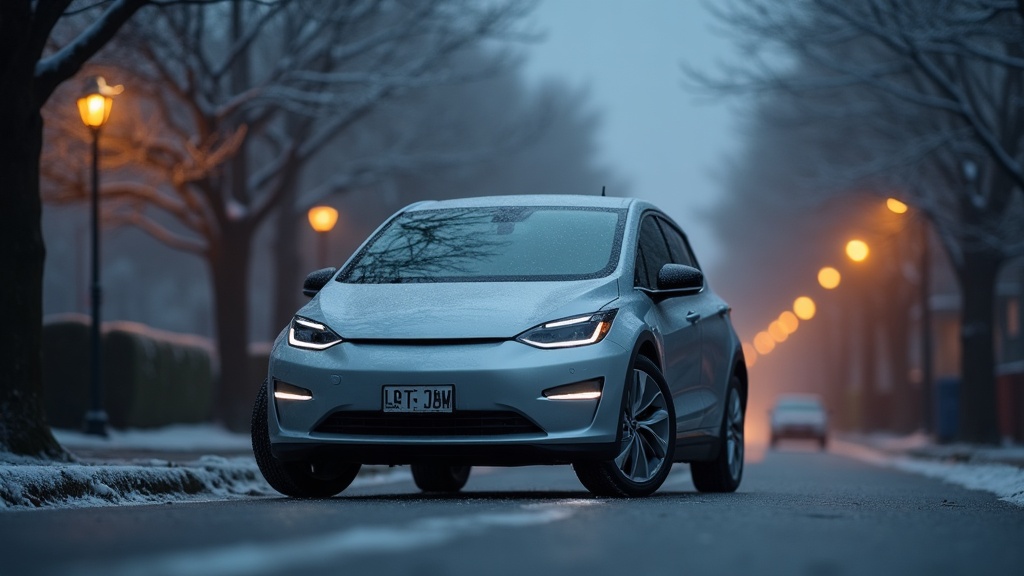
What used EVs actually cost to run in Christchurch
The NZ Angle
The two props that made EVs an easy sell to New Zealand buyers have both been removed. The Clean Car Discount is gone, killed off at the end of 2023. Road User Charges for light EVs came back in April 2024 at $76 per 1,000 kilometres, rising to $53 for PHEVs. Neither figure is crippling, but they do change the maths, and the maths was always the whole argument. Christchurch buyers face a specific wrinkle that Auckland commentators tend to gloss over: Canterbury winters genuinely bite into EV range. A Nissan Leaf that delivers 160 kilometres of real-world range on a warm March day will often deliver closer to 120 kilometres on a cold July morning, before the cabin heater takes its share. That matters if your daily commute is 50 kilometres each way and you're relying on home charging only. Public charging infrastructure in Christchurch has improved — ChargeNet and Tesla Superchargers both have central city and arterial coverage now — but a public top-up at a DC fast charger costs meaningfully more per kilometre than home overnight charging, and if you're regularly using public charging to compensate for winter range loss, your cost assumptions need adjusting. This piece puts real numbers to it.
RUCs, home charging, public top-ups, WoF, and winter range loss — we crunch the real annual numbers for the Leaf, Outlander PHEV, and BYD Atto 3 against a petrol benchmark.
The Nissan Leaf remains the most common used EV in New Zealand. It is not the newest, not the quickest, and the 40 kWh version's real-world range has always been optimistic on the spec sheet. But it is cheap to buy, cheap to service, and if you have off-street parking and a standard home charger, it makes genuine financial sense for a lot of Christchurch households. The question is whether it still makes sense once you stop leaving out the inconvenient line items.
Let's build the annual running cost from the ground up, using a 15,000 km per year driver as the baseline — reasonable for a Christchurch commuter.
Nissan Leaf (40 kWh, 2018-2020)
A clean 40 kWh Leaf sits at around $16,000-$19,000 on the used market right now. Consumption in real Canterbury conditions runs about 18-20 kWh per 100 km once winter heating load is factored in. At home charging rates of roughly $0.30 per kWh, that's $27-$30 per 100 km. Over 15,000 km, call it $420 in electricity.
RUCs at $76 per 1,000 km add $1,140 annually. WoF is $60-$70 at most workshops. A Leaf this age needs a full annual WoF. Tyres, brake fluid, and cabin filter are your main service items — no oil changes, no timing chain anxiety. Budget $300-$400 for consumables and a basic service check.
If you rely on public DC fast charging for 20 percent of your kilometres — a realistic figure if you're doing longer runs or dealing with winter range anxiety — those kilometres cost closer to $0.55-$0.65 per kWh through ChargeNet, roughly doubling the energy cost on that portion. Blended charging cost across the year comes to around $550-$600.
Total annual running cost for the Leaf: roughly $2,100-$2,200, excluding insurance and registration.
For comparison, a 2018 Toyota Corolla hatch on a similar 15,000 km year, at $2.70 per litre and 7.5 L/100 km real-world consumption, spends about $3,040 on petrol alone. Add a full service at $250, WoF at $65, and you're at $3,355. The Leaf wins by over $1,100 per year, even with RUCs and public charging blended in.
Mitsubishi Outlander PHEV (2015-2019)
The Outlander PHEV is the most forgiving of the three for Christchurch buyers who aren't ready to fully commit. You get roughly 35-45 km of electric range depending on the vintage and the temperature, after which it becomes a conventional petrol-hybrid. A lot of owners do short daily commutes entirely on electric and barely touch the petrol engine during the week.
RUCs for PHEVs sit at $53 per 1,000 km, so $795 for 15,000 km. These buyers are also buying some petrol, typically 3-5 litres per 100 km on the blended cycle if they're charging regularly. Say 4 L/100 km average across the year: that's $1,620 in petrol at $2.70/L. Home charging adds perhaps $200-$250 for the electric portion. Service costs are higher than a pure EV — you have a petrol engine, a CVT, and a complex hybrid system to maintain. Budget $500-$600 annually for servicing a well-used example.
Total for the Outlander PHEV: roughly $3,000-$3,200 per year. More than the Leaf, less than the Corolla. The real value here is flexibility — no range anxiety, no RUC at EV rates, and a car that doubles as a family SUV with genuine four-wheel drive.
BYD Atto 3 (2022-2023)
The Atto 3 is a newer proposition. Used examples with the 60.5 kWh battery are appearing in the $35,000-$42,000 range. Real-world range in Canterbury winter sits around 320-360 km, which is substantially more useful than the Leaf and removes most of the public-charging dependency for everyday use.
At 16-17 kWh per 100 km real-world, home charging costs are similar to the Leaf per kilometre. Over 15,000 km: roughly $720-$765 in electricity assuming 85 percent home charging. RUCs at $76 per 1,000 km: $1,140. Public charging for the remaining 15 percent of kilometres adds about $120. Service costs are low — BYD's service intervals are 20,000 km or 12 months, and there's less to do. Budget $350 for a service and consumables.
Total for the Atto 3: roughly $2,300-$2,400 per year. Marginally more than the Leaf in running costs, with a much more capable and modern car. The higher purchase price is where the real gap opens up — you need to hold the car longer to make the capital difference worthwhile against a Leaf.
The honest number
RUCs changed the headline comparison but didn't flip it. A Leaf owner is still saving $1,000 or more per year against a comparable petrol hatch. The Outlander PHEV saves less but offers more utility. The Atto 3 costs slightly more to run than the Leaf but delivers a car you're not compromising on.
What the RUC era does is reward buyers who actually do the maths rather than chasing the lowest sticker price. A cheap Leaf on a flat battery or a first-generation PHEV that never gets plugged in will not deliver the savings the brochure implied. Plug it in, know your real range in July, and the numbers still work. That's the honest answer.
By Auto Luxe. See our editorial standards or email sales@autoluxe.co.nz with corrections.
More automotive
EV road user charges: what Canterbury drivers are actually paying
Light EV RUCs have been running for a year now. We crunch the real numbers on what Canterbury owners are paying versus petrol savings, and whether used EVs still make financial sense.
EVs under $25k: what Canterbury driving actually costs
RUC rates have settled, used Leafs and BYD Atto 3s are everywhere on Trade Me. Here's what the numbers actually look like for a South Island buyer.

Ex-lease Leafs and Atto 3s under $20k: what Canterbury buyers need to know
Used EVs are suddenly affordable, but battery health and RUC costs are the real variables. Here is what first-time electric buyers in Canterbury should check before signing anything.