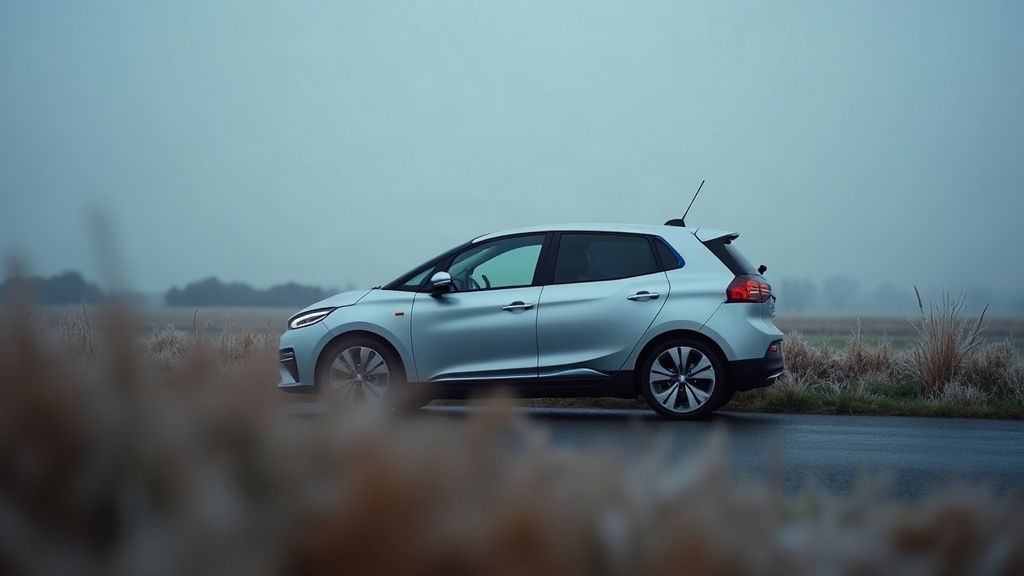
EV road user charges: what Canterbury drivers are actually paying
The NZ Angle
From 1 April 2024, light electric vehicles in New Zealand started paying road user charges at $76 per 1,000 kilometres. That ended three years of free roads for EV owners and changed the used-EV value equation overnight. For Canterbury drivers, the maths is worth doing carefully. The South Island's road network, the longer runs between Christchurch and the ski fields, the coast, or down to Dunedin, means EV owners here clock meaningful kilometres. A driver doing 15,000km a year is now writing a cheque for $1,140 annually in RUCs alone, on top of their registration. That's not catastrophic, but it's not nothing either, and it comes on top of the Clean Car Discount disappearing at the end of 2023, which removed up to $8,625 off new EVs and a meaningful rebate on used imports. The discount's gone, RUCs are real, and used EV prices have softened as a result. Whether an EV still pencils out against a petrol car at current pump prices depends on what you're paying for the car, how far you drive, and what your power bill looks like. The numbers below are real, not press-release figures.
Light EV RUCs have been running for a year now. We crunch the real numbers on what Canterbury owners are paying versus petrol savings, and whether used EVs still make financial sense.
The Clean Car Discount made EV ownership an easy sell. Free roads, government money back on purchase, and petrol sitting above $3 a litre for much of 2022 and 2023. That combination pushed a lot of Canterbury buyers into Leafs, Aquas, and Ioniq 5s. The equation has shifted since then, and it's worth being clear about what's actually changed.
RUCs for light EVs came in at $76 per 1,000km. For context, a diesel vehicle under 3,500kg pays around $76 per 1,000km too, so EV owners are now on the same footing as diesel drivers for road contributions. Petrol cars don't pay RUCs because their road contribution is baked into the fuel excise duty at the pump. That's the structural logic, and it was always coming.
What the RUC bill actually looks like
A Canterbury driver doing 12,000km a year pays $912 in RUCs. At 15,000km, it's $1,140. At 20,000km, which is not unusual for someone commuting from Rangiora or Rolleston into the city and doing weekend trips, you're at $1,520. You buy RUC licences in blocks through the NZTA, and you're legally required to keep them current. The system works the same as diesel RUCs: you display the licence, you keep a record.
Now compare that to petrol. Petrol is sitting around $2.50 to $2.80 per litre in Christchurch at time of writing, depending on grade and which day you fill up. A petrol car averaging 7 litres per 100km over 15,000km burns through 1,050 litres. At $2.65 average, that's $2,782 in fuel. A Nissan Leaf doing the same distance on home charging, assuming a modest 18kWh per 100km and a power rate of 30 cents per kWh, costs around $810 in electricity. Add $1,140 in RUCs and you're at $1,950 all-in for energy and road contribution.
The saving is still real. Around $830 a year against a comparable petrol car on those numbers. It's not the $2,000-plus gap people were quoting when petrol was $3.20, but it's a genuine saving, not a rounding error.
Where the used-EV case gets complicated
The stickier question is whether the purchase price of a used EV still reflects that saving, or whether you're paying a premium that takes years to recover.
A 2018 Nissan Leaf 40kWh was fetching $28,000 to $32,000 in mid-2023. You can find the same car for $22,000 to $26,000 now, sometimes less if the battery state of health is lower. That softening is partly RUC uncertainty settling into the market, partly the end of the Clean Car Discount removing a floor from EV values, and partly a general used-car market correction.
At $23,000 for a tidy 2018 Leaf with 60,000km and reasonable battery health, the maths against a $19,000 petrol equivalent starts with a $4,000 gap to close on running costs. At $830 per year in fuel and RUC savings, you're looking at just under five years to break even. That's a reasonable horizon for someone who plans to keep the car. It starts to look marginal if you're likely to sell in two or three years.
Battery health is the variable that matters most at this end of the market. A Leaf with a LeafSpy report showing 85 percent state of health is a different proposition from one at 72 percent. At 72 percent on a 40kWh pack, real-world range in a Canterbury winter, running the heater, drops to somewhere around 180 to 200km. That's fine for daily use but it changes the character of the car for anyone who wants to run it to the lakes or over the hill regularly without planning around chargers.
The Hyundai Ioniq (the original, not the Ioniq 5 or 6) holds battery better than the Leaf at comparable mileage, but the parts situation for suspension and interior components involves longer waits and higher prices. The Leaf, for all its battery anxiety, is simple to service and parts are available locally.
Whether the numbers still stack up
For a high-mileage Canterbury driver who charges at home on a standard overnight rate and doesn't need to cover more than 150km on a regular basis, a used EV at current pricing still makes financial sense. The RUC bill is manageable, the fuel saving is real, and servicing costs are genuinely lower: no oil changes, no timing chains, no exhaust system to worry about.
For someone doing mixed use, moderate mileage, and likely to sell within three years, the calculation is tighter. The purchase premium on a used EV hasn't fully corrected yet, and the resale risk is real if battery health declines or the public charging infrastructure story gets worse before it gets better.
The honest answer is that the RUC change didn't kill the EV case. It just made it a case that needs to be made with actual numbers rather than assumptions, which is where it should have been all along.
By Auto Luxe. See our editorial standards or email sales@autoluxe.co.nz with corrections.
More automotive
EVs under $25k: what Canterbury driving actually costs
RUC rates have settled, used Leafs and BYD Atto 3s are everywhere on Trade Me. Here's what the numbers actually look like for a South Island buyer.

Ex-lease Leafs and Atto 3s under $20k: what Canterbury buyers need to know
Used EVs are suddenly affordable, but battery health and RUC costs are the real variables. Here is what first-time electric buyers in Canterbury should check before signing anything.

Leaf vs Aqua: what it actually costs to run each car in Canterbury
The Clean Car Discount is gone and light EV RUCs are here to stay. We crunch the real weekly numbers on a used Nissan Leaf versus a Toyota Aqua for Canterbury drivers.