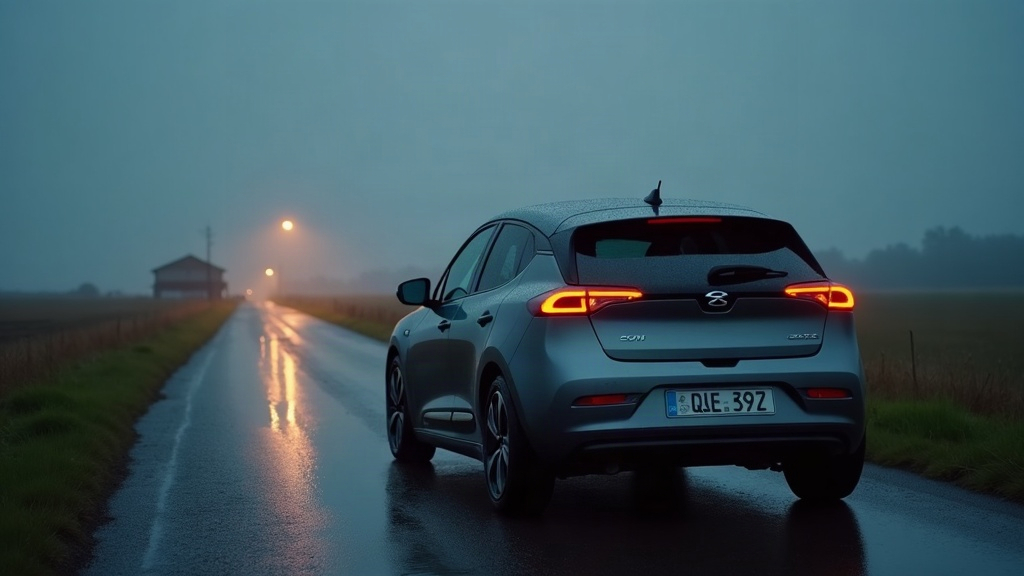
What the new EV road user charges actually cost you in 2026
The NZ Angle
Road user charges for light electric vehicles have been free, then discounted, then phased in, and now from 1 August 2026 they land at a revised per-kilometre rate with the weight threshold shifted to 3.5 tonnes across the board. The Clean Car Discount is already gone. The RUC exemption that softened the blow of early EV ownership is gone too. What remains is a running cost that Canterbury EV owners need to price properly, because the Christchurch-to-Queenstown drive, the Arthurs Pass weekend, the daily run down Riccarton Road: it all racks up distance, and distance now costs money in a way it didn't two years ago. The revised rate sits at $76 per 1,000km for most light EVs, according to NZTA's August 2026 schedule. Buy a 1,000km RUC licence, log your odometer, repeat. Miss it and you're driving unlicensed, same as any diesel ute. For buyers looking at second-hand Leafs in the $12,000-$18,000 bracket, Ioniq 5s around $45,000-$55,000, or MG ZS EVs sitting between $25,000 and $32,000, the RUC line now belongs in every cost-of-ownership calculation alongside tyres, home charging, and insurance.
From 1 August 2026, the RUC threshold for light EVs drops to 3.5 tonnes with a revised per-kilometre rate. Here's what Leaf, Ioniq 5 and MG ZS EV owners will pay across a Canterbury year.
The number most second-hand EV buyers still aren't putting in their spreadsheet is $76 per 1,000km. That's the revised RUC rate that kicks in for light electric vehicles from 1 August 2026, following NZTA's decision to drop the weight threshold to 3.5 tonnes and lock in a standard per-kilometre charge across the light EV fleet. It's not punishing, but it's not nothing either, and for anyone buying a used Leaf, an Ioniq 5, or an MG ZS EV this year, the annual figure deserves a hard look.
A typical Canterbury driver covers around 14,000km a year. That's the national average, and it fits the Christchurch commuter profile reasonably well: school runs, supermarket, the occasional trip up to Hanmer or across to the West Coast. At $76 per 1,000km, that's $1,064 in RUCs annually. Spread across twelve months it feels manageable. Paid in one lump when you buy your next licence block, it's a sharper reminder.
How the three cars stack up
Start with the Nissan Leaf, because it's still the most common second-hand EV in New Zealand. A 2018-2019 40kWh Leaf in reasonable nick sits around $14,000-$17,000 at the moment. Real-world range in Canterbury winter, with the heater running and battery degradation factored in on a car with 60,000-80,000km on it, is somewhere between 180km and 220km per charge. Home charging on a standard 7kW wallbox costs roughly $4-$6 per full charge depending on your electricity plan. Across 14,000km, that's maybe $350-$500 in electricity. Add $1,064 in RUCs and you're looking at $1,400-$1,560 in fuel-equivalent running costs. Compare that with a 2018 Corolla Hatch covering the same distance at 7L/100km and petrol at $2.70/L, and the petrol car costs around $2,646 in fuel alone, before you factor in WoF, servicing intervals, and the fact that a 40kWh Leaf's battery health is a genuine variable that a Corolla's tank is not.
The Ioniq 5 is a different conversation. A 2022 72kWh rear-wheel-drive variant is sitting around $48,000-$54,000 used right now. Range is genuinely strong, 350-400km in normal driving, and the 800-volt architecture means fast charging on a trip to Queenstown is actually quick rather than theoretical. RUCs at 14,000km are the same $1,064 because the charge doesn't scale with battery size, only with distance. Charging costs are higher in absolute terms because you're pushing more kWh through the system, but efficiency is good enough that the per-kilometre electricity cost is competitive with the Leaf. The real cost consideration on the Ioniq 5 is servicing: Hyundai NZ has dealers, but parts lead times on some items can stretch. Budget $400-$600 per year for a service on a car this age, and keep an eye on the 12V auxiliary battery, which has caught a few owners out.
The MG ZS EV occupies the middle ground. Used examples from 2021-2022 are trading around $26,000-$31,000. It's a proper five-seat SUV with a 51kWh battery and a real-world range of about 250-280km. Running costs are low: MG servicing is cheap relative to the European alternatives, parts availability through the NZ network has improved, and the car itself doesn't generate many expensive surprises in the first 80,000km. RUCs of $1,064 on 14,000km represent a larger share of the total running cost here than they do on a $50,000 Ioniq 5, simply because everything else about the ZS EV is so inexpensive to run. Total fuel-equivalent cost for the year, electricity plus RUCs, comes to roughly $1,350-$1,550.
What the petrol equivalent actually costs
The comparison point matters. A 2021 Toyota RAV4 petrol AWD, which is the honest size-equivalent to both the Ioniq 5 and the ZS EV, sits around $38,000-$44,000 used and drinks about 8.5L/100km in mixed driving. At $2.70/L across 14,000km that's $3,213 in petrol. Add a $150 WoF (they're annual after the three-year mark), servicing around $400-$600 a year, and you're well past $4,000 in running costs before you get to tyres and insurance.
On a straight fuel-versus-fuel-equivalent comparison, all three EVs win across a Canterbury year. The Leaf wins most convincingly in percentage terms given its purchase price. The Ioniq 5 wins in absolute dollar savings but costs more to buy. The ZS EV sits in the middle and suits the buyer who wants an SUV footprint without the Ioniq 5's sticker price.
The RUC change doesn't flip any of these calculations. It narrows the gap slightly. At the old zero-rate, the electricity-only cost for 14,000km was maybe $400-$500. The new total of $1,400-$1,550 is still well below what any equivalent petrol car burns in fuel. The honest caveat is battery health on older Leafs: if you're buying a 2018 car and the capacity has dropped to 75%, your real-world costs go up because you're charging more frequently. Get a battery health report before you buy, and factor it in.
The other thing worth saying plainly is that $76 per 1,000km is an NZTA-set rate and it has moved before. It will move again. Anyone doing a ten-year cost projection on an EV purchase today is modelling an assumption, not a certainty. Buy the car on what it costs now, check the NZTA schedule when you renew, and adjust.
By Auto Luxe. See our editorial standards or email sales@autoluxe.co.nz with corrections.
More automotive
EV road user charges: what Canterbury drivers are actually paying
Light EV RUCs have been running for a year now. We crunch the real numbers on what Canterbury owners are paying versus petrol savings, and whether used EVs still make financial sense.
EVs under $25k: what Canterbury driving actually costs
RUC rates have settled, used Leafs and BYD Atto 3s are everywhere on Trade Me. Here's what the numbers actually look like for a South Island buyer.

Ex-lease Leafs and Atto 3s under $20k: what Canterbury buyers need to know
Used EVs are suddenly affordable, but battery health and RUC costs are the real variables. Here is what first-time electric buyers in Canterbury should check before signing anything.