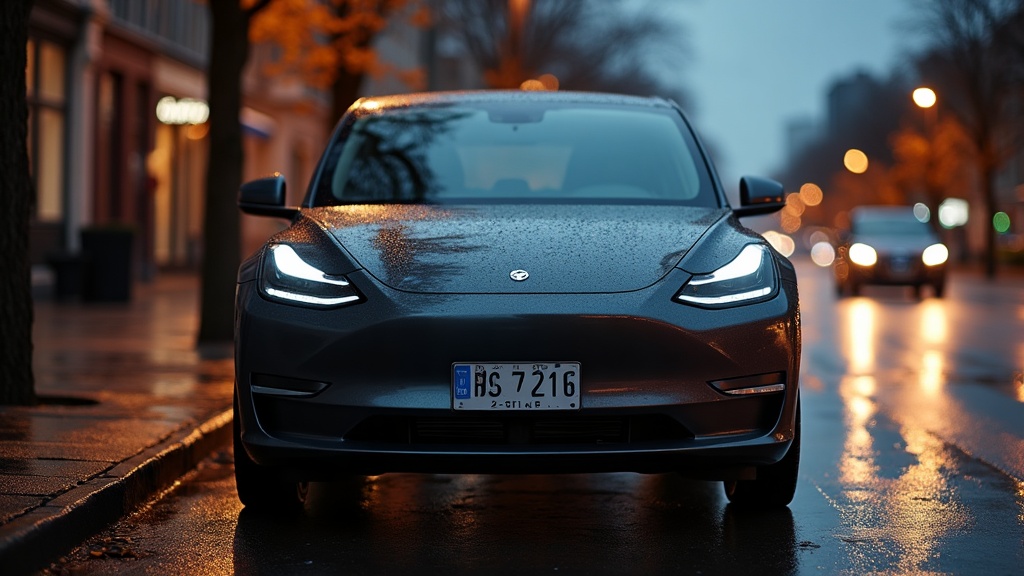
What EV road user charges actually cost you per kilometre
The NZ Angle
New Zealand has charged road user charges on light electric vehicles since 2024, ending the exemption that made early EV ownership cheaper to run. From 1 April 2025, NZTA updated those rates again, setting light EV RUCs at $76 per 1,000 kilometres. That number sounds abstract until you work it out per kilometre and stack it against what a petrol equivalent costs to fuel. The Nissan Leaf is the most common EV on our roads, and the Mitsubishi Outlander PHEV is the most popular plug-in hybrid. Both now attract the full RUC rate, though the PHEV calculation is more complicated because it runs on petrol too. For PHEV owners, RUCs apply only to the electric kilometres driven, which NZTA estimates using a split formula based on distance. It is a system built for approximation, and that creates some genuine ambiguity for owners who do mostly short trips on electric power versus those who highway-drive and run the combustion engine most of the time. The practical cost difference between these cars and their petrol equivalents is now narrow enough that the choice of drivetrain deserves a harder look than it did two years ago.
NZTA's updated RUC rates for light EVs are now in effect. Here's what Leaf and Outlander PHEV owners will pay per kilometre compared to a petrol car.
The RUC exemption that sweetened early EV adoption in New Zealand is long gone, and the rates that replaced it have just been revised upward. From 1 April 2025, NZTA sets light EV road user charges at $76 per 1,000 kilometres. For a Nissan Leaf covering 15,000 kilometres a year, that is $1,140 annually, paid in advance by purchasing RUC licences before you hit the odometer mark. Not a crippling number, but not nothing either.
The comparison that matters is against what a petrol equivalent costs to run over the same distance. At current pump prices sitting between $2.50 and $3.00 per litre, a 15,000 km year in a petrol hatchback consuming around seven litres per 100 km costs roughly $2,625 to $3,150 in fuel alone. The Leaf at current electricity prices, estimated at around $0.30 per kWh and consuming roughly 18 kWh per 100 km, costs about $810 in electricity for that same 15,000 km. Add the $1,140 RUC bill and you are at $1,950 total. Still cheaper. But the gap has narrowed considerably from where it was under the old exemption.
Where the Outlander PHEV sits
The Mitsubishi Outlander PHEV is a different calculation entirely, and it is one that NZTA has never managed to make entirely clean. The RUC liability for a PHEV is applied only to electric kilometres driven, not total distance. NZTA uses a distance-split estimation based on the vehicle's electric range capability, and for most owners this works out to a partial RUC obligation rather than the full $76 per 1,000 km.
In practice, owners who drive mostly around town on short trips will use more electric power and carry more RUC liability relative to fuel spend. Owners who travel long distances frequently will burn more petrol and carry proportionally less RUC exposure, but they pay at the pump instead. Neither mode is obviously better value once you run the numbers honestly.
A typical Outlander PHEV owner doing 15,000 km annually with a reasonable town-to-highway mix might pay somewhere around $500 to $700 in RUCs depending on how NZTA calculates the split, plus petrol costs for the combustion running. The petrol bill will vary enormously by driving pattern. Someone who charges regularly and stays within the electric range can keep fuel consumption very low. Someone who does mostly open road driving will find the Outlander PHEV drinks petrol at rates not far off a conventional SUV of similar size.
The honest per-kilometre comparison
Working it down to cents per kilometre cuts through the noise.
A Nissan Leaf at the new RUC rate plus electricity costs sits at roughly 13 cents per kilometre all-in on energy. A petrol equivalent hatchback at current pump prices runs between 17.5 and 21 cents per kilometre on fuel alone. The Leaf still wins on running costs, but the margin used to be wider.
A petrol Toyota RAV4, the natural comparison point for the Outlander PHEV, consumes around eight litres per 100 km in real-world driving. At $2.75 a litre that is 22 cents per kilometre. A PHEV Outlander owner doing mixed driving with regular charging might realistically land between 14 and 18 cents per kilometre once RUCs and fuel are combined. That range is honest; it depends too much on individual patterns to narrow further without false precision.
What this tells you is that EVs still make financial sense on running costs alone, but the calculation now requires more care. The decision is no longer as obvious as it was when electricity was the only variable and RUCs were zero.
What to watch
RUC rates are set by regulation and can be adjusted. The trend since the exemption ended has been upward, which is what you would expect as the government works toward parity with diesel-powered vehicles contributing through RUCs and petrol vehicles contributing through fuel excise. Light EVs and PHEVs are being normalised into the same framework, and that process is not finished.
For anyone buying a used Leaf or Outlander PHEV right now, the purchase price needs to factor in the changed running-cost picture. These cars still offer genuine savings over petrol equivalents in most use cases, but the buffer has thinned. If you are buying primarily for running-cost reasons, do the maths for your actual kilometres and your actual charging situation. The average figures are a starting point, not a verdict.
By Auto Luxe. See our editorial standards or email sales@autoluxe.co.nz with corrections.
More automotive

EV road user charges: what Canterbury drivers are actually paying
Light EV RUCs have been running for a year now. We crunch the real numbers on what Canterbury owners are paying versus petrol savings, and whether used EVs still make financial sense.
EVs under $25k: what Canterbury driving actually costs
RUC rates have settled, used Leafs and BYD Atto 3s are everywhere on Trade Me. Here's what the numbers actually look like for a South Island buyer.

Ex-lease Leafs and Atto 3s under $20k: what Canterbury buyers need to know
Used EVs are suddenly affordable, but battery health and RUC costs are the real variables. Here is what first-time electric buyers in Canterbury should check before signing anything.