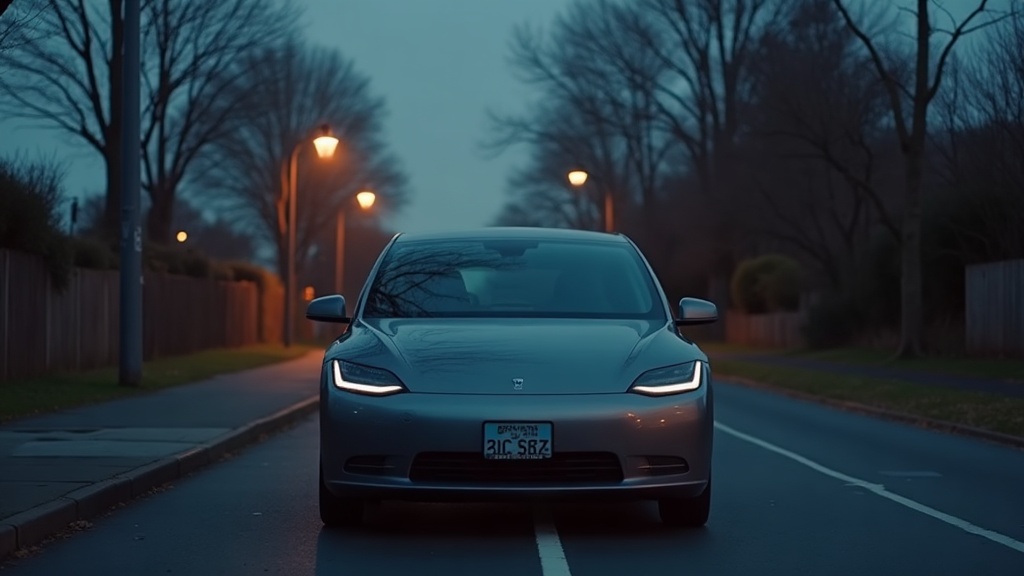
What Christchurch EV owners actually pay under the new RUC rates
The NZ Angle
Road user charges for light electric vehicles have been a moving target since the government reintroduced them in 2024, and the rates that came into force this month represent the latest adjustment in what's become an ongoing recalibration. For Christchurch owners, the numbers matter more than most. Canterbury commuters tend to rack up genuine kilometres — longer runs between suburbs, regular trips to the Port Hills or out toward Rolleston and Prebbleton, and winter driving that leans harder on heating and therefore chews through range faster than the official figures suggest. The practical upshot is that a Christchurch Leaf owner driving 15,000 kilometres a year will spend more on RUCs annually than someone doing the same distance in Wellington with a shorter, flatter commute, simply because cold-weather range loss means more charging cycles and, for some drivers, more distance-licence top-ups than they planned for. The current rate for light EVs sits at $76 per 1,000 kilometres. PHEVs like the Outlander are charged at a lower rate because they still consume petrol and pay fuel excise on that portion, currently set at $53 per 1,000 kilometres. Getting the top-up timing right matters — letting a distance licence run out attracts an infringement fee that wipes out months of fuel savings in one go.
NZTA's updated light EV RUC rates are now in force. Here's what Leaf, Outlander PHEV, and BYD Atto 3 owners will genuinely pay per kilometre in 2026 compared to a petrol equivalent.
Road user charges on light EVs were never supposed to be complicated. Buy a block of kilometres through NZTA's online portal, display the licence, repeat when the odometer gets close. The reality for many owners has been messier — confusion about when to top up, whether PHEVs attract the full rate, and now, what the revised 2026 figures actually mean for the weekly running cost calculation that justified buying an EV in the first place.
The short version: light EVs now pay $76 per 1,000 kilometres in RUCs. The Mitsubishi Outlander PHEV, because it runs on petrol part of the time and pays fuel excise on that consumption, sits at $53 per 1,000 kilometres. A BYD Atto 3, as a full battery-electric vehicle, falls into the same category as the Leaf and pays the full $76 rate.
What this looks like in real money
Take a Christchurch owner driving 15,000 kilometres a year, which is a fairly typical number for someone using a used import as their primary vehicle. On a Nissan Leaf, that's $1,140 in RUCs annually. On an Outlander PHEV, it's $795 in RUCs, though you're also buying petrol for the portions you're not running on battery, so the total energy cost picture is more complicated. On a BYD Atto 3, same as the Leaf: $1,140.
Now put a comparable petrol car alongside them. A 2018 Toyota Corolla Fielder covering the same 15,000 kilometres, averaging around 7 litres per 100 kilometres, will burn through roughly 1,050 litres of 91 octane. At $2.60 a litre, that's $2,730 in fuel. The EV owner running a Leaf at $76 per 1,000 kilometres plus their electricity cost — call it $3.50 per 100 kilometres on a standard home tariff — is spending around $1,665 all up. The saving is real. It's around $1,000 a year over a petrol equivalent, and that gap will hold unless fuel prices drop significantly or RUC rates climb sharply again.
The Atto 3 uses more energy than a Leaf. It's a heavier car with a bigger battery and a more energy-hungry electrical system. Budget closer to $4.50 per 100 kilometres in electricity rather than $3.50, which closes the gap slightly but doesn't change the fundamental arithmetic.
The distance licence trap
Where owners get hurt is not the rate itself but the admin. A distance licence isn't like a registration sticker you renew annually and forget about. You buy a block of kilometres — typically 1,000 at a time, though you can buy in larger increments — and you're responsible for topping it up before the odometer exceeds the licence. Run over by even a single kilometre and NZTA's enforcement system will eventually catch up with you. The infringement fee is $200, and it applies per offence, not per kilometre over.
For Christchurch drivers doing genuine distances, the practical advice is to buy in larger blocks and set a calendar reminder at least three weeks before you expect to hit the limit. The NZTA portal lets you check your current licence expiry against your odometer, which takes about two minutes and removes most of the risk.
PHEV owners have an additional layer of complexity. The Outlander PHEV's RUC obligation only applies to the electric portion of its driving — NZTA operates on a formula that assumes a PHEV uses roughly 50 percent electric and 50 percent petrol, which is why the rate is set lower than a full EV. In practice, an owner who mostly charges at home and does short urban trips will run a higher electric percentage than someone who uses it primarily on the open road and rarely plugs in. There's no mechanism to account for individual usage patterns, so the rate is a blunt instrument. If you're genuinely running the Outlander PHEV mostly on petrol, you're arguably getting a reasonable deal on RUCs. If you're treating it like a full EV and barely visiting a petrol station, you're paying a lower per-kilometre RUC rate than a Leaf owner doing the same thing, which is an anomaly the government has signalled it may address in future reviews.
Doing the full comparison honestly
The per-kilometre cost comparison between an EV and a petrol car only tells part of the story. Used Leafs are available in Christchurch from around $12,000 to $18,000 depending on generation and battery condition. Used Outlander PHEVs sit higher, typically $22,000 to $30,000 for a decent mid-generation example. A BYD Atto 3 in the used market is still relatively thin on supply locally, with prices around $35,000 to $42,000 for 2022-2023 examples.
A Leaf at $15,000 saving $1,000 a year on running costs versus a comparable petrol car breaks even on the running cost differential in a reasonable timeframe, assuming the battery holds up. That's the variable that matters most with the Leaf specifically. A degraded battery on a 40kWh ZE1 Leaf — the most common generation you'll find on the NZ used market — can drop real-world range to 130 or 140 kilometres in a Canterbury winter, which changes both the charging frequency and the practical usability of the car.
The RUC rate itself is not the headline number for most buyers. It's one input in a wider calculation that includes battery health, home charging setup, and whether your daily distances sit comfortably inside the car's real-world winter range. Get those right, and the $76 per 1,000 kilometres is just a line item.
By Auto Luxe. See our editorial standards or email sales@autoluxe.co.nz with corrections.
More automotive
EV road user charges: what Canterbury drivers are actually paying
Light EV RUCs have been running for a year now. We crunch the real numbers on what Canterbury owners are paying versus petrol savings, and whether used EVs still make financial sense.
EVs under $25k: what Canterbury driving actually costs
RUC rates have settled, used Leafs and BYD Atto 3s are everywhere on Trade Me. Here's what the numbers actually look like for a South Island buyer.

Ex-lease Leafs and Atto 3s under $20k: what Canterbury buyers need to know
Used EVs are suddenly affordable, but battery health and RUC costs are the real variables. Here is what first-time electric buyers in Canterbury should check before signing anything.