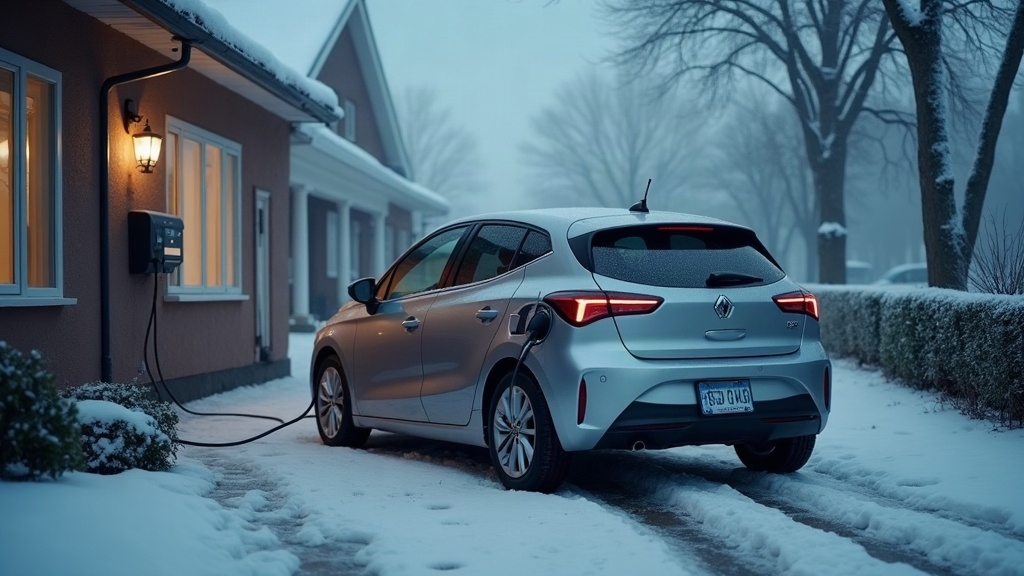
What Canterbury EV owners are actually paying per kilometre in 2025
The NZ Angle
Light EVs in New Zealand lost their RUC exemption in April 2024, with charges set at $76 per 1,000 kilometres. For a Nissan Leaf owner covering 15,000 km a year, that's $1,140 in RUCs on top of electricity costs. The Toyota Aqua plug-in hybrid sits in a slightly different position: it runs on petrol too, so its RUC liability depends on actual electric kilometres driven, which varies significantly by how and where you charge. Canterbury adds its own wrinkles. Cold mornings in Christchurch or the Mackenzie Basin knock real-world range out of an older Leaf faster than any spec sheet would suggest, and if you're relying on home charging overnight, your off-peak rate matters as much as the RUC figure. With the Clean Car Discount gone since the end of 2023, the purchase price gap between a used EV and a comparable petrol car has narrowed, but so has the justification to pay it. The maths that made a second-hand Leaf look like a no-brainer at $12,000 with a $3,000 government rebate looks different when that rebate has gone and the car is still $11,500 with RUCs now running year-round.
RUC charges have been running long enough to do the real maths. We crunch what Leaf and Aqua plug-in owners in Canterbury are paying per kilometre against petrol equivalents.
There was a period, not that long ago, when the per-kilometre case for a used EV in New Zealand practically made itself. Cheap to buy, free to run on electricity at eight to twelve cents a kilowatt-hour off-peak, no RUCs, and a government rebate sitting on top. That window is closed now. RUCs for light EVs have been in place since April 2024, the Clean Car Discount wrapped up at the end of 2023, and we have had enough months of real-world data to run the numbers properly.
The question is whether EVs still make financial sense for Canterbury owners running something like a Nissan Leaf or a Toyota Aqua plug-in. The honest answer is: it depends on your situation more than it ever did before, and the gap has definitely narrowed.
What the RUC actually costs you
Light EVs now pay $76 per 1,000 kilometres in road user charges. For someone doing 12,000 km a year, that is $912. At 15,000 km, you are looking at $1,140. At 20,000 km, $1,520. Those are real numbers that did not exist in the equation eighteen months ago.
Electricity costs vary by retailer and plan, but a reasonable working figure for home charging in Canterbury is around 28 to 33 cents per kilowatt-hour on a standard plan, dropping to 15 to 20 cents on a time-of-use off-peak rate overnight. A 2018 Leaf with a 40 kWh battery and real-world range of around 200 km in mild conditions will use roughly 18 to 20 kWh per 100 km. At 17 cents per kWh overnight, that is about $3.06 to $3.40 per 100 km in electricity alone. Add the RUC at $7.60 per 100 km, and you are sitting at $10.66 to $11.00 per 100 km all up.
A petrol equivalent, say a 2018 Toyota Corolla Hatchback doing 6.5L/100km with petrol around $2.70 a litre, costs roughly $17.55 per 100 km in fuel. No RUCs on top. The Leaf is still cheaper to run. The margin has just shrunk from enormous to meaningful.
The Aqua plug-in is a different calculation
The Toyota Aqua plug-in hybrid sits in a more complicated spot. It has a small battery, roughly 6 kWh usable, giving real-world electric-only range of about 50 to 60 km in Canterbury conditions before the petrol engine takes over. If you are commuting 30 to 40 km a day and charging at home every night, you can cover the bulk of your kilometres on electricity. If you are doing long regional runs down to Timaru or up to Hanmer, the petrol side carries most of that load and the electric range becomes a minor efficiency bonus.
RUC liability on the Aqua plug-in is calculated on total kilometres, not just the electric ones, because it is classified as a plug-in hybrid under NZTA rules and pays at the light EV rate for its electric component. In practice, owners need to track their electric versus petrol kilometre split to apply for the right RUC regime. Many do not bother, which means they are often overpaying or underpaying, and either way they are not optimising the cost picture.
For someone genuinely doing the short urban commute on electricity every day, the Aqua plug-in can get close to the Leaf's per-kilometre cost on those electric kilometres. For someone buying one because they liked the idea but mostly drives it on petrol, the hybrid efficiency alone is doing the work, and the plug-in premium in the purchase price is harder to justify.
Cold weather and older batteries change everything
Canterbury winters are the variable that polite national-level analysis tends to skip over. A 2016 Leaf with 80 percent battery health and a Christchurch overnight frost will deliver meaningfully less than its theoretical range. How much less depends on the battery's state of degradation, how cold it gets, and whether you pre-condition the car while it is still plugged in. In the worst cases, real-world winter range on an older Leaf can drop to 130 to 150 km, which is still adequate for urban use but changes how confidently you plan anything else.
This matters for the running cost equation because reduced range means more frequent charging cycles, slightly more efficiency loss, and a narrower buffer before range anxiety starts affecting how you drive. None of it breaks the economics, but it is the lived reality that the spreadsheet does not capture.
A newer Leaf, the 62 kWh version from 2019 onward, holds up better in cold conditions and retains more battery health over time. It also costs more to buy, and with the Clean Car Discount gone, that price gap from a good petrol hatchback has to be recovered entirely from running cost savings.
At 15,000 km a year, the running cost advantage of a Leaf over a petrol equivalent is roughly $900 to $1,000 annually compared to around $1,800 to $2,000 before RUCs came in. Still real money. Still a genuine reason to go electric if you charge at home, drive mostly urban kilometres, and are not buying a degraded battery on the cheap.
Just not the automatic slam-dunk it was two years ago.
By Auto Luxe. See our editorial standards or email sales@autoluxe.co.nz with corrections.
More automotive

EV running costs just changed: what it means for Leaf and Atto 3 owners
New RUC rates for light EVs are now in force. We crunch the real per-kilometre numbers for Canterbury owners and ask whether the used-EV price premium still makes sense.

EV road user charges are now real money: what Leaf and Atto 3 owners actually pay
The RUC exemption for light EVs ended in 2024. Here's what the full rate means per kilometre for Nissan Leaf and BYD Atto 3 owners, and what used EV buyers need to budget before they sign.
EV running costs in 2026: do the numbers finally add up?
RUC charges on light EVs have now been in place for over a year. We crunch the real per-kilometre costs for the Nissan Leaf and BYD Atto 3 against comparable petrol cars to find out what Canterbury drivers actually save.