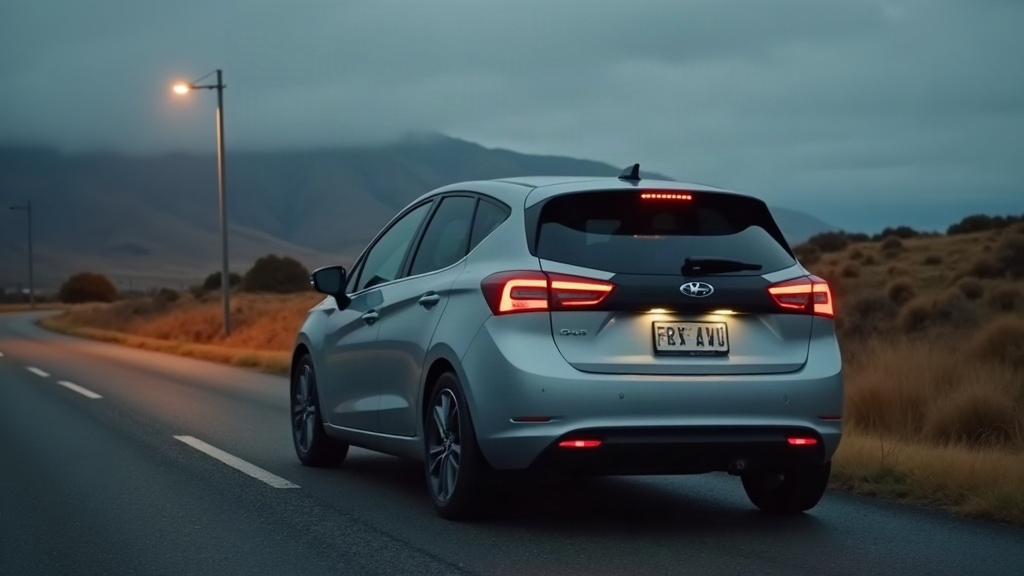
Leaf vs petrol hatch: what Canterbury driving actually costs
The NZ Angle
Light EVs lost their RUC exemption in April 2024, with charges now sitting at $76 per 1,000 km for vehicles under 3.5 tonnes. That changes the maths Kiwi buyers were using when they snapped up used Leafs at peak Clean Car Discount prices. The Discount itself ended in December 2023, so the subsidy that made a second-hand Leaf feel like a bargain is gone, and RUCs are now a real line item rather than a footnote. For a Canterbury driver, there are a few other things worth weighing. Winter in Christchurch is cold enough to knock 15-25% off a Leaf's real-world range, particularly on the older 24 kWh packs that still make up a large chunk of the used market here. That affects charging frequency and, if you're relying on public chargers, cost per km. Home charging off a standard overnight rate sits around 28-32 cents per kWh depending on your retailer, which is still well below what petrol costs per equivalent kilometre. The WoF schedule is the same for both vehicle types once the car is over three years old: annual. So that's not a differentiator. What matters is fuel or energy cost, RUCs, servicing, and what you actually paid for the car.
RUC charges have changed the EV equation. We run the real annual numbers for a used Nissan Leaf against a comparable petrol hatchback for a driver doing average Canterbury kilometres.
The used Nissan Leaf has been one of the most common EVs on Canterbury roads for the better part of a decade. Easy to find, cheap to run at face value, and simple enough mechanically that independent workshops will touch them. The question now, with RUC charges locked in and petrol sitting between $2.50 and $3.00 a litre depending on the week, is whether the running cost case still holds.
Let's use real numbers and real assumptions. Our Canterbury driver covers 15,000 km per year, which is close to the national average. They're comparing a 2017 Nissan Leaf with the 30 kWh battery, bought for around $16,000 to $18,000 in the current market, against a 2018 Toyota Corolla hatchback petrol auto at roughly $17,000 to $19,000. Similar money. Similar age. Similar utility.
The Leaf's annual cost breakdown
Energy cost is where the Leaf leads. A 30 kWh Leaf uses around 18-20 kWh per 100 km in real Canterbury driving, factoring in some winter heating use and the fact that these batteries have degraded from new. At a home charging rate of 30 cents per kWh, that's $5.40 to $6.00 per 100 km. Over 15,000 km, call it $870.
RUCs at $76 per 1,000 km add $1,140 for the year. That takes your combined energy and road user cost to around $2,010.
Servicing a Leaf is genuinely cheaper than a petrol car. No oil changes, no timing belt, no exhaust system to worry about. Budget around $250 to $350 per year for a basic annual check, tyres, brake fluid, and wiper blades. Brake wear is reduced by regenerative braking, so pads last longer than you'd expect.
Total annual running cost for the Leaf: roughly $2,300 to $2,400, excluding insurance and registration.
One variable that doesn't get enough attention is battery condition. A 2017 Leaf with the original 30 kWh pack may be showing 10 to 20% capacity loss by now. That means real-world range of 180 to 220 km rather than the 250 km headline figure. For most Canterbury commuters that's workable, but if you're regularly driving to Timaru or up to Hanmer, you're planning around charging in a way the Corolla driver isn't.
The Corolla's annual cost breakdown
The 2ZR-FAE engine in a 2018 Corolla hatch returns around 7 litres per 100 km in mixed driving. At $2.70 per litre, that's $18.90 per 100 km. Over 15,000 km: $2,835.
No RUCs on a petrol car. Registration (road user tax) is included in the fuel price.
Servicing costs more. Oil and filter every 10,000 km or 12 months, spark plugs periodically, coolant flush every few years. Budget $500 to $650 per year on a well-maintained example.
Total annual running cost for the Corolla: roughly $3,300 to $3,500.
What the gap actually means
The Leaf saves you somewhere between $900 and $1,100 per year in running costs over the Corolla. On purchase prices that are broadly similar, that's a real-money advantage. At that saving rate, the Leaf pays back any small premium in under two years.
But there are catches, and they're worth being honest about.
Battery replacement on a 30 kWh Leaf, if it comes to that, is a significant expense. Reconditioned packs from specialist importers sit around $4,000 to $6,000 installed. That would wipe out several years of fuel savings in one hit. The question is whether your specific car needs one, and the only way to know is a proper battery health check before you buy, not a glance at the dashboard bars.
Public charging costs are also climbing. If you're regularly using fast chargers rather than home charging overnight, the energy cost comparison shifts. Rapid charging at commercial rates can push your cost per 100 km to $12 or more, which narrows the gap with petrol considerably.
The Corolla's advantage is predictability. You know what a service costs. You know what fuel costs, give or take. You can fill up in four minutes anywhere in the South Island. The Leaf asks you to be more organised, more aware of your habits, and more willing to manage range.
For the driver who charges at home, does the bulk of their kilometres within greater Christchurch, and doesn't need to make regular long-distance runs, the Leaf's annual cost advantage is real and durable. The RUC change hit, but it didn't flip the equation. It just made the margin smaller than it was when the exemption was in place.
For the driver who doesn't have a dedicated home charger, or who regularly needs to cover 300-plus km days, the Corolla's simplicity has a dollar value that's harder to quantify but very easy to feel.
By Auto Luxe. See our editorial standards or email sales@autoluxe.co.nz with corrections.
More automotive
What Canterbury EV owners are actually paying per kilometre in 2025
RUC charges have been running long enough to do the real maths. We crunch what Leaf and Aqua plug-in owners in Canterbury are paying per kilometre against petrol equivalents.

EV running costs just changed: what it means for Leaf and Atto 3 owners
New RUC rates for light EVs are now in force. We crunch the real per-kilometre numbers for Canterbury owners and ask whether the used-EV price premium still makes sense.

EV road user charges are now real money: what Leaf and Atto 3 owners actually pay
The RUC exemption for light EVs ended in 2024. Here's what the full rate means per kilometre for Nissan Leaf and BYD Atto 3 owners, and what used EV buyers need to budget before they sign.