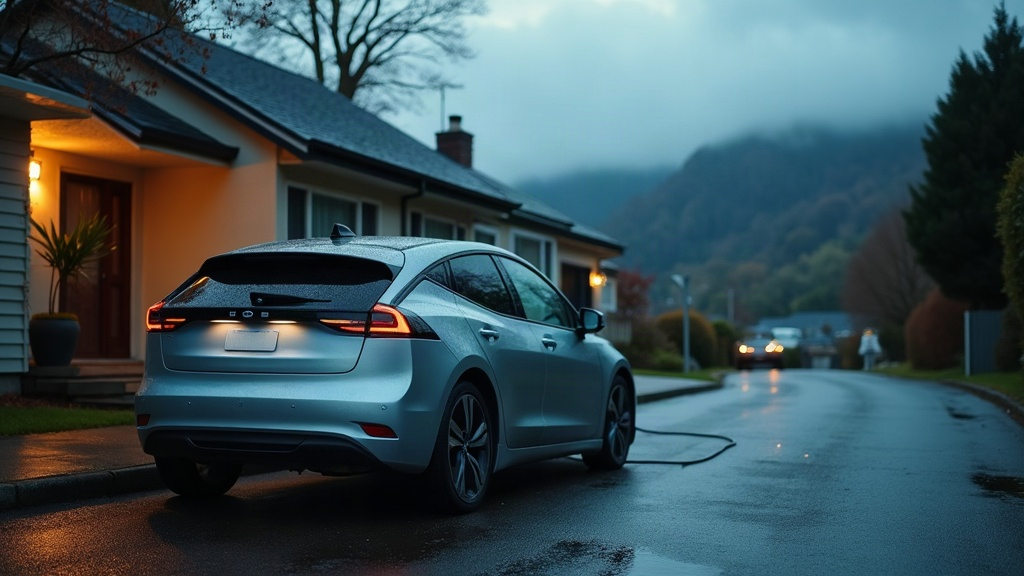
EV running costs in 2026: do the numbers still work for Canterbury buyers?
The NZ Angle
Since July 2024, light EVs have paid road user charges at $76 per 1,000 kilometres, removing the last big financial leg-up they had over petrol cars. That change arrived just as electricity retailers started pushing residential rates higher, with many Canterbury households now paying between 33 and 38 cents per kWh on standard plans. Petrol, meanwhile, has settled into a $2.50 to $2.80 per litre range at Christchurch forecourts, cheaper in real terms than it was during the 2022 and 2023 spikes. The Clean Car Discount is gone. The framing has shifted completely. Buying a used EV in 2026 is no longer a subsidised bet on the future — it is a straight commercial decision, and the running cost gap between electric and petrol is narrower than most EV advocates will admit. Canterbury buyers face some specific wrinkles too: home charging setups vary widely across the city's housing stock, and anyone without a garage or a dedicated off-street charger is going to be paying public charging rates that change the maths significantly. This piece runs the actual numbers for the three EVs most commonly appearing on Canterbury used-car lots right now.
RUC charges are locked in, power prices keep rising, and petrol has settled. We crunch the real per-kilometre costs for the Leaf, MG ZS EV and BYD Atto 3 against their petrol rivals.
The pitch for used EVs used to write itself. Cheap to run, government money back in your pocket, petrol prices going one direction only. That version of the story is over. What remains is a more honest question: after RUCs, after power bills, after the realities of how and where most people actually charge, is an EV genuinely cheaper per kilometre than the petrol car sitting next to it on the lot?
The short answer is yes, usually, but by less than you have probably been told.
The numbers, worked through properly
Take the Nissan Leaf first. A 40kWh 2018-2020 example in reasonable nick sits around $16,000 to $20,000 at a Canterbury dealer. Real-world consumption for a 40kWh Leaf in mixed driving is roughly 16 to 18kWh per 100km — the official figures are flattering, and Canterbury winters with the heater running will push you toward the top of that range. At 35 cents per kWh on a home plan, that is $5.60 to $6.30 per 100km in electricity. Add RUC at $7.60 per 100km and you are sitting at $13.20 to $13.90 per 100km all in.
A comparable 2019 or 2020 petrol hatchback — say a Toyota Aqua or Honda Fit hybrid — uses around 4.5 to 5.5 litres per 100km. At $2.65 per litre, that is $11.90 to $14.60 per 100km. No RUC to worry about. The gap between the Leaf and a decent petrol hybrid is, frankly, trivial. You are talking cents per kilometre, not dollars.
The MG ZS EV and BYD Atto 3 sit in a different bracket. Both are larger, heavier SUVs with bigger batteries — the ZS EV at 51kWh and the Atto 3 at either 49.9 or 60.5kWh depending on variant. Consumption runs 17 to 21kWh per 100km in real Canterbury use. Apply the same electricity and RUC calculation and you land at $13.55 to $14.95 per 100km. Compare that to a similarly sized petrol SUV — a Mitsubishi ASX or Nissan X-Trail — pulling 8 to 9.5 litres per 100km, which works out to $21.20 to $25.18. Here the gap is real. You are saving somewhere between $7 and $11 per 100km. At 15,000km a year, that is $1,050 to $1,650 back in your pocket annually.
So the SUV case for EVs still holds. The small-car case is a wash.
Where charging actually happens matters more than the headline rate
The figures above assume home charging, which is the only scenario where EV economics look consistently good. The moment you start relying on public fast chargers — ChargeNet, Meridian, BP Pulse — the picture changes fast. Rapid charging rates in Canterbury range from 55 to 70 cents per kWh. Feed that into the Leaf's consumption figure and your electricity cost alone hits $9.80 to $12.60 per 100km before you even add RUC. The Leaf is now more expensive per kilometre than a petrol Aqua on almost any comparison.
This matters because a significant portion of Canterbury's used EV buyers are buying into townhouses, units, and older villas without a garage or a dedicated circuit. If your landlord has not fitted a charger and you are not in a position to install one, the economics of EV ownership shift considerably. Public charging as a primary strategy is not an edge case — it is the reality for a meaningful chunk of the market, and it deserves more honesty than it usually gets.
The real objection to the running cost argument
Here is what often gets missed in the per-kilometre debate: purchase price offsets. The same $20,000 that buys a tidy 2019 Leaf also buys a very good 2020 petrol Aqua hybrid — often with lower kilometres, a cleaner service history, and zero battery degradation concerns. The Leaf buyer is not starting from an advantaged position on day one.
The MG ZS EV and BYD Atto 3 are different propositions. A used ZS EV in the $28,000 to $33,000 range is going up against petrol SUVs that cost similar money, and in that comparison the running cost savings over three to five years start to mean something tangible — potentially enough to offset a $2,000 to $3,000 price premium at purchase.
BYD battery longevity over a Canterbury ownership horizon of five-plus years remains an open question. There is not yet enough long-term local data to be confident either way, and any buyer treating that as a solved problem is getting ahead of themselves.
For my money, the used EV case in 2026 comes down to one question before any other: where are you charging it? Answer that honestly, and the rest of the maths tends to follow.
By Auto Luxe. See our editorial standards or email sales@autoluxe.co.nz with corrections.
More automotive

Leaf, Aqua or X-Trail: what it actually costs per kilometre in Canterbury
The Clean Car Discount is gone, light EV RUCs are here to stay, and petrol is sitting above $2.50. Here's what the numbers actually look like for Canterbury mixed-use driving.
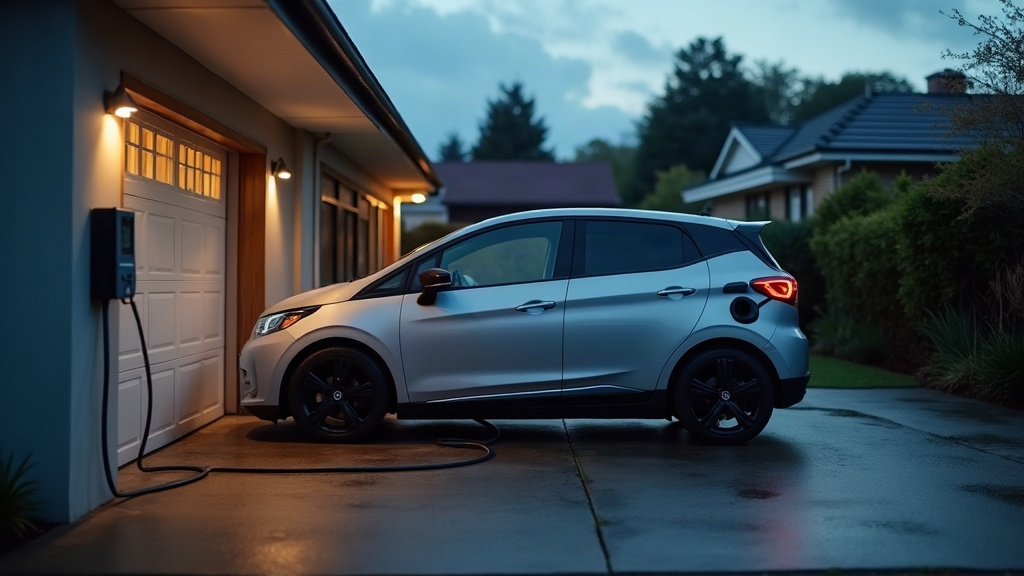
Leaf vs petrol hatch: what the running costs actually look like in 2026
RUCs on light EVs have been in place long enough to do the maths properly. Here's what a Canterbury commuter actually pays each year in a used Nissan Leaf versus a comparable petrol hatchback.
What EV ownership actually costs per kilometre in NZ now
RUCs are locked in, charging costs are real, and the maths has shifted. We work through what Leaf, Atto 3, and Model 3 owners are paying once every cost is stacked up.