
Leaf, Aqua or X-Trail: what it actually costs per kilometre in Canterbury
The NZ Angle
New Zealand removed the Clean Car Discount at the end of 2023, and from April 2024 light EVs joined the Road User Charges regime at $76 per 1000 km. That changes the EV ownership maths considerably. Canterbury buyers face a particular mix of conditions: cold winters that suppress battery range, a genuine motorway corridor between Christchurch and Rolleston or Rangiora, and a second-hand market where used Leafs, Aquas and diesel X-Trails all sit at accessible price points. The question worth asking now is not which car feels virtuous to own, but which one is cheapest to run across a realistic annual distance. To keep the comparison honest, assume 15,000 km per year split roughly 60 percent urban and 40 percent highway, fuel at $2.70 per litre for 91 petrol and $2.10 for diesel, electricity at $0.28 per kWh on a standard home tariff, and EV RUCs at $76 per 1000 km. Purchase prices are drawn from current Canterbury private and dealer listings. Servicing estimates are conservative averages, not worst-case scenarios.
The Clean Car Discount is gone, light EV RUCs are here to stay, and petrol is sitting above $2.50. Here's what the numbers actually look like for Canterbury mixed-use driving.
A used 40 kWh Nissan Leaf in Canterbury right now sits between $18,000 and $26,000 depending on age, battery health, and whether it's a ZE0, AZE0 or the later ZE1 shape. A Toyota Aqua in good nick runs $13,000 to $18,000. A 2015 to 2018 diesel X-Trail with the 2.0-litre dCi comes in at $17,000 to $23,000. None of these are identical products. The X-Trail carries families and tows. The Aqua does not. So treat this as a cost-per-kilometre exercise for a solo commuter or small family doing realistic Canterbury distances, not a full vehicle comparison.
The Leaf: cheaper per kilometre, but read the small print
At 15,000 km annually, the Leaf's energy cost is its strongest card. A 40 kWh Leaf in real-world Canterbury driving, where winter temperatures shorten range and the Southern Motorway has a few stretches at 100 km/h, will use somewhere between 15 and 18 kWh per 100 km. Call it 17 kWh average. At $0.28 per kWh, that's $4.76 per 100 km in electricity.
Add RUCs. At $76 per 1000 km, that's $7.60 per 100 km on top. Total running cost per 100 km for energy plus road tax: $12.36. Over 15,000 km, that's $1,854 per year just in energy and RUCs.
Servicing on a Leaf is genuinely low. No oil, no cambelt, brake wear is reduced by regenerative braking. Budget $300 to $400 per year for a WoF, tyre rotation, cabin filter, and whatever the battery health check throws up. Total annual running cost lands around $2,200 to $2,300.
The catch is battery degradation. A 2016 or 2017 Leaf with the 30 kWh pack and no active thermal management will often show 10 to 12 bars out of 12 on the battery health display. At 10 bars you've lost roughly 25 percent of original capacity. That matters in Canterbury winter when a claimed 200 km range becomes a real-world 120 to 130 km on a cold morning. The 40 kWh ZE1 is a better buy, but prices are higher and the same thermal management gap applies.
The Aqua: the reliable middle ground
A petrol Aqua at 15,000 km uses around 4.2 to 4.8 litres per 100 km in mixed driving. Japanese import figures are optimistic; Canterbury includes enough cold starts and open-road stretches that 4.5 L/100 km is a fair working number. At $2.70 per litre, that's $12.15 per 100 km. Over 15,000 km: $1,823 in fuel.
No RUCs. Annual servicing runs $500 to $700 including oil changes, filters, and WoF. Total annual running cost: roughly $2,400 to $2,600.
So the Aqua and the Leaf are actually close on total annual cost once RUCs are in the Leaf's column. The Aqua has a lower purchase price, a simpler drivetrain, and no range anxiety on a run down to Tekapo or up to Kaikōura. It also doesn't degrade. The hybrid battery in an Aqua is a sealed, modest-capacity pack with a solid reliability record in the New Zealand fleet. There are Aquas in Christchurch with 200,000 km on them and original hybrid batteries still performing correctly.
The X-Trail diesel: more car, more cost, more sense for the right buyer
The diesel X-Trail changes the equation because it's not really competing with the Aqua for the same job. It carries more, handles gravel roads, and tows a small boat or trailer tent. But the fuel cost is where it gets interesting.
The 2.0-litre dCi in the T32 X-Trail does around 7.0 to 7.8 L/100 km in genuine mixed use. Highway is better, urban is worse. At $2.10 per litre for diesel, that's $14.70 to $16.38 per 100 km. Over 15,000 km, fuel alone runs to $2,200 to $2,460.
Diesel servicing costs more: longer oil changes but pricier filters, the occasional DPF clean if it spends too much time in short urban trips, and diesel injection systems that don't respond well to neglect. Budget $800 to $1,000 per year in servicing for a well-maintained example. Total annual cost: $3,000 to $3,500, well above both alternatives.
The X-Trail only makes financial sense if you're buying the extra capability, not just the car. If your Canterbury life involves school runs and weekend supermarket trips, it's an expensive way to move one adult around.
What the numbers say
Over a three-year period at 15,000 km annually, the gap between the Leaf and the Aqua on running costs is narrow enough that purchase price and battery condition determine the real outcome. A $16,000 Aqua with clean history versus a $21,000 Leaf with a degraded battery is not a close contest. A $19,000 Aqua versus a $19,000 ZE1 Leaf with 11 or 12 bars and a recent WoF is genuinely competitive.
The X-Trail costs materially more per year to run than either, and Canterbury fuel prices aren't going anywhere that changes that conclusion. If you need the space and the tow capacity, accept the cost. If you don't, the diesel X-Trail is a solution to a problem you may not have.
The Clean Car Discount papered over a lot of these numbers. Without it, the EV case leans harder on low purchase price and good battery health than it ever did on headline fuel savings.
By Auto Luxe. See our editorial standards or email sales@autoluxe.co.nz with corrections.
More automotive
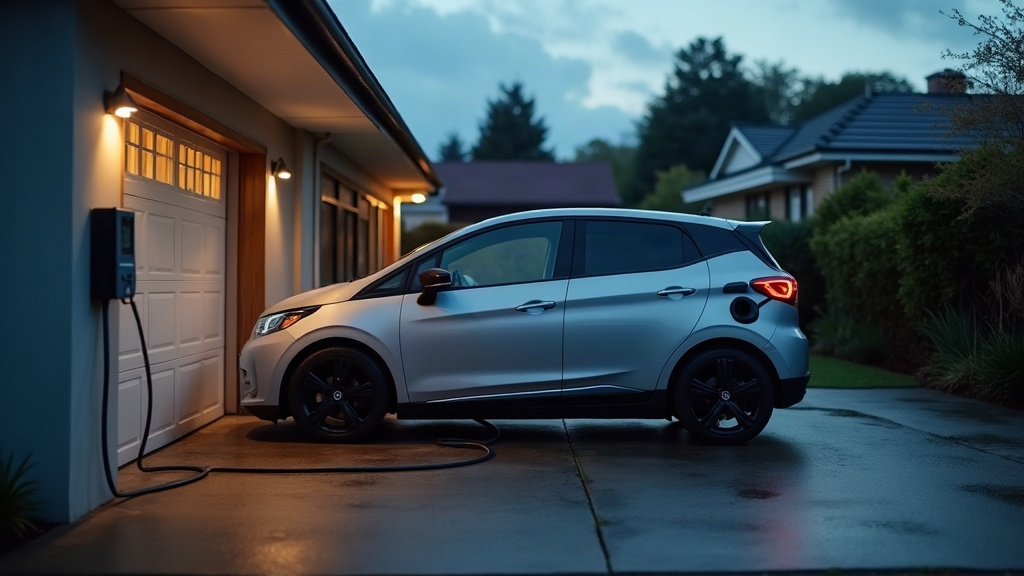
Leaf vs petrol hatch: what the running costs actually look like in 2026
RUCs on light EVs have been in place long enough to do the maths properly. Here's what a Canterbury commuter actually pays each year in a used Nissan Leaf versus a comparable petrol hatchback.
What EV ownership actually costs per kilometre in NZ now
RUCs are locked in, charging costs are real, and the maths has shifted. We work through what Leaf, Atto 3, and Model 3 owners are paying once every cost is stacked up.
EV road user charges after a year: do the numbers still work for Canterbury buyers?
Light EV road user charges have been running for over a year. We crunch what Canterbury Leaf and Prius owners are actually paying versus what they're saving at the pump.