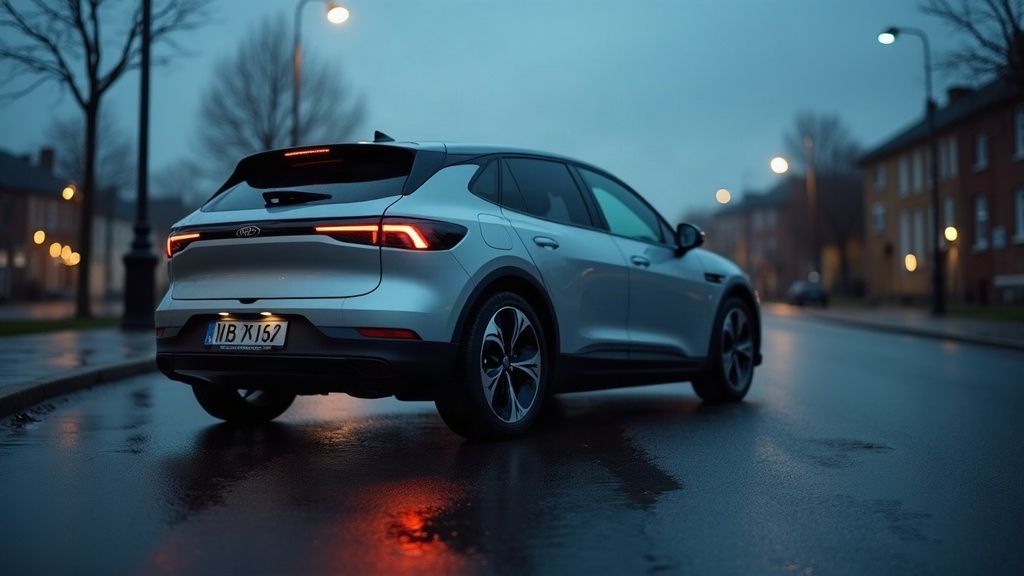
What EV ownership actually costs per kilometre in NZ now
The NZ Angle
Light electric vehicles lost their RUC exemption in April 2024, and the phase-in is done. From 1 April 2025, owners of EVs under 3.5 tonnes pay the full rate of $76 per 1,000km, the same as diesel light vehicles. That changes the cost conversation considerably. For years, zero RUCs was one of the strongest financial arguments for going electric in New Zealand, particularly for high-kilometre drivers. That argument is now gone. What remains is the question of whether cheaper home charging, lower servicing costs, and longer brake life are still enough to keep EVs ahead of a comparable petrol import on a per-kilometre basis. The three vehicles worth examining are the ones actually moving in the New Zealand used-car market right now: the Nissan Leaf, which has been here long enough to have a genuine secondhand ecosystem; the BYD Atto 3, which arrived in volume from 2022 and is now appearing at the $35,000-$45,000 used mark; and the Tesla Model 3, which sits higher in price but commands strong residuals. Against those, a 2019-2021 Toyota RAV4 petrol or a well-specced Mazda CX-5 petrol gives a fair comparison point for a family buyer with real distances to cover.
RUCs are locked in, charging costs are real, and the maths has shifted. We work through what Leaf, Atto 3, and Model 3 owners are paying once every cost is stacked up.
The question used to be simpler. Before April 2024, an EV owner in New Zealand paid nothing in road user charges, which handed them a meaningful per-kilometre cost advantage over diesel and, depending on how you calculated it, over petrol too. That advantage has been unwound. The full RUC rate now applies, and the numbers need to be run again from scratch.
Let's start with the Nissan Leaf, because it's the car most Kiwi EV buyers have actually owned. A 2018-2020 40kWh Leaf sits around $18,000-$24,000 in the current market. Real-world range on New Zealand roads, accounting for hills, cold Canterbury mornings, and the battery degradation that's common on higher-mileage examples, is typically 180-220km per charge. Overnight home charging on a standard 7.2kW home charger costs roughly $5-7 for a full charge at current residential electricity rates, call it around 28-32 cents per kWh depending on your plan and provider. That works out to somewhere between 2.5 and 3.5 cents per km in energy cost alone.
Add RUCs at $76 per 1,000km and that's another 7.6 cents per km on top. Stack in WoF (annual after the vehicle turns three years old, so roughly $60-70 per year), tyres, and the occasional service, and a realistic all-in running cost for a well-maintained Leaf lands around 13-17 cents per km for a driver covering 15,000km annually. That figure assumes home charging, no public fast-charging top-ups, and no unexpected battery repair bills.
Battery condition is the variable that blows the budget on older Leafs. The ZE0 and AZE0 generations use passive thermal management, which means the battery degrades faster in hot climates and fast-charge-heavy usage patterns. A Leaf showing nine or ten battery bars on the dashboard gauge is one thing; what it actually delivers in range on a cold Christchurch morning is another. If you're buying privately and the seller can't show you a Leaf Spy readout or a recent battery health check, factor in the possibility of a $4,000-$8,000 battery replacement within a few years. That changes the per-km maths fast.
The BYD Atto 3 and Tesla Model 3: better numbers, higher entry cost
The BYD Atto 3 is a more modern proposition. A 2022-2023 example with the 60.5kWh standard-range battery sits around $38,000-$44,000 used right now. Real-world range is closer to 350-380km in mixed driving. Home charging costs a bit more per session simply because the battery is larger, but the energy cost per kilometre is similar to the Leaf, around 2.5-3.5 cents depending on your electricity rate. RUCs apply at the same $76/1,000km. Servicing is straightforward and cheaper than a comparable petrol SUV, no cambelt, no oil changes, simpler brake servicing because regenerative braking does most of the work.
All-in, the Atto 3 running cost sits around 12-16 cents per km at 15,000km per year, slightly better than the Leaf on a per-km basis once you account for its longer real-world range reducing the relative impact of fixed costs. The bigger issue is the entry price. You need to cover more kilometres to justify the gap over a $25,000 CX-5 petrol.
The Tesla Model 3 Standard Range (2019-2021 NZ-compliant examples) trades around $35,000-$45,000 depending on spec and kilometres. Energy efficiency is among the best in the class, real-world consumption around 14-16kWh per 100km. At current home charging rates, that's roughly 4-5 cents per km in energy. With RUCs added, you're looking at 11.6-12.6 cents per km in energy plus RUCs alone, before servicing, tyres, and WoF. Total running cost at 15,000km per year, around 14-18 cents per km. Tyres are a known cost on the Model 3; the car is heavy and the instant torque is hard on rubber, expect 25,000-35,000km per set on budget tyres.
How does a petrol import stack up
A 2019 Mazda CX-5 2.0 petrol in good condition sits around $24,000-$28,000. Fuel consumption in real New Zealand driving, with hills and motorways mixed in, runs about 9-11 litres per 100km. At $2.70 per litre, that's 24-30 cents per km in fuel alone. No RUCs, but a petrol of this age needs a service every 10,000-12,500km, cambelt inspection, and the usual wear items. All-in, a realistic figure is 28-34 cents per km at 15,000km annually.
On that comparison, all three EVs still win on running cost per kilometre. The gap is smaller than it was when EVs paid no RUCs, but it's real. A Leaf owner saves roughly 15-18 cents per km over a comparable petrol SUV. Over 15,000km per year, that's $2,250-$2,700 annually. Over five years, that offsets a meaningful chunk of the price premium, assuming nothing goes wrong with the battery.
The caveat worth repeating: the Leaf's battery risk is genuine at higher mileages. The Atto 3 and Model 3 are better bets on longevity but cost more to enter. For a buyer covering 20,000km or more per year, the EV case is still solid. For someone doing 10,000km in a mild climate with occasional use, the numbers are tighter than the marketing ever suggested.
By Auto Luxe. See our editorial standards or email sales@autoluxe.co.nz with corrections.
More automotive
EV road user charges after a year: do the numbers still work for Canterbury buyers?
Light EV road user charges have been running for over a year. We crunch what Canterbury Leaf and Prius owners are actually paying versus what they're saving at the pump.

A year of full EV road user charges: what it actually costs
The RUC exemption for light EVs ended 1 April 2024. Twelve months on, we look at what that means for Leaf and BYD Atto 3 owners in Canterbury and whether the used-EV price case still holds.
What EVs actually cost per kilometre in NZ right now
RUC charges are locked in, power prices keep climbing, and the winter off-peak window is narrowing. Here's what a Leaf, Atto 3, and MG ZS EV genuinely cost to run versus petrol alternatives.