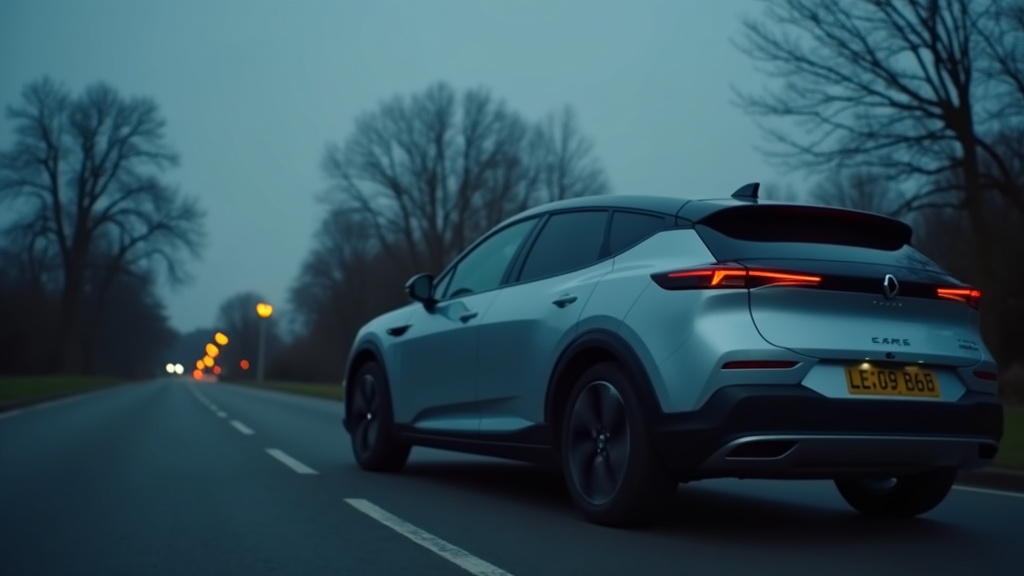
EV road-user charges: what Leaf, MG ZS and Atto 3 owners actually pay now
The NZ Angle
Since 1 April 2024, every light electric vehicle in New Zealand pays road-user charges at $76 per 1,000 kilometres, the same rate that applies to light diesel vehicles. The free ride is over. For the average New Zealand driver covering around 12,000 to 14,000 kilometres a year, that's between $912 and $1,064 in RUCs annually, paid in advance through NZTA in blocks of your choosing. You buy a 1,000km block, fit the hubodometer reading, and NZTA issues a licence label. Miss it and you're driving unlicensed, which is a $200 fine and a potential WoF problem. Canterbury drivers tend to clock more kilometres than the national average, particularly those commuting from Rolleston, Rangiora, or Lincoln into the city, so the RUC bill climbs faster than it might for someone doing short urban runs in Auckland. The Clean Car Discount that once made new EVs more attractive expired in December 2023, so buyers are now paying market rate on purchase and full RUCs in operation. Whether EVs still make financial sense depends entirely on what you're comparing them to, what you paid for them, and how many kilometres a year you actually drive.
The RUC exemption for light EVs ended 1 April 2024. We've run the real annual numbers for Canterbury's most common used EVs against a frugal petrol and diesel alternative.
The $76 per 1,000 kilometres RUC rate doesn't sound enormous until you start multiplying it out. A Canterbury commuter doing 15,000 kilometres a year is paying $1,140 in road-user charges alone, before they've bought a single kilowatt-hour of electricity. That's the new baseline for EV ownership in New Zealand, and it's worth being honest about what it does to the running-cost case.
Let's take three of the most common used EVs sitting on Canterbury yards right now.
Nissan Leaf
The 24 kWh Leaf, model years 2013 to 2017, is selling for $8,000 to $14,000 depending on battery health and kilometres. The 40 kWh version from 2018 to 2022 sits at $16,000 to $24,000. At 15,000km a year, RUCs cost $1,140. Home charging on a standard Orion tariff, say 30 cents per kWh, will run you roughly $675 to $900 a year for the 40 kWh model depending on real-world efficiency, which in Canterbury winters with the heater running is noticeably worse than the spec sheet suggests. Call total energy-plus-RUC around $1,800 to $2,000 annually.
Servicing is cheap. The Leaf has no cambelt, no gearbox oil, no exhaust system. Annual WoF, a brake fluid change every two years, and tyres. Budget $400 to $600 a year for maintenance on a tidy example. Parts are readily available through local auto factors for the consumables, and the broader Leaf community in NZ is large enough that you can find secondhand components without drama.
The catch at this mileage, and it's a real one, is battery degradation. A 2014 Leaf with 120,000km might show eight or nine out of twelve bars on the capacity gauge. That's a usable range somewhere in the 100 to 130km territory in warmer weather, less in June and July. For a Rolleston-to-city daily run that's workable. For anything beyond that, you're planning around charging stops. Replacement battery packs are available but they're not cheap, typically $4,000 to $7,000 fitted.
MG ZS EV
The ZS EV from 2021 to 2023 is the most accessible newer Chinese-market EV in the used fleet here. Prices are sitting at $22,000 to $30,000. The standard-range version does around 250km claimed; real-world in Canterbury is closer to 190 to 210km with mixed driving. The long-range version adds around 50km to that.
At 15,000km a year, same RUC bill: $1,140. Home charging costs are similar to the Leaf on a per-kilometre basis. Total running costs come out comparable, but you're spending more upfront for a newer, more capable car with better safety kit and a functioning DC fast-charge capability that the older Leaf lacks.
The MG's main unknown is long-term parts supply. MG Motor New Zealand has a dealer network and a warranty programme, but the brand hasn't been here long enough to have a secondhand parts ecosystem. If something goes wrong with the battery management system or the onboard charger out of warranty, you're looking at dealer pricing with no secondhand alternative. That's a real risk at the $25,000 to $30,000 price point.
BYD Atto 3
The Atto 3 is newer and more expensive. Used examples from 2022 to 2023 are starting at $32,000 and running to $42,000. It's a better car in most measurable ways: longer range, nicer interior, more advanced driver assists. RUCs are the same flat rate regardless of what you're driving, so at 15,000km you're still paying $1,140. The Atto 3's larger battery means charging costs per kilometre are slightly higher in absolute terms, though efficiency is reasonable.
BYD has committed to New Zealand in a way that MG has also tried to, but the resale trajectory on both brands is still unclear. Depreciation risk is real on any Chinese EV right now.
How it stacks up against petrol and diesel
Compare the EV trio against a 2019 Toyota Aqua or a well-specced 2018 Honda Fit Hybrid, both sitting at $14,000 to $19,000. The Aqua averages around 4.2 litres per 100km in real Canterbury mixed driving. At $2.70 per litre, that's $1,701 in fuel at 15,000km. Add WoF, servicing including a cambelt on some models, and you're at roughly $2,200 to $2,600 a year in running costs. Parts are everywhere, any mechanic can work on them, and resale is bulletproof.
A diesel option like a 2017 Mazda CX-5 2.2d at around $22,000 to $26,000 burns around 6.5 litres per 100km and pays RUCs at the same $76 per 1,000km. Fuel at $2.10 per litre diesel runs to $2,048, RUCs add $1,140. That's over $3,100 before a service. The diesel makes more sense as a towing vehicle or for genuine long-distance use, not as a daily in town.
The EV case still holds for high-mileage urban and suburban driving, particularly if you have home charging and aren't relying on public infrastructure. The RUC change has narrowed the gap meaningfully, probably by $700 to $900 a year compared to pre-April 2024 running costs. It hasn't killed the argument, but it's ended the era where EVs were obviously, easily cheaper to run than anything with a combustion engine. Now you need to do the actual sums for your actual kilometres before you sign anything.
By Auto Luxe. See our editorial standards or email sales@autoluxe.co.nz with corrections.
More automotive
EV road user charges: what Canterbury drivers are actually paying
Light EV RUCs have been running for a year now. We crunch the real numbers on what Canterbury owners are paying versus petrol savings, and whether used EVs still make financial sense.
EVs under $25k: what Canterbury driving actually costs
RUC rates have settled, used Leafs and BYD Atto 3s are everywhere on Trade Me. Here's what the numbers actually look like for a South Island buyer.

Ex-lease Leafs and Atto 3s under $20k: what Canterbury buyers need to know
Used EVs are suddenly affordable, but battery health and RUC costs are the real variables. Here is what first-time electric buyers in Canterbury should check before signing anything.