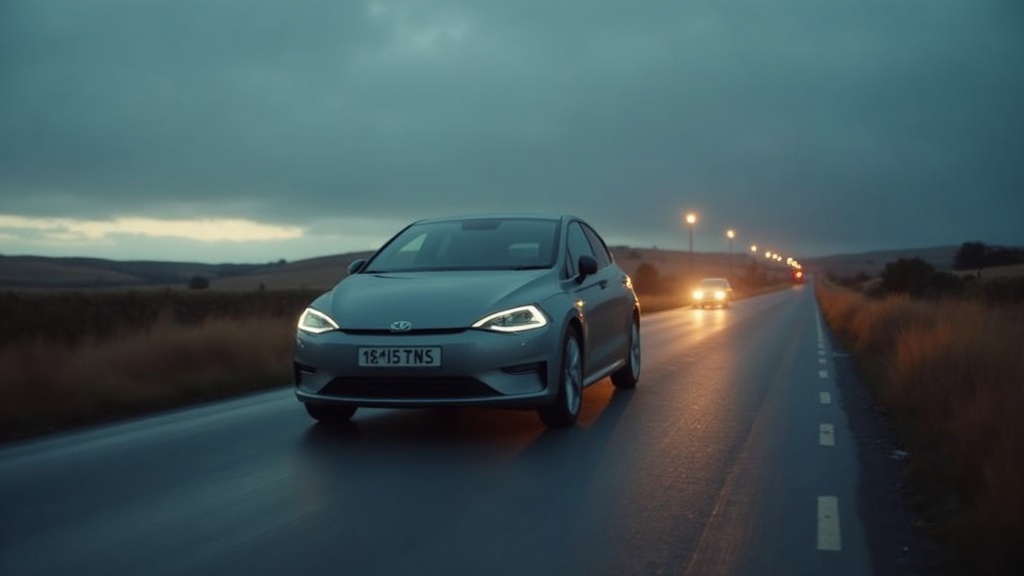
EV road user charges kick in September 2026: what it costs per km
The NZ Angle
New Zealand has given light electric vehicles a free ride on road user charges since 2021, but that ends on 31 August 2026. From 1 September, EVs join diesel vehicles and pay RUCs like everyone else. The current rate for light EVs is set at $76 per 1,000 kilometres under the NZTA's proposed framework, though the final rate is subject to confirmation before the exemption closes. That puts a driver covering 15,000 kilometres a year looking at roughly $1,140 in RUCs annually, on top of registration. It is not trivial, but it is also not the budget-wrecker some commentary has made it out to be. The calculation that matters is how that $1,140 stacks up against what a comparable petrol car costs to fuel over the same distance. At current Christchurch pump prices sitting between $2.50 and $3.00 per litre, and with petrol cars in the 7 to 9 litres per 100 kilometres range, fuel alone on a petrol equivalent runs $2,625 to $4,050 a year. The RUC impost changes the EV equation, but it does not flip it. What it does do is remove the last major financial incentive that was nudging buyers toward used EVs on pure running-cost grounds, which will cool demand and likely soften resale values on popular models like the Nissan Leaf and BYD Seal through 2026.
The RUC exemption for light electric vehicles ends 31 August 2026. Here is what Leaf, Ioniq 6 and BYD Seal owners will actually pay from September, and whether a used EV still beats a petrol car on running costs.
The road user charge exemption for light electric vehicles has been a known temporary measure since it was introduced. The government extended it a couple of times, but 31 August 2026 is the hard deadline. After that, EV owners buy RUC licences the same way diesel drivers do, at a rate NZTA has indicated will sit around $76 per 1,000 kilometres for light EVs. The diesel rate is currently $76 per 1,000 kilometres as well, so light EVs are expected to come in at parity, not at a penalty.
That means a Nissan Leaf owner doing average New Zealand mileage of around 12,000 to 15,000 kilometres a year will pay somewhere between $912 and $1,140 in RUCs per year. A BYD Seal owner doing 18,000 kilometres, which is realistic for anyone using one as a primary car or doing regional runs out of Christchurch, is looking at $1,368. You buy the licence in blocks and display it like a rego sticker. If you go over your purchased kilometres, you are technically non-compliant, same as a diesel truck driver. The system is not complicated, but it is a new administrative habit for EV owners who have never had to think about it.
What it costs per kilometre, compared to petrol
At $76 per 1,000 kilometres, the RUC cost works out to 7.6 cents per kilometre. Add the electricity cost. A Nissan Leaf (40 kWh battery, real-world consumption around 16 kWh per 100 km) charged mostly at home in Christchurch, where residential power sits around 30 to 33 cents per kWh, costs roughly 5 cents per kilometre in electricity. Combined, you are at around 12.5 cents per kilometre all-in for energy and RUCs on a Leaf.
A 2018 Toyota Corolla Hybrid doing the same distance costs about 5.5 to 6 litres per 100 kilometres. At $2.70 per litre, that is 14.8 to 16.2 cents per kilometre, fuel only, with no RUC obligation. A standard 2.0-litre petrol Corolla at 7.5 litres per 100 kilometres lands at 20.2 cents per kilometre.
So the Leaf with RUCs applied is still cheaper per kilometre than a petrol Corolla, and roughly on par with a hybrid. The EV advantage narrows considerably, but it does not disappear. The Ioniq 6 is more efficient than the Leaf, around 14 kWh per 100 kilometres in mixed driving, which drops the electricity cost to about 4.3 cents per kilometre. RUCs add 7.6 cents. Total: around 12 cents per kilometre. The BYD Seal Long Range comes in around 15 kWh per 100 kilometres under real conditions, so similar numbers to the Ioniq 6.
The caveat on the Ioniq 6 and Seal is that these are newer, more expensive vehicles to buy in the first place. A clean 2018 Nissan Leaf with 40 kWh battery is sitting around $18,000 to $22,000 at a Christchurch yard right now. An Ioniq 6 in decent shape starts around $45,000 to $55,000. The payback arithmetic is very different across those two price points.
Does a used EV still make sense at current prices
For a buyer with $20,000 to $25,000 looking at a used Leaf versus a used petrol equivalent, the running cost gap post-RUC is narrower than it was, but the Leaf is still ahead on fuel and energy costs. The question becomes whether the buyer can absorb the battery risk. A 40 kWh Leaf with 12 bars of battery health and 90,000 kilometres on it is a reasonable purchase. One sitting at 10 bars is giving you maybe 180 kilometres of real range and you should walk away unless the price reflects it.
Battery replacement on a 40 kWh Leaf through Nissan New Zealand is expensive enough that it effectively writes the car off in most cases. There are aftermarket options through specialist EV shops, including reconditioned Japanese packs, but you want to know what you are buying before you commit. Leaf battery health is readable with a compatible OBD tool and the Leafspy app, and any reputable dealer should let you check it.
The Ioniq 6 and BYD Seal are too new to have significant battery degradation concerns in the New Zealand used market, and both have better thermal management than the air-cooled Leaf. The Seal in particular has held up well in Australian and UK data. Parts availability for the BYD is still developing in New Zealand, which is worth knowing, but for routine servicing it is not a problem.
RUC parity with diesel removes the pricing anomaly that made EVs look artificially cheap to run. It does not make them expensive. At $2.70 per litre petrol and a 12.5 cent per kilometre all-in cost for a Leaf, the numbers still favour the EV for anyone covering meaningful annual distance. What changes is the psychology: buyers who were attracted by the idea of no fuel and no RUCs now have to do the actual maths, which is probably a more honest basis for a purchasing decision anyway.
By Auto Luxe. See our editorial standards or email sales@autoluxe.co.nz with corrections.
More automotive
EV road user charges: what Canterbury drivers are actually paying
Light EV RUCs have been running for a year now. We crunch the real numbers on what Canterbury owners are paying versus petrol savings, and whether used EVs still make financial sense.
EVs under $25k: what Canterbury driving actually costs
RUC rates have settled, used Leafs and BYD Atto 3s are everywhere on Trade Me. Here's what the numbers actually look like for a South Island buyer.

Ex-lease Leafs and Atto 3s under $20k: what Canterbury buyers need to know
Used EVs are suddenly affordable, but battery health and RUC costs are the real variables. Here is what first-time electric buyers in Canterbury should check before signing anything.