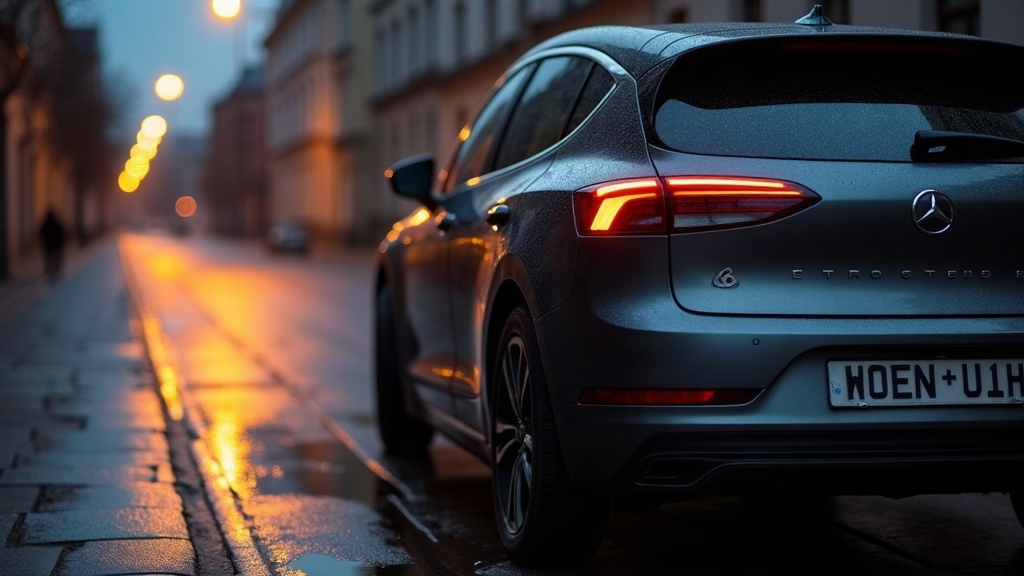
Do the EV running cost sums still stack up in 2025?
The NZ Angle
Light EVs lost their RUC exemption in April 2024, and the charge is now $76 per 1,000 km for vehicles under 3,500 kg. That is not ruinous, but it does change the maths that convinced a lot of Canterbury buyers to go electric in the first place. Add electricity prices that have crept up to around 30-35 cents per kWh for most residential plans — and higher still if you are on a time-of-use tariff and charging at the wrong hour — and the gap between EV and petrol running costs is narrower than the showroom conversation usually admits. Petrol is sitting around $2.50-$2.80 per litre for 91 across most of Canterbury right now. A late-model Japanese petrol import, a Mazda Axela or Toyota Corolla Hybrid, returns 5-7 litres per 100 km in real conditions. That gives you a workable baseline to compare against. The Clean Car Discount is gone, so there is no upfront subsidy softening the purchase price of a new EV either. What you are left with is the actual ownership equation: purchase price, registration costs, servicing, and what it genuinely costs to move the car down the road every kilometre.
RUC charges are locked in, power prices keep climbing. We crunch the real per-kilometre costs of the Nissan Leaf, BYD Atto 3, and MG ZS EV against a petrol Japanese import.
The EV pitch used to be simple. Pay more upfront, save on fuel, come out ahead over three or four years. That pitch is still broadly true, but the numbers need revisiting. RUC is real now, electricity is not cheap, and used EV prices have softened enough that the comparison cars have changed too.
Let's work through the three EVs you will actually find on Canterbury forecourts in volume: the Nissan Leaf, the BYD Atto 3, and the MG ZS EV. Then stack them against a sensible petrol benchmark.
What it costs to move each car per kilometre
The Nissan Leaf is the reference point. A 40 kWh model — the most common import — uses roughly 15-17 kWh per 100 km in real-world Canterbury driving, which includes cold mornings, heated seats, and the occasional motorway run to Rangiora. At 32 cents per kWh on a standard residential plan, that is $4.80-$5.44 in electricity per 100 km. Add RUC at $7.60 per 100 km and you land at $12.40-$13.04 per 100 km all-in on energy costs. The Leaf's real-world range on an older battery is also worth flagging: many 2018-2019 examples are showing 120-150 km of usable range, not the 270 km on the sticker.
The BYD Atto 3 is a bigger, newer car with a 60.5 kWh battery and a more honest 400-plus km of real range. Consumption sits around 16-18 kWh per 100 km. Same electricity rate gets you $5.12-$5.76 per 100 km, plus the same $7.60 RUC, landing at $12.72-$13.36. Marginally worse than the Leaf per kilometre, but you are getting a full-size SUV with a battery that is not a decade old. Used examples are sitting at $35,000-$45,000 at the moment.
The MG ZS EV sits between the two. The 50.3 kWh Long Range version uses 16-17 kWh per 100 km typically, putting energy costs at $5.12-$5.44 before RUC, so $12.72-$13.04 per 100 km. Used pricing has fallen hard — you can pick up a 2022 example for under $30,000 now, which changes the ownership argument meaningfully.
For comparison, a 2019-2021 Toyota Corolla Hybrid imported from Japan, averaging 5.5 litres per 100 km at $2.70 per litre, costs $14.85 per 100 km in fuel. A non-hybrid Mazda Axela at 7 litres per 100 km costs $18.90. Registration and WoF costs are comparable across the board. Servicing on the EV side is lower — no oil, fewer wear items — probably $200-$400 per year less than a petrol car in a typical Canterbury ownership pattern.
Where the Leaf starts to lose ground
The Leaf's problem is battery age. A 2018 Leaf with 80,000 km on it might have a battery showing 10-12 bars on the gauge, which sounds acceptable until you are stuck in a Christchurch winter with the heater on and 90 km of indicated range. The degradation is not always visible in the purchase inspection, and most buyers only discover it in the first Canterbury frost.
The 30 kWh Leaf, still common in the sub-$15,000 bracket, is worse again. Real-world range of 100-130 km, higher consumption per km as the battery ages, and replacement battery cost if you ever go that route runs $8,000-$12,000 fitted. At that point, the running cost advantage over a $14,000 Corolla Hybrid evaporates entirely.
The Atto 3 and MG avoid this because they are newer and because BYD and MG have been more conservative with usable battery capacity, which tends to protect long-term health. The chemistry is also different. The Atto 3 uses LFP cells, which tolerate regular 100% charging without the degradation penalty that NMC chemistry (the Leaf) suffers.
Whether the sums still stack up
For a Canterbury buyer doing 15,000 km a year, the saving over a petrol Corolla Hybrid is roughly $300-$400 annually on running costs once you factor RUC in alongside electricity. That is meaningful, but it is not the $1,500-plus annual saving that EV advocates were quoting two years ago when petrol was $3.20 and EVs were exempt from RUC.
The purchase price gap has closed too. A tidy 2021 Corolla Hybrid sits at $26,000-$30,000. A 2022 MG ZS EV is $27,000-$32,000. You are not making up the difference in fuel savings over a standard ownership period anymore, at least not quickly.
The Atto 3 makes the best financial argument of the three EVs if you are buying new or near-new: genuinely useful range, a battery that should hold up over time, and a per-kilometre cost that beats petrol at current prices. The older Leaf makes sense only if the price is low enough that you can absorb the battery uncertainty. The MG sits in the middle — better value now than it was twelve months ago, honest range, reasonable costs.
None of these cars are a bad choice. But the sums are tighter than they look from the outside, and anyone who tells you EVs are obviously cheaper to run in 2025 has not done the arithmetic lately.
By Auto Luxe. See our editorial standards or email sales@autoluxe.co.nz with corrections.
More automotive
EV road user charges: what Canterbury drivers are actually paying
Light EV RUCs have been running for a year now. We crunch the real numbers on what Canterbury owners are paying versus petrol savings, and whether used EVs still make financial sense.
EVs under $25k: what Canterbury driving actually costs
RUC rates have settled, used Leafs and BYD Atto 3s are everywhere on Trade Me. Here's what the numbers actually look like for a South Island buyer.

Ex-lease Leafs and Atto 3s under $20k: what Canterbury buyers need to know
Used EVs are suddenly affordable, but battery health and RUC costs are the real variables. Here is what first-time electric buyers in Canterbury should check before signing anything.