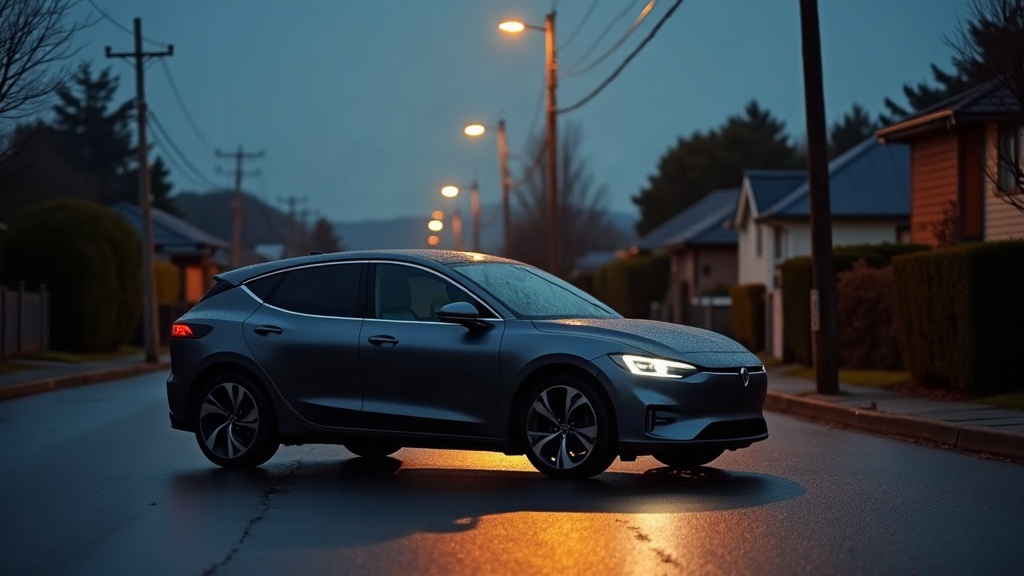
Do EVs still save you money in Canterbury in 2026?
The NZ Angle
Light EVs lost their RUC exemption at the end of 2023, and the rate has been climbing since. From 1 April 2025, the RUC rate for light EVs sits at $76 per 1,000 kilometres, with further increases signalled as EV numbers grow and the government works to recover roading revenue lost from falling petrol excise. At the same time, electricity retailers across New Zealand have been pushing prices up steadily, with many Christchurch households now paying between 32 and 38 cents per kilowatt-hour on standard plans, depending on their retailer and whether they have a controlled hot water cylinder eating into their rate options. The Clean Car Discount, which made new EVs considerably cheaper to buy, ended in 2023, so used import prices have largely settled without that artificial floor under them. A second-generation Nissan Leaf with a 40kWh battery is sitting around $18,000 to $24,000 in the Canterbury used market right now. An MG ZS EV fetches $28,000 to $36,000, and BYD Atto 3 examples are starting to appear from $38,000 upward. Against those prices, the running cost equation matters more than it did when EVs were heavily subsidised and power was cheap.
RUC charges are locked in, power prices keep rising, and petrol sits around $2.60 a litre. We crunch the real per-kilometre numbers for the Leaf, MG ZS EV and BYD Atto 3.
The honest answer is: it depends on how you charge, how far you drive, and whether you bought smart.
The EV cost argument was always built on a few assumptions — cheap overnight power, no road user charges, and a meaningful gap to petrol prices. Two of those three have now narrowed significantly. So let's put some actual numbers on it and see what's left.
The cost of moving a kilometre
Start with the Nissan Leaf. A 40kWh second-gen Leaf uses roughly 15 to 17kWh per 100km in real Canterbury driving — hills, heaters running through winter, the occasional motorway run to Rangiora. Call it 16kWh as a working average. At 35 cents per kWh on a standard home rate, that's $5.60 per 100km in electricity alone. Add the RUC at $7.60 per 100km and you're sitting at $13.20 per 100km all-up on running costs, excluding maintenance.
The MG ZS EV is a heavier, less efficient car. Real-world consumption sits closer to 18 to 20kWh per 100km. At the same power rate, that's $6.65 to $7.00 in electricity, plus the same RUC, landing around $14.25 to $14.60 per 100km.
The BYD Atto 3 is the most efficient of the three on paper, with a claimed 15.9kWh per 100km. In practice, Canterbury owners are seeing 17 to 18kWh — the heat pump works hard in a Christchurch winter. Charge at home and you're around $5.95 to $6.30 in power, which gives a combined running cost of roughly $13.55 to $13.90 per 100km.
Now compare that to a petrol equivalent. A Toyota RAV4 petrol — the obvious like-for-like against the ZS and Atto — burns about 7.5 to 8.5 litres per 100km in mixed driving. At $2.65 per litre, that's $19.90 to $22.50 per 100km, and that includes fuel excise which covers roading. No separate RUC. A Honda Jazz or Toyota Corolla Cross hybrid against the Leaf? Around 5.5 to 6.5 litres per 100km, so $14.60 to $17.20.
The gap is smaller than the EV marketing of 2021 would have you believe, but it's still real. The Leaf versus a Corolla Cross hybrid is almost a wash on running costs once you factor everything in. The larger EVs against a petrol SUV still deliver a meaningful saving, roughly $6 to $9 per 100km depending on which cars you're comparing.
Where the maths breaks differently
If you can charge on an off-peak or EV-specific power plan, the equation shifts back toward EVs. A few Canterbury retailers still offer controlled or time-of-use rates around 18 to 22 cents per kWh overnight. Drop the Leaf's charging cost to 20 cents and the electricity portion falls to $3.20 per 100km. Add RUC and you're at $10.80 total — a clear win over almost any petrol equivalent.
The catch is that not every household can access those rates easily, and a two-car family with mismatched schedules often ends up charging at peak times more than they planned to.
Public charging flips the equation entirely. On a public fast charger at 65 to 80 cents per kWh — which is common across Christchurch right now — the Atto 3 costs around $12.75 to $14.40 in electricity alone per 100km, before RUC. That's not cheaper than petrol at all. Anyone buying an EV expecting to live on public charging is going to be disappointed by the numbers.
Battery health matters too, and this is where the Leaf market requires some caution. A 40kWh Leaf with significant battery degradation — say, down to 75 or 80 percent capacity — will charge slower, range less, and use proportionally more energy per kilometre in the kind of hilly, cold-weather driving that Canterbury dishes out. Check the battery state of health before you buy. A cheap Leaf with a tired pack can erode its own running cost advantage quickly.
So do the savings still stack up?
For a high-kilometre driver who charges at home overnight on a decent plan, yes, the savings are still real. Do 20,000km a year and the running cost difference between a Leaf and a Corolla Cross hybrid might be modest — a few hundred dollars — but the gap between a BYD Atto 3 and a petrol RAV4 is still worth $1,200 to $1,800 annually in fuel and RUC, depending on your driving pattern.
For a lower-kilometre driver — say, 10,000km a year — the running cost saving gets harder to justify against the price premium you're paying for the EV in the first place. At that usage level, the payback period on the extra purchase cost starts stretching out past the point where it makes straightforward financial sense.
The EV still wins on maintenance. No cam belt, no oil changes, regenerative braking means rear pads last a long time. That adds a few hundred dollars a year back into the EV column that the per-kilometre analysis doesn't capture.
It used to be easy to say EVs were cheaper to run. Now it's more accurate to say they can be cheaper to run, if you're set up for it.
By Auto Luxe. See our editorial standards or email sales@autoluxe.co.nz with corrections.
More automotive
EV running costs in 2026: do the numbers still work for Canterbury buyers?
RUC charges are locked in, power prices keep rising, and petrol has settled. We crunch the real per-kilometre costs for the Leaf, MG ZS EV and BYD Atto 3 against their petrol rivals.

Leaf, Aqua or X-Trail: what it actually costs per kilometre in Canterbury
The Clean Car Discount is gone, light EV RUCs are here to stay, and petrol is sitting above $2.50. Here's what the numbers actually look like for Canterbury mixed-use driving.
Leaf vs petrol hatch: what the running costs actually look like in 2026
RUCs on light EVs have been in place long enough to do the maths properly. Here's what a Canterbury commuter actually pays each year in a used Nissan Leaf versus a comparable petrol hatchback.