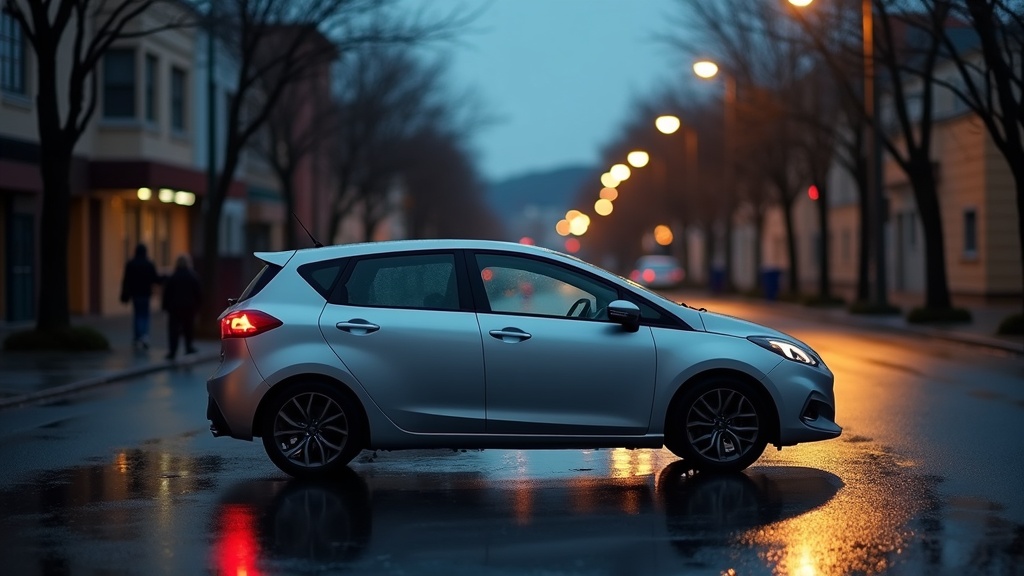
A year on from the Clean Car Discount: where EV prices actually landed
The NZ Angle
The Clean Car Discount was scrapped by the incoming National-led government in December 2023, ending rebates that had been worth up to $8,625 on new EVs and meaningful sums on used imports. The policy had directly inflated demand for affordable Japanese-import EVs, particularly the Nissan Leaf and Toyota Aqua, by making them genuinely competitive against petrol alternatives at the same price point. When the rebate disappeared, the question was whether asking prices would hold or collapse. They collapsed. A 2018 40kWh Leaf that was sitting at $19,000-$22,000 through mid-2023 dropped hard, and by mid-2024 you were regularly seeing compliant, reasonable-mileage examples in the $13,000-$16,000 range on Trade Me. The Aqua, never as sensitive to the rebate because it's a hybrid rather than a full EV, fell less sharply but still softened by $2,000-$3,000 across most model years. Both cars also carry ongoing RUC obligations now that the EV RUC exemption ended in March 2024, adding roughly $1,200-$1,500 per year for a typical 15,000km driver. That running cost shift is real, and it's part of why buyer enthusiasm cooled faster than some dealers expected.
The Clean Car Discount ended in December 2023. Twelve months later, used Leaf and Aqua prices have shifted significantly. Here's what the market data actually shows.
Cast your mind back to late 2022 and early 2023. Japanese-import Nissan Leafs were selling inside a week. Dealers were holding stock back. A 2017 Leaf with 60,000km and a reasonable battery was touching $20,000 without anyone blinking. The Clean Car Discount had done what subsidies do: it pulled forward demand, inflated perceived value, and made a $14,000 car feel like an $18,000 car because the gap to a petrol Corolla looked smaller than it actually was.
That's gone now. And a year on from the abolition, the used EV market has re-priced in ways that are worth understanding before you make a move.
What Leafs are actually selling for
The 2018-2019 40kWh Leaf is the volume car to watch. Through most of 2022 it sat at $19,000-$23,000 for good examples. By the middle of 2024 that same car was landing at $13,500-$17,000 depending on battery health, compliance date, and kilometres. That's a real-money drop of five to six thousand dollars on a car that was already an affordable secondhand option.
The earlier 24kWh cars have been hit harder in percentage terms. A 2015 Leaf with 70,000km was never worth $15,000 except in the distorted market of 2022-2023. Those are now sitting at $8,000-$11,000, which is closer to honest money given the battery anxiety that comes with the smaller pack.
Where it gets interesting is the 62kWh e+ models, the 2019-onwards cars with real range. Those haven't softened as much, because genuine range anxiety is a bigger buying barrier than price anxiety for a lot of buyers. A tidy 2020 Leaf Plus is still holding $24,000-$28,000. That premium is probably justified. You get a car that can do Christchurch to Kaikoura without planning your charging stops like a military operation.
One thing buyers need to factor: RUCs. The exemption ended in March 2024, and at the current rate of $76 per 1,000km, you're looking at around $1,140 a year on 15,000km. That's not crippling, but it changes the operating cost comparison against a petrol hybrid, and it's real money that wasn't in the calculation two years ago.
The Aqua picture
The Toyota Aqua is a different animal. It's a petrol-electric hybrid, not a plug-in, so it was never as directly subsidised under the Clean Car Discount, and it doesn't pay RUCs. The softening in Aqua prices has been gentler and more gradual.
A 2015-2017 Aqua was trading at $14,000-$18,000 at peak. Those same cars are now $11,000-$15,000, a drop of around $2,000-$3,000 depending on the example. That's a market correction rather than a collapse. The Aqua's fundamentals are still solid: around 4.5L/100km in real-world mixed driving, Toyota reliability, parts that any Christchurch workshop can source, and a hybrid battery that doesn't carry the same anxiety as a full EV pack because you're never stranded if it degrades.
The second-generation Aqua, which arrived in Japan in 2021 and has been filtering into the NZ compliance pipeline more recently, is a different proposition. It's a better car with a bipolar nickel-metal hydride battery that Toyota claims is more durable in cold conditions. Early 2022 examples are appearing at $19,000-$23,000 compliant. That's reasonable money for what is genuinely a well-engineered small hybrid.
Has the floor arrived yet
Honest answer: probably, for Leafs. The 40kWh cars have repriced to something close to their real utility value, and at $14,000-$16,000 for a good one, there's a genuine argument that they're the best-value urban commuter in the country right now. Electricity is still significantly cheaper than petrol per kilometre even with RUCs included, servicing costs are low, and the cars are well understood by the compliance industry.
The risk is battery health. At 60,000-90,000km on a Japanese-import Leaf, you should be asking for a battery health report, not just taking the seller's word that it's fine. A Leaf showing 10 or 11 bars on the dash is acceptable. Eight bars is a problem. Nissan's battery capacity warranty doesn't help you on an import, so what you buy is what you live with.
For Aquas, the floor feels less certain. There's still solid demand, the cars hold up well at 150,000km if the hybrid battery is intact, and supply from Japan remains consistent. If you're buying, a 2016-2018 Aqua G or S grade at $12,000-$14,000 with a full service history is close to a safe bet. The hybrid battery on these runs to around $2,500-$3,500 to replace through a specialist if it fails, which is worth knowing before you buy one with 130,000km on it.
Buyers who held off through 2023 and early 2024 waiting for prices to drop made the right call. Whether waiting another six months pays off further is less clear. The sharp correction has happened. What's left is the usual secondhand market noise.
By Auto Luxe. See our editorial standards or email sales@autoluxe.co.nz with corrections.
More automotive
EV road user charges: what Canterbury drivers are actually paying
Light EV RUCs have been running for a year now. We crunch the real numbers on what Canterbury owners are paying versus petrol savings, and whether used EVs still make financial sense.
EVs under $25k: what Canterbury driving actually costs
RUC rates have settled, used Leafs and BYD Atto 3s are everywhere on Trade Me. Here's what the numbers actually look like for a South Island buyer.

Ex-lease Leafs and Atto 3s under $20k: what Canterbury buyers need to know
Used EVs are suddenly affordable, but battery health and RUC costs are the real variables. Here is what first-time electric buyers in Canterbury should check before signing anything.