
What Canterbury EV ownership actually costs per kilometre in 2026
The NZ Angle
New Zealand's road user charge system brought light EVs into line with diesel vehicles from 1 April 2024, ending the free-road exemption that had made the cost case for electric cars look better than it was. The current RUC rate for light EVs sits at $76 per 1,000 kilometres, the same as light diesel vehicles, and it is indexed to rise. Canterbury EV owners are also buying power in a market where residential electricity prices have climbed steadily, with average rates now sitting around 33-38 cents per kilowatt-hour depending on your retailer and plan. On the other side of the ledger, petrol is hovering between $2.50 and $3.00 per litre at the pump across most of the South Island. The Clean Car Discount, which softened the upfront price gap between EVs and petrol cars, ended in December 2023. That means Canterbury buyers are now making decisions without a subsidy cushion, on the real numbers, with RUC factored in. What that produces, when you actually run the maths on a common used import pairing, is a picture that is more nuanced than either the EV advocates or the petrol loyalists tend to admit.
RUC charges are locked in, power prices keep climbing. Here's what the numbers genuinely look like for Canterbury EV owners compared to a petrol import doing the same kilometres.
The story that sold a lot of Leafs and Teslas in Canterbury went like this: pay more upfront, save a fortune running it. No petrol, no RUC, cheap electricity. The total cost of ownership argument was real, and for a period it held up. It holds up less cleanly now.
RUC for light EVs is $76 per 1,000 kilometres. Power prices have moved. The Clean Car Discount is gone. Running the actual numbers for a Canterbury driver doing, say, 15,000 kilometres a year tells a more honest story.
The EV side of the ledger
Take a 2019-2020 Nissan Leaf 40kWh, which is one of the most common EV imports in Christchurch right now. Real-world consumption in Canterbury conditions, factoring in cold mornings, the heater doing work from June through August, and some motorway running on the Southern Motorway extension, sits around 17-18kWh per 100 kilometres. Call it 17.5kWh as a working number.
At 15,000 kilometres a year, that's 2,625kWh consumed. At 35 cents per kWh, a reasonable mid-point for a standard Orion-network residential tariff in 2026, you're spending $919 a year on electricity for driving. If you're on a good EV night rate closer to 25 cents, that drops to $656. If you're charging at work or public chargers at 55-65 cents, it climbs past $1,400.
Then add RUC. At $76 per 1,000km, 15,000 kilometres costs $1,140. There is no avoiding this number.
Total energy-plus-RUC cost for the Leaf: somewhere between $1,796 and $2,540 a year depending on where and when you charge. Call the middle-ground reality about $2,100.
Servicing on a Leaf is genuinely low. No oil, no timing belt, no exhaust. Budget $300-400 a year for tyres, brake fluid, wiper blades, and the occasional software update or 12V battery. Brake pads last a long time with regenerative braking doing most of the work.
The petrol side of the ledger
A comparable used import in the same bracket is a 2018-2019 Toyota Aqua or a Honda Fit Hybrid. The Aqua is the fairer comparison: similar size, similar purchase price in the current used market, similar urban-friendly profile.
The Aqua averages around 4.5-5.0 litres per 100 kilometres in real Canterbury driving. It's a light car with a good hybrid system and it does well in stop-start city traffic. On the open road it's less impressive, but around Christchurch it earns its economy figures.
At 4.7L/100km and 15,000 kilometres, that's 705 litres of petrol a year. At $2.75 per litre, a fair average across 2026 so far, you're spending $1,939 on petrol. No RUC applies to petrol vehicles.
Servicing costs more than the Leaf. Oil changes, filters, and the general mechanical overhead of a combustion drivetrain add up to $600-900 a year for a well-maintained Aqua, assuming no surprises.
Total energy-plus-service cost: roughly $2,539-2,839 a year.
What the gap actually looks like
The EV wins on running costs, but the margin is narrower than the pre-RUC narrative suggested. On these figures, a Canterbury driver saves somewhere between $400 and $700 a year running the Leaf over the Aqua, assuming home charging at a reasonable rate. That's real money over five years, somewhere between $2,000 and $3,500.
But the Leaf purchased today needs a battery health check. A 2019 40kWh car with 60,000-plus kilometres on it may be showing degradation. If the pack is down to 80 percent capacity, your real-world range in a Canterbury winter drops noticeably, and your consumption per kilometre climbs because you're asking more of what's left. That affects the numbers.
The Aqua, by contrast, is a known quantity. The hybrid system is reliable, parts are cheap and available, and a good example with a full service history will run without drama for years. The running cost gap doesn't close the mechanical risk gap, but it's worth factoring in.
There's also the question of what you're doing with the car. If your 15,000 kilometres is mostly Christchurch city driving with the odd run to Hanmer or Kaikoura, the Leaf is genuinely the better tool. If you're running regularly to Queenstown or doing the West Coast road in winter, the range anxiety calculation changes and so does the value proposition.
The honest answer in 2026 is that EVs still win on per-kilometre cost for Canterbury drivers who charge at home and stay mostly urban. The margin is real but not dramatic. RUC has taken a meaningful bite. Power prices have taken another. The Leaf is still worth considering. So is the Aqua. Neither choice is wrong; they just suit different driving patterns, and the numbers are close enough that it comes down to how and where you actually use the car.
By Auto Luxe. See our editorial standards or email sales@autoluxe.co.nz with corrections.
More automotive
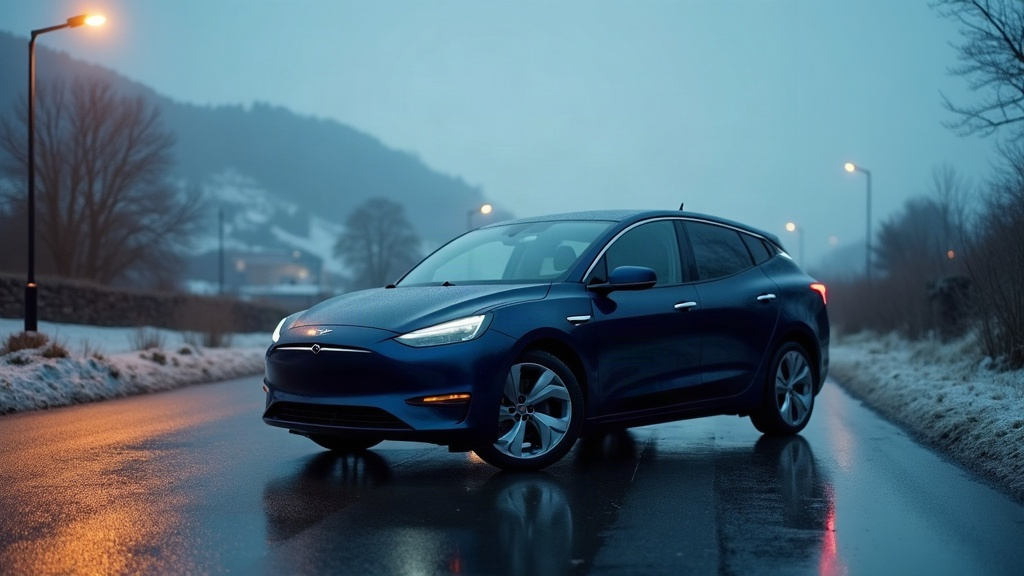
What Canterbury EV owners are actually paying per km in 2026
The RUC exemption for light EVs is gone. We run the real numbers on what it costs to drive a Leaf or Model 3 in Canterbury versus a petrol Prius or diesel X-Trail.

Do the running costs still add up for used EVs in Canterbury?
RUC charges are locked in, power prices keep climbing. We crunch the real per-kilometre costs for the Leaf, MG ZS EV and BYD Atto 3 against a petrol alternative.
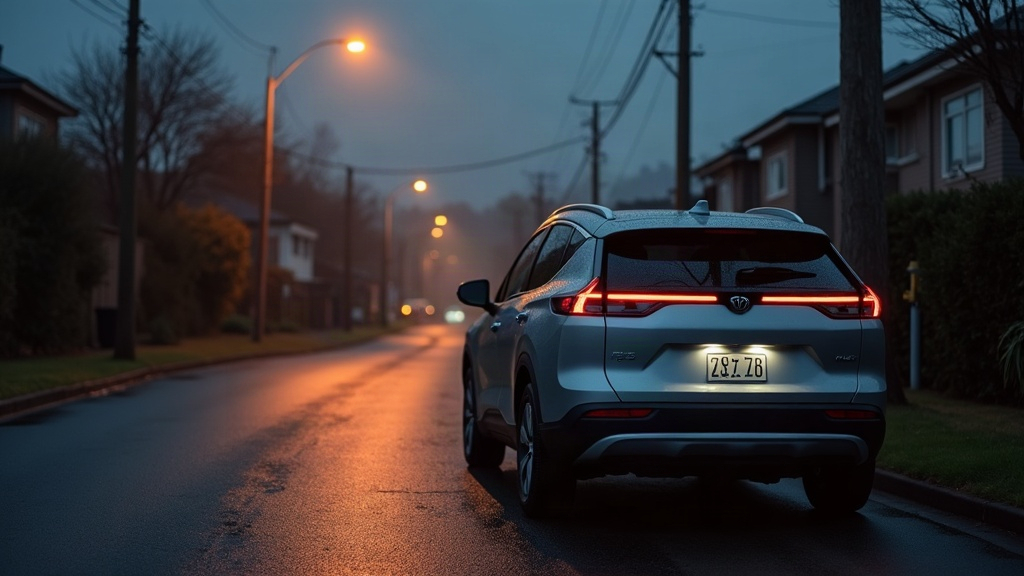
What Canterbury EV owners are actually paying in RUCs now the exemption is gone
The light EV RUC exemption expired, and per-kilometre charges are now locked in. Here's what Christchurch drivers are genuinely paying in 2026 compared to a petrol equivalent.