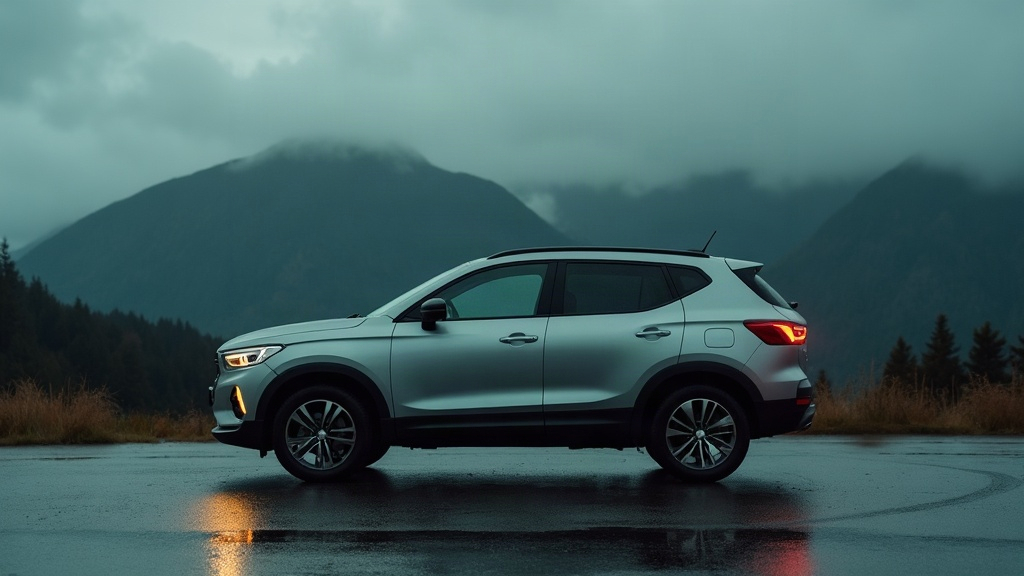
Do the running costs still add up for used EVs in Canterbury?
The NZ Angle
Light EVs lost their RUC exemption in April 2024, and the rate has since settled at $76 per 1,000km for vehicles under 3,500kg. That's not the end of the world, but it does change the maths that convinced a lot of Canterbury buyers to go electric in the first place. Add electricity prices that have crept up to around 30-35 cents per kWh for most residential plans, and the cost-per-kilometre gap between a used EV and a comparable petrol import is narrowing. The Clean Car Discount is already gone, so there's no upfront subsidy softening the purchase price either. A second-generation Leaf is sitting at $18,000-$24,000 on the used market right now. An MG ZS EV first gen is around $22,000-$28,000. A BYD Atto 3 in usable spec is closer to $32,000-$38,000. Against those numbers, a 2018-2019 Toyota RAV4 petrol or a similarly aged Mazda CX-5 petrol comes in at $22,000-$28,000 with known parts supply, straightforward servicing, and no RUC admin to manage. Whether the EV still wins on running costs depends entirely on how many kilometres you cover and where you charge.
RUC charges are locked in, power prices keep climbing. We crunch the real per-kilometre costs for the Leaf, MG ZS EV and BYD Atto 3 against a petrol alternative.
The argument for buying a used EV in New Zealand used to be almost automatic. No petrol, minimal servicing, and no road user charges while the exemption held. That last bit expired in April 2024, and the landscape shifted enough that it's worth running the actual numbers rather than assuming the EV still wins.
For this comparison, we're looking at the three most common used EVs on NZ roads right now: the Nissan Leaf (second generation, 40kWh), the MG ZS EV (first generation, 44.5kWh), and the BYD Atto 3 (60.5kWh standard range). The petrol benchmark is a 2018-2019 Mazda CX-5 2.0 petrol, which sits in a similar size and price bracket to the MG and Atto 3.
The EV cost per kilometre
Start with the Leaf. A 40kWh battery with real-world range of around 200-220km in Canterbury conditions — less in winter, more on the open road — means consumption of roughly 18-20kWh per 100km once you account for charging losses. At 32 cents per kWh on a standard home plan, that's $5.76-$6.40 per 100km in electricity. Add the RUC at $7.60 per 100km, and you're at $13.36-$14.00 per 100km all up. That's before tyres, WoF, and the occasional 12V battery replacement.
The MG ZS EV first gen uses a bit more power — call it 17-19kWh per 100km in real use — so electricity costs land around $5.44-$6.08 per 100km. Same RUC rate applies. Total: $13.04-$13.68 per 100km.
The Atto 3 is the most efficient of the three in warmer conditions, but Canterbury winters hurt it. Budget 18-20kWh per 100km, so $5.76-$6.40 in electricity, plus the $7.60 RUC. You're at $13.36-$14.00 per 100km, similar to the Leaf despite the larger battery.
The consistent theme: once RUC is in the picture, all three sit in the $13-$14 per 100km range for energy and road costs alone.
What the CX-5 petrol actually costs to run
A 2018-2019 CX-5 2.0-litre petrol returns around 7.5-8.5L per 100km in mixed Canterbury driving. At $2.75 per litre — a reasonable middle of the current range — that's $20.63-$23.38 per 100km in fuel. No RUC to pay, obviously.
So the petrol still costs noticeably more to run in pure energy terms: roughly $7-$9 per 100km more than the EVs. Over 15,000km a year, that's $1,050-$1,350 in savings running an EV. Over 20,000km, closer to $1,400-$1,800.
That sounds convincing until you factor in the rest.
Where the EV advantage erodes
Servicing on the Leaf and MG ZS EV is genuinely cheaper. No oil, no transmission fluid changes, regenerative braking extends pad life substantially. Budget around $150-$200 per year for a basic safety check and top-ups versus $350-$450 for the CX-5 including oil and filter. That's a real saving.
Tyres are not a saving. EVs are heavier, and regenerative braking doesn't eliminate tyre wear the way people assume. Budget the same $600-$800 per axle set you'd spend on the Mazda.
Battery degradation on the second-gen Leaf is the number that matters most and gets mentioned least. Many 40kWh Leafs on the market are showing 80-85% state of health, which in practice means the real-world range is 170-185km rather than the 220km the specs suggest. That compresses your charging window on longer South Island runs and pushes some owners toward more frequent top-ups at higher commercial charging rates. If you're relying on Leaf EV range to get from Christchurch to Queenstown without careful planning, check the battery health certificate before you buy.
The MG ZS EV first gen holds up better on range, partly because buyers often ran them harder and the battery management is more conservative. The BYD Atto 3 is too new in the used market to have a clear degradation pattern at 100,000km-plus, but early signs from overseas suggest it handles temperature cycling well.
Insurance is broadly similar across all four vehicles in Canterbury. Comprehensive cover on a $25,000 used EV runs $900-$1,300 annually depending on your insurer and driving history, comparable to the CX-5.
The purchase price spread matters too. You can buy a solid 2018 CX-5 petrol for $24,000-$26,000 right now. A comparable Leaf costs slightly less but delivers less car in terms of size and range. The Atto 3 at $32,000-$38,000 requires either a longer ownership horizon to recoup the cost difference in fuel savings, or a high annual mileage to close the gap.
At 15,000km per year and $2.75 petrol, the annual running cost saving from the EV is real but modest — $1,200-$1,600 depending on the model. That pays back the purchase price premium of a Leaf over the CX-5 in two to three years. It does not pay back the Atto 3's premium in any reasonable timeframe at current electricity and RUC rates unless you're covering 25,000km-plus annually.
The EV still makes economic sense for the right buyer: high mileage, home charging, Leaf or ZS EV rather than Atto 3, and a realistic read on battery condition before purchase. For the average Canterbury driver doing 12,000-15,000km a year with no dedicated home charger, the numbers are close enough that the petrol CX-5 is a perfectly rational choice.
By Auto Luxe. See our editorial standards or email sales@autoluxe.co.nz with corrections.
More automotive
What Canterbury EV owners are actually paying in RUCs now the exemption is gone
The light EV RUC exemption expired, and per-kilometre charges are now locked in. Here's what Christchurch drivers are genuinely paying in 2026 compared to a petrol equivalent.
Do EVs still save you money in Canterbury in 2026?
RUC charges are locked in, power prices keep rising, and petrol sits around $2.60 a litre. We crunch the real per-kilometre numbers for the Leaf, MG ZS EV and BYD Atto 3.
EV running costs in 2026: do the numbers still work for Canterbury buyers?
RUC charges are locked in, power prices keep rising, and petrol has settled. We crunch the real per-kilometre costs for the Leaf, MG ZS EV and BYD Atto 3 against their petrol rivals.