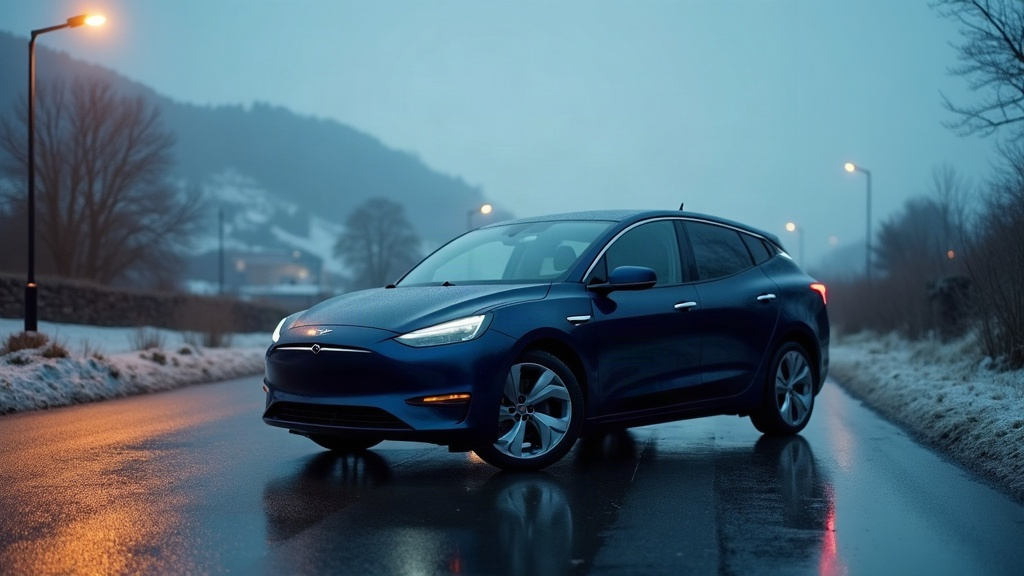
What Canterbury EV owners are actually paying per km in 2026
The NZ Angle
From 1 April 2024, light electric vehicles lost their road-user charge exemption and now pay RUCs like any other vehicle. The current rate sits at $76 per 1,000km for light EVs under 3,500kg, charged in advance through the NZTA system the same way diesel drivers have always done it. For Canterbury owners, this changes the maths that made an EV feel like a no-brainer a couple of years ago. The Clean Car Discount is also long gone, having wound up at the end of 2023, so there is no upfront subsidy softening the purchase price either. What you are left with is a straight cost-per-kilometre comparison: what you pay to run your 2019 Nissan Leaf versus what your neighbour pays to run a 2019 Toyota Prius or a 2018 Nissan X-Trail diesel. The numbers are closer than EV advocates would like to admit, particularly for drivers who do modest annual kilometres. Canterbury winters also raise a real question about EV range, since battery performance drops in the cold and a Christchurch frost is not the same as an Auckland drizzle. None of this makes EVs a bad choice. It makes them a calculated choice, and the calculation has changed.
The RUC exemption for light EVs is gone. We run the real numbers on what it costs to drive a Leaf or Model 3 in Canterbury versus a petrol Prius or diesel X-Trail.
The RUC exemption that helped sell a generation of used EVs to New Zealand buyers quietly expired, and in 2026 the full charge applies. Light EVs now pay $76 per 1,000km in road-user charges. That is not a disaster, but it is not nothing either, and it changes the per-kilometre story considerably for anyone who bought a Leaf or a Model 3 partly on the promise of cheap running costs.
Let's put some real numbers around this.
A 2019 Nissan Leaf 40kWh, one of the most common used EVs in New Zealand right now, will sit on the market around $18,000 to $22,000 depending on kilometres and condition. Charge it at home on a standard overnight rate and you are looking at roughly $0.30 per kWh in Canterbury, maybe a fraction less on a controlled rate. The Leaf does around 6km per kWh in mixed real-world driving, less in winter. So electricity cost alone is about $0.05 per km. Add the RUC at $76 per 1,000km and you are at $0.126 per km before you touch insurance or servicing.
A 2019 Toyota Prius hybrid sitting at a similar price point, say $19,000 to $23,000, runs on petrol at around 4.5L per 100km in genuine everyday use. With petrol at $2.70 per litre, that is $0.122 per km in fuel alone. No RUCs, because it is a petrol vehicle. So the Prius and the Leaf are now within a whisker of each other on pure running cost per kilometre, and the Prius does not require you to think about charging infrastructure or range anxiety on a run to Queenstown.
Where diesel still makes a case
A 2018 Nissan X-Trail 2.0 diesel is a different calculation again. These sit around $20,000 to $26,000 for a decent example with sensible kilometres. Diesel consumption around 7.0L per 100km is realistic for mixed driving with a family load. At $2.10 per litre for diesel, that is $0.147 per km in fuel. Add RUCs at the light diesel rate, currently $76 per 1,000km for vehicles under 3,500kg, and you are at $0.223 per km.
On fuel and RUCs alone, the diesel X-Trail is notably more expensive to run than either the Leaf or the Prius. Where it makes its case is capability: genuine all-wheel drive, real towing capacity, space that a Leaf cannot match, and no range concerns on a Christchurch to Hanmer Springs return in July. If you actually use that capability, the extra running cost might be the price of having the right tool.
For urban Canterbury use, though, the X-Trail diesel is hard to justify on the numbers in 2026.
The 15,000km driver versus the 25,000km driver
Annual kilometres matter more than people realise when comparing these cars, and the EV's case weakens at lower mileage.
Drive 15,000km a year in the Leaf and you are paying $1,890 in RUCs annually. Drive 25,000km and that becomes $1,900 in RUCs alone, but the lower fuel cost compounds over the bigger distance and the EV starts to pull ahead again in total running costs. The Prius stays competitive throughout because its fuel economy is genuinely good and there are no RUCs at all.
At 15,000km annually, the Prius is arguably the better financial choice right now for a Canterbury driver who charges from a standard home setup and is not near a cheap overnight electricity plan. It is simpler, has no RUC admin overhead, and the hybrid system on a well-maintained Prius at 120,000km is about as reliable as used cars get.
At 25,000km or more, the EV math improves, provided you have home charging sorted. A Level 2 charger installation in a Canterbury home runs $1,500 to $2,500 all up, and that cost needs to sit in the calculation for the first couple of years.
There are two other factors Canterbury EV drivers talk about that do not show up in the per-km numbers. First, battery degradation. A 2019 Leaf 40kWh with 80,000km might give you 220 to 240km of real-world range in summer, considerably less on a cold Christchurch morning in July. The 30kWh Leaf, still common in the market at $14,000 to $17,000, is a genuinely short-range car in winter conditions and probably not the right choice for anyone doing regular intercity runs. Second, resale. The EV resale market has softened as supply has grown and the subsidy incentive has disappeared. Buying a $20,000 Leaf today and selling in three years is not the clear financial win it looked like in 2021.
None of this makes EVs wrong. It makes the calculation more honest. The exemption was always a policy lever to drive uptake, not a permanent feature of EV economics. The cars have to stand on their own merits now, and for high-mileage drivers with home charging, they mostly still do. For everyone else, the Prius is sitting there looking quite sensible.
By Auto Luxe. See our editorial standards or email sales@autoluxe.co.nz with corrections.
More automotive

Do the running costs still add up for used EVs in Canterbury?
RUC charges are locked in, power prices keep climbing. We crunch the real per-kilometre costs for the Leaf, MG ZS EV and BYD Atto 3 against a petrol alternative.

What Canterbury EV owners are actually paying in RUCs now the exemption is gone
The light EV RUC exemption expired, and per-kilometre charges are now locked in. Here's what Christchurch drivers are genuinely paying in 2026 compared to a petrol equivalent.
Do EVs still save you money in Canterbury in 2026?
RUC charges are locked in, power prices keep rising, and petrol sits around $2.60 a litre. We crunch the real per-kilometre numbers for the Leaf, MG ZS EV and BYD Atto 3.