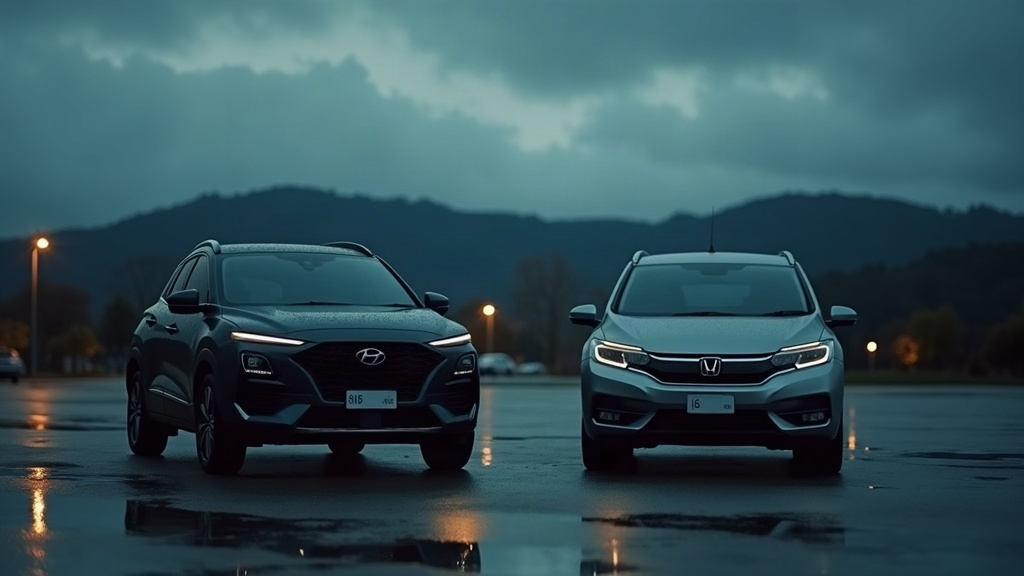
Used Leaf and Outlander PHEV prices: has the correction bottomed out?
The NZ Angle
The Clean Car Discount ran from July 2021 until the new government pulled the plug in December 2023. While it lasted, it pushed rebates of up to $8,625 onto new EVs and meaningful discounts onto low-emission used imports, which inflated the whole second-hand EV market alongside it. Dealers were pricing used Leafs and Outlander PHEVs with that tailwind baked in. When the policy vanished, so did the floor. Prices dropped, buyers went cautious, and the market spent most of 2024 finding its level. Used Nissan Leafs are now sitting in the $9,000 to $18,000 range depending on the generation and battery condition, with 30kWh 2016-era cars at the cheaper end and 40kWh 2018-2019 cars clustering around $13,000 to $16,000. Outlander PHEVs are fetching $22,000 to $34,000 for the 2015-2019 generation, with genuine variance based on odometer and whether the high-voltage battery has been serviced. Road user charges apply to both: EVs pay RUCs on distance travelled, which adds real running cost that buyers coming from petrol often underestimate. For Canterbury drivers heading into another winter with a 40kWh Leaf, the honest range in cold weather is closer to 180km than the 270km headline figure.
The Clean Car Discount is gone and winter range anxiety is real. We look at what second-hand Nissan Leafs and Mitsubishi Outlander PHEVs are actually fetching at NZ dealers right now.
There is a specific kind of buyer regret that surfaces every June in New Zealand. Someone bought a used Nissan Leaf in late 2022 when the Clean Car Discount was running hot, paid $19,500 for a 40kWh 2018 model, and has just watched the same car sell at auction for $13,800. That is not a niche experience right now. It is fairly common.
The question worth asking is whether that correction has finished, or whether there is more to come.
Where prices actually sit
Let's be direct about what the market looks like. Thirty-kilowatt-hour Leafs, the 2016 to 2017 generation, are trading in the $9,000 to $11,500 range at dealers with a warrant and some presentation. They were $14,000 to $16,000 at the peak. The 40kWh cars from 2018 and 2019 are the volume of the market right now, and they are landing between $13,000 and $16,500 depending on battery health, odometer, and whether the dealer has bothered to check the battery capacity with a proper read rather than just listing it as 40kWh and hoping no one asks. Some haven't. Ask anyway.
The e-Plus 62kWh Leaf, which started arriving here in meaningful numbers from around 2020 and 2021, is holding better. Expect $21,000 to $27,000 for a tidy example. The larger battery means real-world winter range that doesn't cause planning anxiety on a Christchurch to Hanmer run, and buyers who have thought this through are willing to pay for it.
Outlander PHEVs occupy different territory. The 2015 to 2019 generation is sitting around $22,000 to $30,000 at the credible end of the market, with outliers in both directions. The appeal is obvious: you get a proper AWD SUV, a 50-odd kilometre electric range for daily driving, and a petrol engine that removes any distance anxiety entirely. The real objection to buying one right now is the high-voltage battery. Mitsubishi used a sophisticated but not indestructible battery management system, and a 2016 Outlander PHEV with 130,000km on it may have a degraded electric range of 25km on a good day, which changes the value proposition considerably.
Getting a proper battery health check before purchase is not optional on these. It is the purchase decision.
The winter factor
Range anxiety and cold weather are not equally distributed problems. A Leaf owner in Auckland doing 40km a day is living an uncomplicated life. A Leaf owner in Dunedin or the central South Island in July is doing genuine range calculations every time they leave the driveway, and those calculations need to include cabin heating, which eats into a 40kWh pack faster than the spec sheet implies.
Frankly, the 30kWh Leaf should not be a primary vehicle for anyone living south of Taupo who does occasional inter-city trips in winter. That is not a knock on the car. It is an honest read of what 150km to 160km of real-world cold-weather range actually means when the nearest fast charger is 80km away and there is a headwind. The 40kWh is more forgiving. The 62kWh is fine.
The Outlander PHEV sidesteps the problem entirely, which is part of why it holds its value better than a Leaf of equivalent age and price. For my money, a well-sorted 2017 or 2018 Outlander PHEV with a healthy battery is one of the more genuinely practical used car purchases in the New Zealand market right now, provided you do the battery due diligence and accept that the electric-only economy figures were always optimistic.
Has the correction finished?
Here is what I think is happening. The post-discount correction in used EV prices has mostly run its course. There may be another five to eight percent of softness left in the 30kWh Leaf segment, because that car is genuinely being squeezed by real-world range limitations and buyers are increasingly aware of it. But the 40kWh Leaf and the Outlander PHEV look like they have found something close to fair value.
The floor for used EVs is now set by actual utility rather than policy incentive, which is how it should work. A 40kWh Leaf at $14,000 is a reasonable car at a reasonable price if you understand what you are buying. An Outlander PHEV at $26,000 with a healthy battery is a solid used vehicle for a family that wants AWD and real-world flexibility.
The buyers who are waiting for prices to fall further are probably waiting for something that isn't coming. The subsidy-era premium has already been paid by the people who bought at the top, and the rest of the correction will be slow and small from here.
RUCs are worth factoring properly. EVs currently pay $76 per 1,000km in road user charges, and PHEVs pay a blended rate depending on how they are registered. Over 15,000km a year, that is a real number. Not a deal-breaker, but not zero either, and enough to matter when you are comparing running costs against a frugal diesel.
The smart buy right now is a 40kWh Leaf with a battery capacity reading above 85 percent, or an Outlander PHEV from 2017 to 2019 with a verified battery history and under 120,000km. Both exist at current prices. You just have to look past the ones that don't.
By Auto Luxe. See our editorial standards or email sales@autoluxe.co.nz with corrections.
More automotive
EVs under $25k: what Canterbury driving actually costs
RUC rates have settled, used Leafs and BYD Atto 3s are everywhere on Trade Me. Here's what the numbers actually look like for a South Island buyer.
Ex-lease Leafs and Atto 3s under $20k: what Canterbury buyers need to know
Used EVs are suddenly affordable, but battery health and RUC costs are the real variables. Here is what first-time electric buyers in Canterbury should check before signing anything.
Leaf vs Aqua: what it actually costs to run each car in Canterbury
The Clean Car Discount is gone and light EV RUCs are here to stay. We crunch the real weekly numbers on a used Nissan Leaf versus a Toyota Aqua for Canterbury drivers.