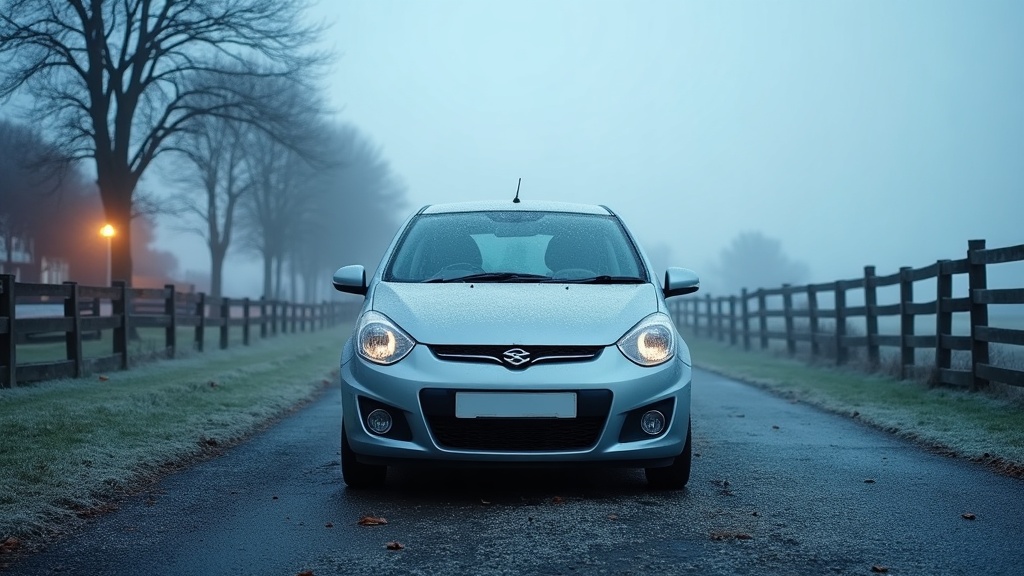
Used Leaf and Aqua prices in the South Island: has the slide stopped?
The NZ Angle
The Clean Car Discount ended in late 2023 and the market felt it almost immediately. Rebates of up to $8,625 on new EVs had been quietly inflating second-hand prices across the board, because buyers who missed out on new stock were happy to pay a premium for a used Leaf or Aqua rather than wait. When the subsidy vanished, so did that logic. South Island buyers face a specific version of this problem: Canterbury and Otago winters are cold enough to take a genuine bite out of battery range, and a 24 kWh first-generation Leaf that might manage 130 km on a warm Auckland afternoon could struggle to crack 90 km on a frost-heavy Christchurch morning. That is not a scare story, it is chemistry. Add the fact that most older Leafs arriving here from Japan now carry ten-year-old battery packs, and you have a buyer pool that is more cautious than it was two years ago. The Aqua sits in a different position entirely: it is a hybrid, not a pure EV, so range anxiety does not apply. What buyers are working out is whether the price gap between a tired Aqua and a fresher Corolla hybrid actually justifies the older platform.
The Clean Car Discount is gone, winter range anxiety is real, and South Island used EV and hybrid prices have taken a battering. Here is where the market actually sits today.
Canterbury dealers will tell you the used EV market softened. What they are less likely to tell you is exactly how much, and whether it has found a floor or is still drifting.
Here is what the numbers look like from where most South Island buyers are sitting in mid-2025.
The Leaf: still falling or finally flat?
A 2013 or 2014 Nissan Leaf with a degraded battery, say six or seven bars on the capacity gauge, was retailing around $7,000 to $9,000 at the height of the subsidy years. The same car today is sitting between $5,000 and $7,000 at most Canterbury yards, and private sellers are going lower. The 30 kWh 2016-to-2017 generation has held a little better, typically $10,000 to $14,000 depending on battery health, but even those have slipped three or four thousand dollars off their 2022 peaks.
The reason is not complicated. The Clean Car Discount is gone, new EVs have come down in price as Chinese brands entered the market, and buyers have had enough time to hear from friends who owned older Leafs through a Southland winter. Battery degradation is not a myth or a niche concern. It is the defining variable in every used Leaf purchase, and enough buyers have learned this the hard way that the market now prices it in.
For my money, the 40 kWh Leaf, the one that arrived here from around 2018, is where the real value conversation is happening. These are sitting in the $16,000 to $22,000 range depending on condition and whether they have the e-Plus trim with the bigger motor. That is still a lot of money for a car with no spare tyre, mediocre interior plastics, and a charging standard the world is slowly moving away from. But the battery on a well-kept 40 kWh example is genuinely usable in Canterbury conditions, and the running costs are low enough to matter.
The floor question is harder to answer. Frankly, prices feel like they are stabilising rather than recovering. There is no catalyst on the horizon that would push them back up. No new subsidy is coming. Used EV supply from Japan is still arriving. Buyers who want an EV and have budget to spend are increasingly looking at newer Chinese imports or lightly used Teslas rather than a ten-year-old Nissan with a question mark over its pack.
The Aqua: a different kind of correction
The Toyota Aqua never had quite the same rollercoaster ride as the Leaf, because it was never purely dependent on subsidy-fuelled EV demand. It is a petrol-electric hybrid, and its case rests on fuel economy, not emissions virtue signalling.
At $2.60 to $2.80 a litre for 91 octane, the Aqua's 3.4 litres per 100 km real-world average still makes a compelling argument for urban running. Christchurch commuters who cover 15,000 km a year are saving a meaningful amount over a comparable conventional hatchback, and WoF costs on a well-maintained Japanese-market Aqua are generally unremarkable.
Prices on a 2012 to 2015 Aqua have settled around $9,000 to $13,000, depending on kilometres and specification. That is down from the $13,000 to $16,000 that the better examples were asking in 2022 and early 2023. The correction happened, but it was orderly. The Aqua has a broader buyer pool than the Leaf: people who want low fuel bills without the charging infrastructure conversation, people who do not have off-street parking, people who just want a reliable small car. That breadth keeps the floor higher.
The later G-series Aqua, which arrived in New Zealand compliance from around 2022 and 2023, is a genuinely different proposition with a lithium-ion battery replacing the old nickel-metal hydride pack. These are still holding $18,000 and above for low-kilometre examples. Supply is limited enough that prices there have not moved much at all.
What buyers should actually do
If you are shopping for a used Leaf in the South Island right now, the only thing that matters is the battery. Not the service history, not the colour, not whether it has heated seats. Get a CHAdeMO quick charge reading, check the leaf spy data if you can, and walk away from anything showing fewer than ten bars unless the price reflects that reality. A six-bar Leaf at $5,500 is not a bargain. It is a liability with a charging cable.
For the Aqua, the calculus is simpler. Check for hybrid battery warning lights, confirm the CVT fluid has been changed, and make sure the compliance plate shows the frontal impact certification that NZTA requires on Japanese imports. Beyond that, these are largely sorted cars.
The broader picture in the South Island is a market that overshot in both directions. It was too hot in 2022, pushed by subsidies and pandemic-era supply shortages. It overcorrected through 2024 as reality set in. Right now, prices feel close to where they should be for the actual utility these cars offer in cold-weather, longer-distance South Island conditions.
Close to. Not quite.
By Auto Luxe. See our editorial standards or email sales@autoluxe.co.nz with corrections.
More automotive
EVs under $25k: what Canterbury driving actually costs
RUC rates have settled, used Leafs and BYD Atto 3s are everywhere on Trade Me. Here's what the numbers actually look like for a South Island buyer.

Ex-lease Leafs and Atto 3s under $20k: what Canterbury buyers need to know
Used EVs are suddenly affordable, but battery health and RUC costs are the real variables. Here is what first-time electric buyers in Canterbury should check before signing anything.
Leaf vs Aqua: what it actually costs to run each car in Canterbury
The Clean Car Discount is gone and light EV RUCs are here to stay. We crunch the real weekly numbers on a used Nissan Leaf versus a Toyota Aqua for Canterbury drivers.