
Leaf vs Corolla: what it actually costs per km in Canterbury
The NZ Angle
From 2026, light electric vehicles will pay $76 per 1,000 km in Road User Charges, up from the current $53. That figure is now locked in, which gives EV owners something they have rarely had: a number they can plan around. In Canterbury, where a second-hand Nissan Leaf can be picked up for $12,000 to $18,000 depending on battery generation and kilometres, this matters. The Clean Car Discount is gone, phased out at the end of 2023, so the government subsidy that once sweetened EV pricing on the used market has worked its way through the system. Prices have softened a little as a result. A comparable 2014 to 2016 petrol Toyota Corolla sits in roughly the same price bracket, which makes the comparison honest. Canterbury drivers also deal with cold winters, and a Leaf's usable range drops noticeably below five degrees, particularly on older 24 kWh packs. That is a real-world variable that does not show up in any cost-per-kilometre spreadsheet, but it shapes how the car lives in daily use. What follows is a straight run through the numbers, without the EV evangelism.
RUC rates for light EVs are locked in for 2026. We run the real numbers on a used Nissan Leaf against a petrol Corolla, including electricity, fuel, and WoF costs.
The used car market has a habit of burying the real cost of ownership inside the sticker price. You buy the car, you drive the car, and the bills arrive in ways you did not budget for. Running an EV in New Zealand has always had this problem, partly because the cost inputs keep shifting. RUC exemptions, Clean Car Discounts, fluctuating electricity pricing. For the first time in a while, one of those inputs has settled.
Light EVs will pay $76 per 1,000 km in Road User Charges from 2026, confirmed and locked. The current rate is $53. It is a 43 percent increase, and it is worth absorbing before you start comparing running costs with a petrol car.
The base numbers
Take a 2015 Nissan Leaf with a 24 kWh battery. These are common on the NZ market, typically imported from Japan, and they carry a real-world range of around 100 to 130 km per charge depending on conditions and battery health. Expect to pay $12,000 to $15,000 for a tidy one. Home charging in Canterbury on a standard residential rate runs around 30 to 33 cents per kWh. To cover 100 km you will use roughly 18 to 20 kWh, so electricity cost sits at about $5.50 to $6.60 per 100 km.
Add the 2026 RUC rate: $7.60 per 100 km. Total running cost on energy and road tax comes to roughly $13 to $14 per 100 km.
Now the Corolla. A 2014 to 2016 1.8-litre automatic sits in similar money, call it $13,000 to $16,000. Fuel consumption in mixed driving is around 7.5 litres per 100 km. At $2.70 per litre, that is $20.25 per 100 km in fuel alone. No RUC, because petrol buyers pay road tax at the pump. The Corolla costs around $20 per 100 km to run on energy.
On pure running cost, the Leaf is materially cheaper. Over 15,000 km a year, the difference is around $1,000. Over three years, that gap starts to look meaningful relative to the purchase price difference between the two cars.
Where it gets more complicated
The 24 kWh Leaf battery is aging. Most of these cars have lost one or two capacity bars on the battery health indicator. A car showing ten bars out of twelve is fine for urban use. A car at eight bars is starting to show its limits, and in a Canterbury winter those limits arrive sooner. Cold air reduces lithium-ion output, and real range on a chilly Christchurch morning can drop to 80 km or below. For most people doing school runs and commutes, that is workable. For anyone covering rural distances, it is not.
The Corolla has no such variable. Fill it up, drive it. The range is the range.
WoF costs are similar for both. After three years old, both cars go to annual WoF inspections. Mechanically, the Leaf has fewer moving parts in the drivetrain, but brake wear tends to be slightly higher than expected because regenerative braking is less aggressive on older Leaf models than on newer EVs. Tyres wear normally. The Corolla's service schedule is straightforward and cheap. The Leaf has no oil changes, no timing belt, no transmission service, which saves a few hundred dollars a year in routine maintenance.
The wild card is the battery. A Leaf with degraded cells that drops below a usable threshold faces a replacement cost of $5,000 to $10,000 for a reconditioned pack. That number can undo years of fuel savings in a single invoice. It does not happen to every car, but it is a real risk on high-mileage Japanese imports, and it is a risk that does not exist with the Corolla.
What the numbers actually say
If the Leaf battery is healthy and holds most of its original capacity, the running cost advantage is real. Around $1,000 a year at 15,000 km. The 2026 RUC increase narrows that gap a little but does not close it. You would still save money driving the Leaf.
The Corolla is the lower-risk bet. Its running costs are higher, but predictable. There is no single bill that can blindside you. It does everything in all weather without adjustment, and you will not find yourself rationing a charge on the way home from Hanmer in July.
The smartest move if you are looking at a Leaf is to pay for a battery health report before you buy. Several NZ EV specialists can do a detailed capacity check for around $100 to $150. That report tells you what range you actually have, and it gives you the information you need to decide whether the running cost savings will materialise or evaporate into a battery replacement.
By Auto Luxe. See our editorial standards or email sales@autoluxe.co.nz with corrections.
More automotive
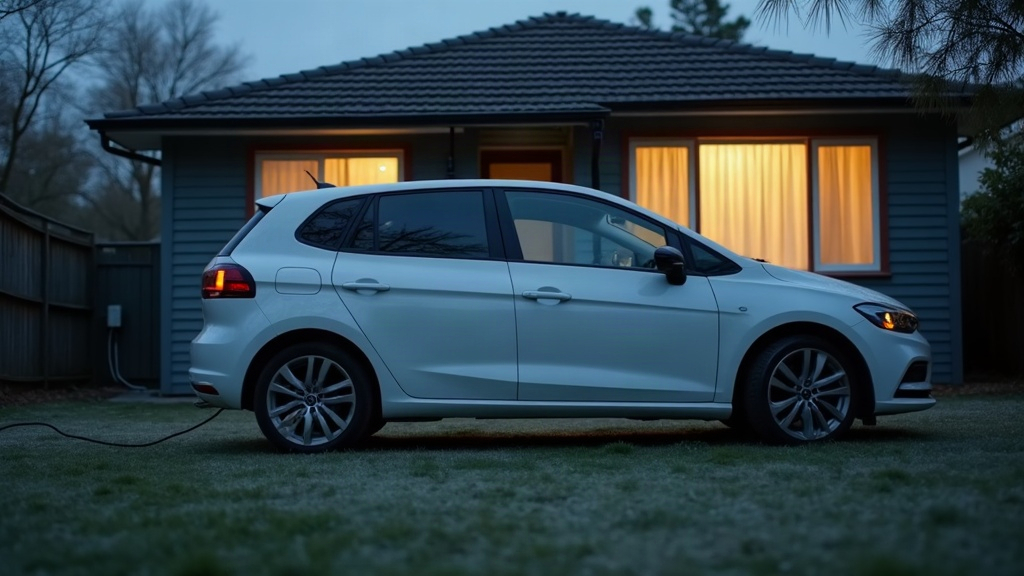
What a Nissan Leaf actually costs per kilometre in Canterbury
RUCs, home charging rates, depreciation and WoF costs broken down against a comparable petrol import for Canterbury drivers doing real kilometres.
EV road user charges: what Canterbury drivers are actually paying
Light EV RUCs have been running for a year now. We crunch the real numbers on what Canterbury owners are paying versus petrol savings, and whether used EVs still make financial sense.
EVs under $25k: what Canterbury driving actually costs
RUC rates have settled, used Leafs and BYD Atto 3s are everywhere on Trade Me. Here's what the numbers actually look like for a South Island buyer.