Leaf and Aqua prices in Canterbury: has the floor held?
The NZ Angle
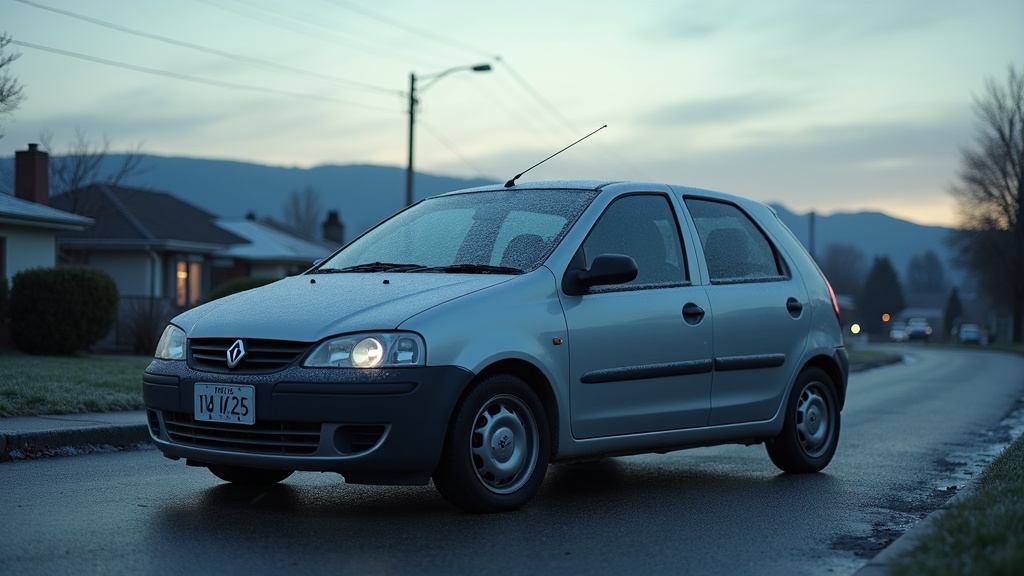
Canterbury winters concentrate the mind when you own an electric car. A Nissan Leaf that claims 150 kilometres of range on a warm Auckland day might deliver 90 to 110 on a cold Christchurch morning with the heater running and the battery not fully warm. That is not a flaw unique to the South Island, but it is sharper here, and buyers know it. The Clean Car Discount, which at its peak handed buyers up to $8,625 on a new EV and pushed used prices up with it, ended in December 2023. Since then the floor has dropped out from under early Leaf prices in particular. A 24 kWh Gen 1 Leaf that fetched $14,000 to $16,000 in mid-2023 is now regularly advertised at $9,000 to $11,000, and some are sitting. The Toyota Aqua, a conventional petrol-electric hybrid with no range anxiety and no road user charges liability for private buyers, has held its ground better. Understanding why those two cars are tracking differently tells you something useful about where the Canterbury used-car market actually sits right now.
The Clean Car Discount is gone, winter range anxiety is real, and second-hand EV and hybrid prices have been sliding. Here is what the Canterbury market is actually doing.
The Nissan Leaf arrived in New Zealand in numbers from around 2014, and for a while the secondhand market treated it well. The Clean Car Discount inflated demand broadly, dealers paid more at auction, and sellers got prices that, looking back, were optimistic. The discount ended, the optimism went with it, and now the correction is working through every yard in the country.
In Canterbury specifically, the correction has a harder edge. Winter here is real. Frosts through June and July, temperatures that sit at two or three degrees for days at a time, and the kind of cold that sits in a battery pack the way it sits in your joints. A Gen 1 Leaf with a degraded battery and a Canterbury winter is a limited-range vehicle, and the market has priced that in.
What the numbers look like now
Trademycar and AutoTrader listings from the past two months show Gen 1 Leafs (24 kWh, pre-2018) sitting between $8,500 and $12,000 in Christchurch. The sweet spot is $9,500 to $10,500 for a tidy example with a 10 to 11 bar battery reading. Anything showing eight bars or below is sitting longer, regardless of price. Dealers are asking, buyers are negotiating, and the gap between ask and sale is wider than it has been in years.
The 30 kWh Leaf, built from late 2015 through 2017 and common in the New Zealand fleet, is a more complicated proposition. That battery chemistry degrades in a specific way: capacity drops sharply after the first few bars, then stabilises. A 10-bar 30 kWh car in good health is worth real money for urban Canterbury use. They are sitting at $12,000 to $16,000, and the good ones do move.
The 40 kWh Leaf from 2018 on is a different car. Genuine range, a better battery thermal profile, and enough real-world distance to handle a Christchurch to Akaroa day return without drama. These are holding at $18,000 to $25,000 depending on year and condition. That price range has compressed a little from its 2023 peak but has not collapsed. The demand floor here is sturdier.
The Toyota Aqua is a separate story. It is not an EV. There is no range anxiety, no road user charges consideration for private use, and no cold-battery degradation to worry about. You fill it at any petrol station at whatever the pump is asking this week, which lately sits around $2.60 to $2.80 for 91 in Christchurch, and the Aqua's 26 to 30 kilometres per litre real-world figure makes that easy to live with. A 2013 to 2015 Aqua in tidy shape is $11,000 to $14,000. A newer 2016 to 2019 car asks $15,000 to $19,000. Those prices have barely moved in 12 months.
Why the Aqua holds and the old Leaf doesn't
The gap comes down to one thing: the Aqua asks nothing of its owner that a petrol car doesn't. No home charger. No public charging network anxiety. No winter range calculation before you head out on a cold morning. The hybrid system is self-contained, proven over two decades, and essentially invisible to the driver. You feel the engine cut out at low speed and fill in at the lights, and that is the full extent of the experience. The car just works.
The Gen 1 Leaf asks more. It needs a home charger, ideally a 7 kW wallbox, to be practical. It needs an owner who understands state of charge management in cold weather, who knows not to charge to 100 percent and leave it. It suits a specific buyer with a specific usage pattern, and that buyer has got more selective. They know what battery bars mean now. They know how to read a Leaf Spy report. The uninformed impulse buy that inflated prices in 2022 and early 2023 is gone.
Whether the floor has steadied
For the Gen 1 Leaf, yes, roughly. There is a natural floor set by the cost of cheap daily transport, and the 24 kWh car is approaching it. Below about $8,500 in Canterbury you are looking at project territory: degraded batteries, compliance questions, cars that need work. The cars priced honestly between $9,500 and $11,000 are getting bought, slowly, by buyers who understand what they are getting. That is not a hot market. It is a stable, specific one.
For the 40 kWh Leaf and upward, there is genuine demand and the prices reflect it. These are cars that work in Canterbury winter without constant compromise. A buyer who has done the reading knows the difference.
The Aqua never really had a floor problem. It had a discount-inflated ceiling in 2023, and that has come off a little, but the fundamentals were always sound. Low running costs, reliable, parts available, no charging infrastructure dependency. Canterbury buyers heading into another winter understand what that is worth.
The Leaf market is not broken. It is just honest now.
By Auto Luxe. See our editorial standards or email sales@autoluxe.co.nz with corrections.
More automotive
EVs under $25k: what Canterbury driving actually costs
RUC rates have settled, used Leafs and BYD Atto 3s are everywhere on Trade Me. Here's what the numbers actually look like for a South Island buyer.

Ex-lease Leafs and Atto 3s under $20k: what Canterbury buyers need to know
Used EVs are suddenly affordable, but battery health and RUC costs are the real variables. Here is what first-time electric buyers in Canterbury should check before signing anything.
Leaf vs Aqua: what it actually costs to run each car in Canterbury
The Clean Car Discount is gone and light EV RUCs are here to stay. We crunch the real weekly numbers on a used Nissan Leaf versus a Toyota Aqua for Canterbury drivers.