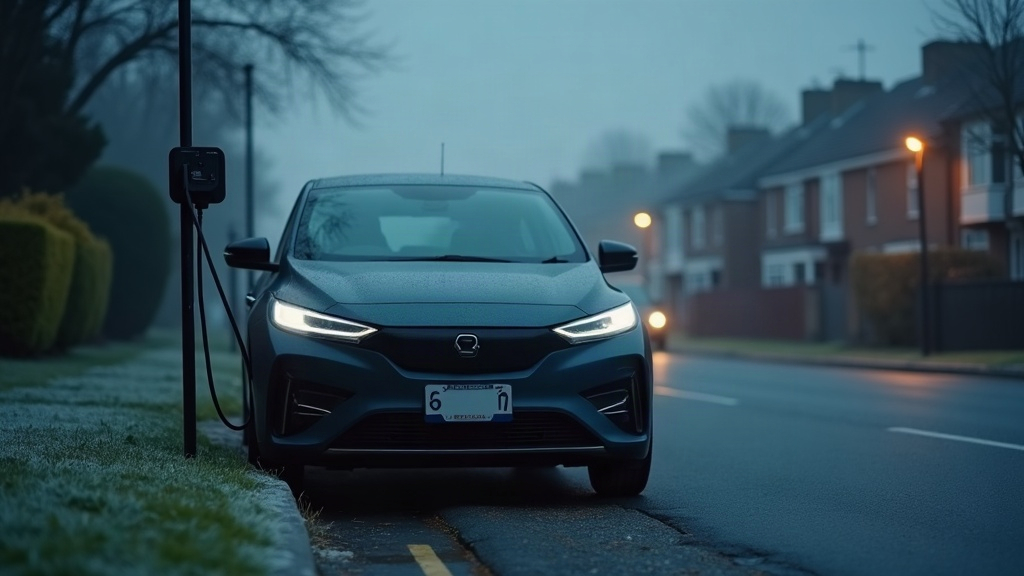
EV running costs just changed: do Leaf and Aqua still make sense?
The NZ Angle
From 1 April 2024, light electric vehicles lost their RUC exemption and now pay $76 per 1,000km under NZTA's revised schedule. That's not a trivial line item. A Leaf owner covering 15,000km a year is looking at $1,140 in RUCs on top of power costs, WoF, insurance, and tyres. The Clean Car Discount also wound up at the end of 2023, so the $8,625 rebate that made a low-mileage imported Leaf an obvious call is gone. In Canterbury specifically, the calculus matters more than most. Winters are cold enough that EV range drops meaningfully, Christchurch's recharging network is adequate but not saturated, and a lot of buyers in this market are weighing a $16,000-$22,000 2017-2019 Leaf against similarly priced petrol Aquas or Note e-Powers from the same Japanese import channels. The Aqua, being a petrol-electric hybrid, pays no RUCs at all. It fills up at the pump like any other car. That gap, which looked narrow when EVs were RUC-exempt, has now widened in a way that genuinely changes the breakeven point for high-mileage South Island drivers.
NZTA's updated RUC rates for light EVs have shifted the numbers. We work through what Canterbury Leaf and Aqua owners actually pay per kilometre now, and whether used EVs still beat petrol.
The RUC exemption for light EVs was always described as temporary by NZTA, but plenty of buyers treated it as a permanent feature of the ownership equation. It wasn't, and now it's gone. From April 2024, light EVs pay $76 per 1,000km in road user charges. Diesel vehicles pay in the same system, so there's a logic to it, but the rate change lands at an awkward moment: petrol is sitting around $2.50-$2.80 per litre in Canterbury right now, which is low enough to make the numbers for EV ownership tighter than they were two years ago.
Let's put actual figures on it rather than talking in circles.
What a Leaf owner pays now
A 2018 Nissan Leaf 40kWh, bought for $18,000-$21,000 through a Japanese import channel, will use roughly 16-18kWh per 100km in real Canterbury driving once you account for winter heating and the fact that battery degradation on a six-year-old pack is real. At average residential power prices of around 30-33 cents per kWh, that's $4.80-$5.90 per 100km in electricity. Add RUCs at $76 per 1,000km and you're adding another $7.60 per 100km on top. Total running cost: roughly $12.40-$13.50 per 100km in variable costs, before you touch insurance, servicing, or tyres.
For comparison, a 2018 Toyota Aqua in Canterbury, bought for $14,000-$18,000, returns real-world fuel economy of around 4.5-5.5L per 100km. At $2.60 per litre, that's $11.70-$14.30 per 100km in petrol. No RUCs. No home charging infrastructure needed.
The gap has essentially closed at average driving conditions. The Leaf was comfortably cheaper to run when it paid no RUCs. At $76 per 1,000km, it's running neck and neck with the Aqua on variable costs, and behind it if you're on a slower home charger that can't access cheaper overnight rates.
High-mileage drivers, say 20,000km-plus per year, still benefit from EVs if they charge cheaply overnight. But the Canterbury buyer doing 12,000-15,000km on mixed urban and open road driving? The case is a lot less clear than it was.
What breaks and what it costs
Battery health is the crux of any used Leaf purchase. A 2017-2018 40kWh Leaf with 12 bars showing on the battery capacity indicator is fine. One showing 10 bars has lost a meaningful chunk of range, probably 15-20%, and Canterbury winters will remind you of that regularly. Nissan's battery warranty doesn't follow Japanese imports in the same way it covers new NZ-market cars, so you're buying the risk with the car.
Servicing on the Leaf is genuinely cheap: no oil, no timing chain, no clutch. Brake pads last longer due to regenerative braking. The 12V auxiliary battery, which powers all the ancillaries, typically needs replacing around 60,000-80,000km and costs $150-$200 fitted. That's the main gotcha. The CHAdeMO fast-charge port is increasingly awkward as public networks shift toward CCS, though Christchurch still has CHAdeMO availability at the major charge points.
The Aqua has its own attrition points. The hybrid battery is the obvious one, but Toyota's NiMH pack in the Aqua is genuinely durable and replacements, when needed, run $1,500-$2,500 at independent specialists. Inverter coolant pump failures show up on higher-mileage examples, typically past 150,000km, and parts come through Toyota NZ or Japanese import channels at $300-$600 for the pump assembly. Overall, the Aqua's repair profile is well-understood and parts are available. The same is true of the Leaf for most things, though the main battery pack is a different conversation.
Does the EV case still hold?
For the right buyer, yes. If you own a home, you can charge overnight on a cheaper rate, you're doing 18,000km or more per year, and you've checked the battery health independently before buying, a $19,000 Leaf is still a reasonable proposition. The RUC cost is real, but it's predictable and you can plan around it.
For everyone else, the Aqua and the Note e-Power have quietly become the more sensible calls. The Note e-Power in particular is worth attention at $18,000-$24,000 for a 2020-2022 example. It runs on petrol, drives like an EV in feel, pays no RUCs, and doesn't ask you to think about charging infrastructure. It's what a lot of Canterbury buyers who liked the idea of EV running but couldn't commit to the charging logistics have landed on.
The RUC change doesn't kill the used EV market in New Zealand. But it does mean the spreadsheet matters more than the sentiment. Check the battery, check the bars, check your annual kilometres, then check the numbers honestly. The affordability case for a used Leaf isn't gone, but it's no longer automatic.
By Auto Luxe. See our editorial standards or email sales@autoluxe.co.nz with corrections.
More automotive
EVs under $25k: what Canterbury driving actually costs
RUC rates have settled, used Leafs and BYD Atto 3s are everywhere on Trade Me. Here's what the numbers actually look like for a South Island buyer.

Ex-lease Leafs and Atto 3s under $20k: what Canterbury buyers need to know
Used EVs are suddenly affordable, but battery health and RUC costs are the real variables. Here is what first-time electric buyers in Canterbury should check before signing anything.

Leaf vs Aqua: what it actually costs to run each car in Canterbury
The Clean Car Discount is gone and light EV RUCs are here to stay. We crunch the real weekly numbers on a used Nissan Leaf versus a Toyota Aqua for Canterbury drivers.