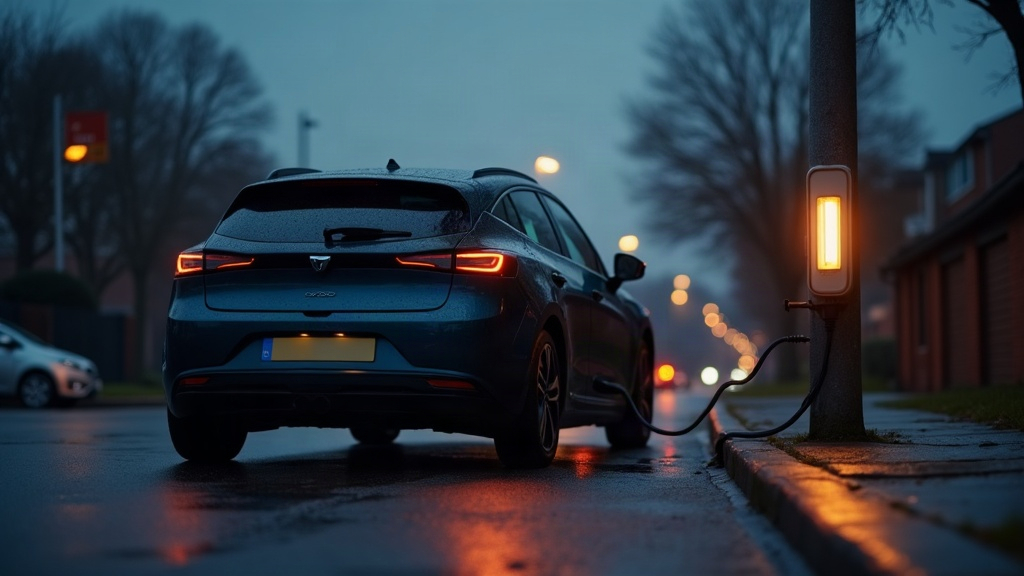
EV road user charges: are Kiwi owners still ahead of the game?
The NZ Angle
New Zealand's road user charge system for light electric vehicles kicked in on 1 April 2024, ending the RUC exemption that had been in place since 2009. The rate started at $76 per 1,000 kilometres, putting EVs on a similar footing to other RUC-liable vehicles, though still well below what diesel cars pay. For context, a light diesel car currently pays around $76–$93 per 1,000km depending on weight, while petrol vehicles pay their road contribution through fuel excise duty baked into the pump price. EV owners now buy RUC licences through NZTA's online portal or at licensing agents, in blocks of 1,000km upward. The licence sits on your windscreen like a registration label and has to be kept current. If you're caught without one, the fine is real. For the average Kiwi driving around 12,000–14,000km a year, that's roughly $912–$1,064 annually in RUCs alone, before you factor in home charging costs, insurance, and servicing. That changes the maths on EV ownership in ways that weren't fully priced in when a lot of buyers made their purchase decisions during the Clean Car Discount years, when both the subsidy and the RUC exemption made EVs look very attractive on paper.
Light EV owners have been paying RUCs since late 2023. Here's what those charges actually add up to, and whether the numbers still beat a petrol or hybrid alternative.
The RUC exemption for light EVs was always a temporary arrangement. NZTA said so from the start. But when you're sitting in a dealership in 2022 being told your new Leaf or Model 3 qualifies for a Clean Car rebate and pays zero road user charges, the eventual cost of both those things going away can feel pretty abstract. It isn't abstract any more.
Since 1 April 2024, light EVs have been paying $76 per 1,000km in RUCs. That rate has held through 2024 and into 2025, though it's reviewed periodically and there's no guarantee it stays flat. For a driver covering 13,000km a year, that's $988 in RUC licences on top of their electricity bill. Buy the licences in small blocks and you'll also spend time managing the system, which isn't difficult but isn't free either.
So how does that compare to running a petrol or hybrid alternative?
The actual numbers, side by side
Take a 2020 Nissan Leaf 40kWh, which you can pick up used for $22,000–$28,000 depending on condition and kilometres. Charging at home on a standard residential rate of around 30 cents per kWh, and assuming the Leaf's real-world consumption of roughly 17–19kWh per 100km, you're spending about $5.10–$5.70 per 100km on electricity. Add RUCs at $7.60 per 100km and you're looking at $12.70–$13.30 per 100km in combined running costs for fuel and road contribution.
A 2019 Toyota Aqua hybrid in similar condition sits at $16,000–$21,000 on the used market. It uses around 4.5L/100km in mixed driving. At $2.70 per litre, that's $12.15 per 100km in petrol. No RUCs, because petrol excise covers it. Servicing on the Aqua is cheap, parts are everywhere, and the batteries in that generation have held up well.
The Leaf's per-kilometre advantage over a petrol car has shrunk to almost nothing once RUCs are in the picture. Against a proper hybrid, there's barely a gap at all, and the hybrid doesn't require you to think about charging infrastructure or licence block management.
A 2019–2020 Toyota RAV4 Hybrid is a fairer comparison if you're looking at larger family vehicles. Used examples are sitting at $38,000–$48,000, which is real money, but fuel costs come in around $9–$11 per 100km at current petrol prices, with no RUCs and Toyota's reputation for longevity at high kilometres. A comparable Tesla Model 3 Standard Range from the same era would cost you similar money to buy, then add $76 per 1,000km in RUCs plus your electricity. The gap is closing faster than many buyers expected.
What EV owners budgeted for versus what they're paying
Buyers who purchased during the Clean Car Discount period, between July 2021 and December 2023, were making decisions in a very different environment. Rebates of up to $8,625 were available on new EVs, RUCs were zero, and the messaging around EVs was almost uniformly positive. A lot of people ran their sums on that basis.
Take out the rebate (gone), add the RUCs (new), and watch electricity prices tick upward, and the business case looks softer. That doesn't mean EVs are bad value. It means the numbers need recalculating with current inputs, not 2022 ones.
For higher-mileage drivers, the equation can still work. Someone covering 25,000km a year in an EV will spend around $1,900 in RUCs but potentially save more than that on fuel compared to a petrol SUV. The crossover point depends heavily on your electricity rate, your actual driving pattern, and what petrol alternative you're comparing against. Comparing a Leaf to a V6 SUV makes EVs look great. Comparing it to a hybrid hatchback is a much tighter race.
What this means if you're buying now
If you're in the used market today, the RUC cost needs to be a line item in your decision-making, not a footnote. For a private buyer considering a $25,000–$30,000 used EV, calculate your expected annual kilometres, multiply by $0.076, and add that to your projected electricity cost. Then do the same exercise with a comparable hybrid using current petrol prices. Be honest about which number is smaller.
For some buyers, the EV still wins: home charging overnight is convenient, servicing costs are genuinely lower on a pure EV (no oil, simpler drivetrain), and if you're driving in stop-start urban conditions the efficiency advantage is real. A Leaf or a BYD Atto 3 in Christchurch doing school runs and commuting will still stack up.
For others, particularly those doing long highway runs where EV efficiency drops off and charging stops add time, a 2019 CX-5 diesel or a Corolla hybrid on excise-paid petrol starts looking like the sensible call. The diesel's RUCs are higher, but the range and refuelling flexibility are genuine advantages for certain use cases.
The RUC exemption made EVs an easy sell. Without it, they're still worth considering, but they need to earn it on the actual numbers.
By Auto Luxe. See our editorial standards or email sales@autoluxe.co.nz with corrections.
More automotive
EVs under $25k: what Canterbury driving actually costs
RUC rates have settled, used Leafs and BYD Atto 3s are everywhere on Trade Me. Here's what the numbers actually look like for a South Island buyer.

Ex-lease Leafs and Atto 3s under $20k: what Canterbury buyers need to know
Used EVs are suddenly affordable, but battery health and RUC costs are the real variables. Here is what first-time electric buyers in Canterbury should check before signing anything.

Leaf vs Aqua: what it actually costs to run each car in Canterbury
The Clean Car Discount is gone and light EV RUCs are here to stay. We crunch the real weekly numbers on a used Nissan Leaf versus a Toyota Aqua for Canterbury drivers.