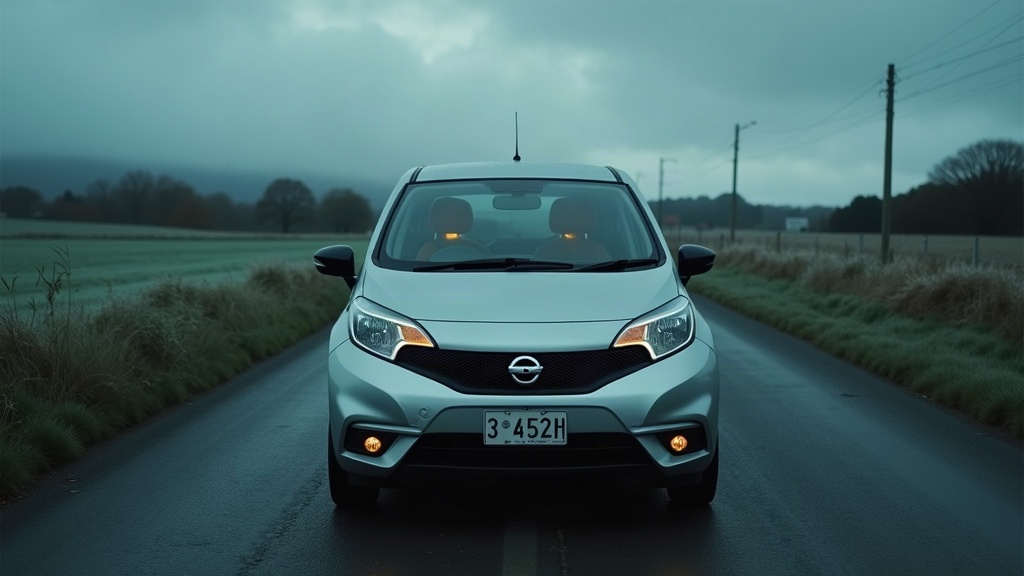
EV and hybrid running costs after NZTA's new RUC rates
The NZ Angle
Road user charges for light electric vehicles have moved again. From this week, NZTA's updated RUC rate for light EVs sits at $76 per 1,000 kilometres, up from the previous $53 rate that was introduced when the government ended the RUC exemption in 2024. For a Nissan Leaf owner doing 15,000 kilometres a year around Christchurch, that's $1,140 annually in RUCs alone, paid in advance in blocks via the NZTA portal. The Toyota Aqua, being a self-charging petrol hybrid rather than a plug-in, pays no RUC at all. It pays petrol tax at the pump like any other petrol car, which means its fuel costs are baked into every fill rather than managed as a separate compliance obligation. Plug-in hybrids sit in a grey area depending on engine size and how they're registered, so if you're buying one, confirm with NZTA before you assume anything. The Clean Car Discount is gone, has been since the end of 2023, so there's no rebate softening the EV purchase price anymore. What you're left with is a straight comparison: what does it cost to move you down the road, and which car does it cheaper.
NZTA's updated light EV RUC rates are now in force. We run the real per-kilometre numbers for Leaf and Aqua owners doing a typical Christchurch commute.
The question Canterbury commuters keep asking is whether an EV or a hybrid still makes financial sense once you factor in what you're actually paying to use the road. The answer depends on what you drive, how far you go, and whether you've been paying attention to how NZTA's RUC settings have shifted over the past 18 months.
Let's put some real numbers on it. A typical Christchurch commuter covers around 15,000 kilometres a year. That's the benchmark we'll use.
What a Nissan Leaf costs to run
The Leaf is the default used EV for most New Zealand buyers. A decent 30kWh example sits around $14,000-$17,000 on the used market right now. The 40kWh cars push closer to $20,000 depending on condition and kilometres.
At the new RUC rate of $76 per 1,000 kilometres, a Leaf owner covering 15,000 kilometres a year pays $1,140 in road user charges. On top of that, there's the electricity cost. A 30kWh Leaf uses roughly 18-20kWh per 100 kilometres in real-world Canterbury driving, which includes cold mornings, heater use, and the occasional motorway run to Kaikōura. At an average home charging rate of around 28-32 cents per kWh, that's roughly $5.00-$6.40 per 100 kilometres in electricity, or $750-$960 for 15,000 kilometres.
Add it together and a Leaf owner is looking at around $1,900-$2,100 per year in combined energy and RUC costs. That's before servicing, which is genuinely cheaper on an EV, and insurance, which isn't.
The fly in the ointment is the RUC obligation itself. You have to buy them in advance, you have to remember to do it, and if you let it lapse, you're technically driving an unlicensed vehicle. It's not complicated, but it's an ongoing admin task that petrol drivers never think about.
What a Toyota Aqua costs to run
The Aqua is the other car in this conversation. It's not an EV. It's a conventional self-charging hybrid, which means the battery charges through braking and engine cycling rather than a wall socket. No RUC. No charging infrastructure required. Just petrol.
A late-model Aqua does around 4.5-5.5 litres per 100 kilometres in honest Christchurch use. In town it's closer to 4.5. On the open road the number climbs a bit because the small petrol engine has to work harder without the low-speed electric assist that makes city driving so efficient.
At current South Island pump prices sitting around $2.60-$2.80 per litre for 91 octane, that's $117-$154 to cover 1,000 kilometres. Over 15,000 kilometres, fuel costs land somewhere between $1,750 and $2,300 depending on how and where you drive.
The Aqua wins on simplicity. You fill it up, you drive it, the fuel tax is already in the price. Used examples are plentiful, parts are straightforward, and servicing costs are low. A tidy 2020-2022 model sits around $16,000-$20,000.
Whether the sums still stack up
The honest answer is that the gap has narrowed since NZTA reinstated and then increased the EV RUC. A year ago, a Leaf had a clearer cost-per-kilometre advantage. Now it's closer, and the calculus depends more on individual circumstances than it used to.
If you have a driveway or garage and can charge at home overnight, the Leaf is still cheaper to run than the Aqua in most scenarios. That sub-$6 per 100km energy cost is hard to match at the pump, even with the RUC added back in. Over 15,000 kilometres a year, you're likely saving $200-$500 annually in running costs compared to a similarly priced Aqua.
If you're charging at public stations even half the time, the numbers erode quickly. Public fast charging in Christchurch runs anywhere from 50 cents to over 70 cents per kWh depending on the network and time of day. At those rates, the Leaf's energy cost advantage largely disappears.
The Aqua, meanwhile, doesn't ask you to think about any of this. You feel the efficiency every time you watch the consumption display in traffic, the car recovering energy through every braking event, the petrol engine cutting out at low speed. It's not as dramatic as full electric driving, but the running cost is predictable and the range anxiety doesn't exist.
For a typical Christchurch commuter doing 60-80 kilometres a day with home charging available, the Leaf probably still makes sense financially, though the margin is thinner than the EV lobby would have you believe. For someone without reliable home charging, the Aqua is the more rational choice right now, and that's a sentence that would have sounded more controversial twelve months ago than it does today.
By Auto Luxe. See our editorial standards or email sales@autoluxe.co.nz with corrections.
More automotive
EVs under $25k: what Canterbury driving actually costs
RUC rates have settled, used Leafs and BYD Atto 3s are everywhere on Trade Me. Here's what the numbers actually look like for a South Island buyer.

Ex-lease Leafs and Atto 3s under $20k: what Canterbury buyers need to know
Used EVs are suddenly affordable, but battery health and RUC costs are the real variables. Here is what first-time electric buyers in Canterbury should check before signing anything.

Leaf vs Aqua: what it actually costs to run each car in Canterbury
The Clean Car Discount is gone and light EV RUCs are here to stay. We crunch the real weekly numbers on a used Nissan Leaf versus a Toyota Aqua for Canterbury drivers.