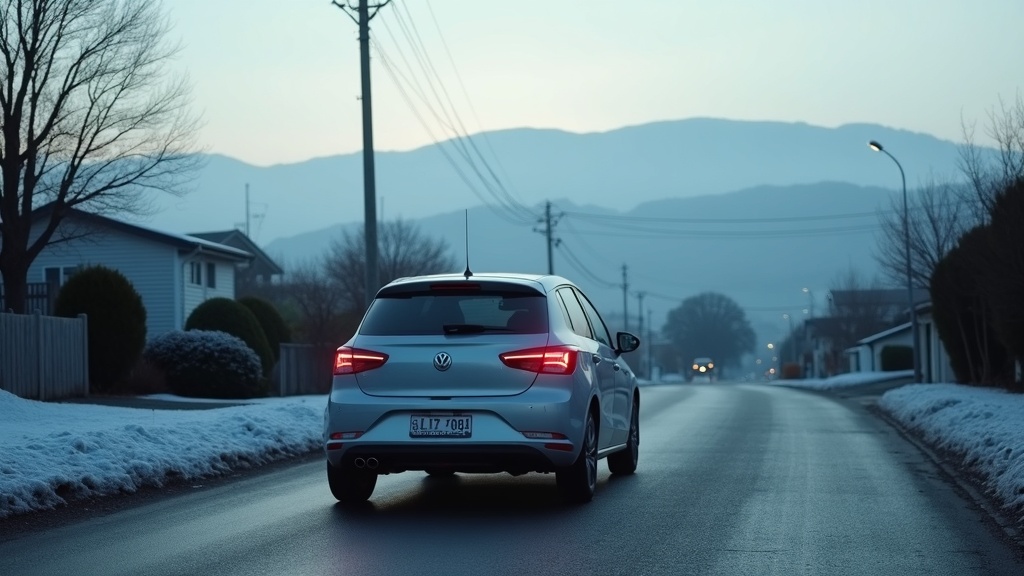
Do used EVs still make financial sense in Canterbury?
The NZ Angle
The two props that made EVs an easy sell in New Zealand have both been pulled. The Clean Car Discount, which handed buyers up to $8,625 on a new EV, ended in December 2023. And from April 2024, light EVs joined diesel vehicles on Road User Charges, currently set at $76 per 1,000km for battery electrics. That changes the sums meaningfully. A Leaf averaging 15,000km a year now pays $1,140 in RUCs annually, on top of registration and WoF. That's no longer a trivial line item. Canterbury buyers have their own wrinkle: winter driving on the Christchurch plains and into the foothills hits EV range harder than the marketing suggests, particularly on older Leafs with degraded battery packs. Real-world range on a 2017 24kWh Leaf in a Canterbury July can be 90-110km on a warm pack, less on a cold one. The charging network between Christchurch and the ski fields is functional but not comfortable. None of that makes EVs a bad choice. It just means the numbers deserve an honest look before you hand over a deposit.
With RUCs now applied to light EVs and the Clean Car Discount gone, we crunch the real weekly running costs of the Leaf, Aqua PHEV, and BYD Atto 3 against a petrol import.
The used EV market in New Zealand has entered a more honest phase. For a few years, generous subsidies and zero RUCs made the financial case almost automatic. Now that both are gone, buyers are doing the maths themselves, and some of them are finding the answer less obvious than they expected.
We've picked three vehicles that appear regularly in Canterbury yards right now: the Nissan Leaf (2017-2019 vintage, the most common used EV in the country), the Toyota Aqua PHEV (also known as the Aqua G's or the Prius C PHEV in some markets, though the plug-in Aqua is the relevant variant here), and the BYD Atto 3, which is arriving in increasing numbers as two and three-year-old examples filter through from early adopters. Against those three, we're benchmarking a 2018-2019 Toyota Corolla hybrid import, which is roughly the petrol-adjacent comparison most buyers in this price range are actually weighing.
What you're paying at the gate
A clean 2017 Leaf 30kWh with 60,000-80,000km is sitting at $14,000-$17,000 in Christchurch right now. Battery health is everything on these: a 2017 with 85% state of health is a different car from one at 72%, and many sellers won't volunteer that figure. Ask for it. A 2019 Leaf 40kWh with reasonable battery health is $18,000-$22,000 and the better buy if you're doing regular open-road trips.
The Aqua PHEV is trickier to find in genuine plug-in form. Most Aquas on NZ yards are the standard hybrid, not the PHEV. The plug-in variant offers around 26km of electric-only range, which sounds modest but covers most Christchurch commutes. Expect to pay $16,000-$20,000 for a 2017-2019 example with low kilometres. Confirm it's actually the PHEV before you get attached.
The BYD Atto 3 is a newer proposition. A 2022 with 30,000-40,000km is $34,000-$39,000. That's a different budget conversation entirely, though running costs do favour it over the longer term.
A 2018 Corolla hybrid, Japanese import, sits at $17,000-$21,000 with 50,000-80,000km. That's the petrol baseline.
The weekly running cost reality
RUCs on a battery EV are $76 per 1,000km. At 15,000km per year, that's $1,140 annually, or roughly $22 a week. Add WoF ($65-$75 annually after the car is three years old), registration (around $110 per year), and insurance. A Leaf in this bracket will run $80-$110 a month for third-party fire and theft, more for comprehensive.
Home charging on a standard overnight rate in Canterbury (Meridian or Contact on a basic plan, around 28-32 cents per kWh) costs roughly $4-$5 to fill a 30kWh Leaf from near-empty. At 15,000km a year, with consumption around 18kWh/100km in mixed conditions, you're spending about $750-$900 a year on electricity. Including RUCs, that's $1,900-$2,040 per year in energy and road costs combined.
The Aqua PHEV in real-world mixed use, with regular home charging, averages around 3.5-4.5L/100km over a year. At $2.70 a litre for 91 petrol, that's $1,400-$1,800 per year in fuel. No RUCs, because it's a PHEV and the petrol engine handles the road user contribution through fuel excise. Running cost is competitive, and the flexibility on long trips removes the range anxiety entirely.
The Corolla hybrid doesn't get plugged in. Real-world consumption on NZ roads is 4.5-5.5L/100km. At 15,000km, that's $1,800-$2,200 in petrol annually. Servicing is cheap: Toyota parts are everywhere, labour isn't specialised, and the hybrid system on a Corolla of this generation is well proven. At 150,000km you might be looking at a hybrid battery conversation, but realistically that's years away for most buyers.
The Atto 3's RUCs are the same $76 per 1,000km, but its 60kWh battery and lower per-km electricity cost (it's more efficient than the Leaf) mean energy costs are similar to the Leaf in dollar terms. The difference is purchase price and the relative newness of BYD's NZ parts supply chain. That's a genuine unknown for a car sitting at $36,000.
Where the Leaf loses ground
Battery degradation is the conversation nobody has at the dealership. A 2017 Leaf 30kWh with 78% battery health has a real-world range of around 140-160km in summer and 110-130km in winter. That's liveable for a city commuter. It becomes stressful if you're doing Christchurch to Hanmer or Christchurch to Kaikoura without very careful planning.
Servicing on the Leaf is straightforward and cheap because there are so many of them here. Parts availability is good. But if you're looking at a Leaf and the seller doesn't know the battery health figure, walk away. That single number determines whether you're buying a practical car or an expensive problem.
The honest comparison at the $17,000-$21,000 price point: the Aqua PHEV edges the standard Leaf on flexibility, the Corolla hybrid edges it on long-term predictability, and the Leaf edges both on energy cost if the battery is healthy and your driving pattern suits it. The maths work, just less automatically than they did in 2022.
By Auto Luxe. See our editorial standards or email sales@autoluxe.co.nz with corrections.
More automotive
EVs under $25k: what Canterbury driving actually costs
RUC rates have settled, used Leafs and BYD Atto 3s are everywhere on Trade Me. Here's what the numbers actually look like for a South Island buyer.

Ex-lease Leafs and Atto 3s under $20k: what Canterbury buyers need to know
Used EVs are suddenly affordable, but battery health and RUC costs are the real variables. Here is what first-time electric buyers in Canterbury should check before signing anything.
Leaf vs Aqua: what it actually costs to run each car in Canterbury
The Clean Car Discount is gone and light EV RUCs are here to stay. We crunch the real weekly numbers on a used Nissan Leaf versus a Toyota Aqua for Canterbury drivers.