
Do used EVs actually save you money in Christchurch now?
The NZ Angle
New Zealand's EV subsidy era ended quietly in December 2023, and the used market has been recalibrating ever since. Wholesale prices on popular imports like the Nissan Leaf and Kia Niro EV have softened noticeably through 2024 and into 2025, which sounds like good news until you factor in what's changed on the cost side. EVs registered from 2024 onwards pay road user charges just like diesel vehicles, currently around $76 per 1000km for light EVs. That's not a crippling number, but it's real money that didn't exist in the subsidy years. Battery condition on second-hand Japanese-market Leafs is the other variable most buyers underestimate. A 2016 or 2017 Leaf with 10 or 11 bars on the capacity gauge is a very different proposition from a 12-bar car, and a WoF inspector isn't going to flag the difference. You need to read it yourself or have someone who knows read it for you. NZTA compliance requirements on Japanese imports are straightforward for standard cars, but any charging equipment modifications or aftermarket battery work would require LVVTA certification. Most stock imports arrive clean. The comparison that matters most for Canterbury buyers is the honest one: Leaf or Niro EV against a proven petrol import at similar money.
The Clean Car Discount is gone, RUCs apply, and older battery packs need scrutiny. Here's what a used Leaf or Niro EV genuinely costs to own today versus a petrol Japanese import.
Two years on from the end of the Clean Car Discount, the used EV market in New Zealand looks quite different from how the enthusiasts predicted it would. Prices haven't cratered, but they've softened. A tidy 2018 Nissan Leaf 40kWh that would have moved for $22,000 to $24,000 in 2022 is now sitting closer to $16,000 to $19,000 depending on battery condition and kilometres. Kia Niro EVs from similar years are coming in around $22,000 to $28,000 for the better examples. The question is whether those numbers, without subsidy support, without free RUCs, and with real-world battery degradation in the equation, finally make sense against a solid petrol import.
The honest answer is: sometimes, and it depends entirely on how you drive.
What RUCs actually add to the equation
The road user charge for light EVs sits at roughly $76 per 1000km at current NZTA rates. Drive 15,000km a year, which is around the national average, and you're paying just over $1,100 annually in RUCs. That's a fixed cost regardless of what electricity costs you. On the other side, a 1.5-litre petrol Japanese import covering the same distance at, say, 6.5 litres per 100km will burn through roughly 975 litres of petrol. At current South Island pump prices around $2.60 to $2.80 per litre, that's $2,500 to $2,700 in fuel.
So the EV still wins on running costs, by roughly $1,400 to $1,600 per year in this scenario. The gap is narrower than it was when petrol was nudging $3.20 and EVs were exempt from RUCs, but it's still meaningful. Over five years, that's $7,000 to $8,000 in your pocket, assuming petrol prices don't fall significantly and your electricity costs stay reasonable.
The problem is that the savings calculation assumes your battery holds up.
Battery condition is the whole conversation
A Nissan Leaf ages in one very specific way: the battery degrades, and unlike most reliability concerns you can inspect or test drive your way around, degradation requires you to actually know what you're looking at. The Leaf displays state of health as a bar graph on the dash, from 12 bars at new down to fewer as capacity drops. A car sitting at 9 or 10 bars is meaningfully compromised. Real-world range on a 40kWh Leaf at full health is roughly 200 to 220km. At 10 bars, you're looking at 160 to 170km. In Christchurch that's probably fine for daily use, but it tightens your margin on a run to Hanmer or over the Port Hills in winter when the battery is cold and heating is running.
The Kia Niro EV is a better story here. Its thermal management system handles the battery more carefully, and degradation rates in the field have been noticeably slower. A 2019 Niro EV with 80,000km is likely to be in substantially better shape proportionally than a 2018 Leaf with the same distance on it. The Niro also has a more conventional feel behind the wheel. The front end loads up progressively through a corner, the car settles on its suspension rather than fighting you, and the weight of the battery sits low enough that it doesn't unsettle the car the way you might expect. It's not exciting, but it's honest transport.
The Leaf has its own character. Lighter steering, a slightly floatier feel over broken chip seal, and the one-pedal driving mode that becomes addictive in stop-start traffic. You do feel it through your foot on the accelerator in a way that takes some adjustment. In real driving around the city, it's a relaxed, easy car. On anything resembling a proper road at proper pace, the front end washes wide earlier than you'd like and the chassis doesn't communicate much.
What the petrol alternative actually costs
A comparable spend on a petrol Japanese import gets you into a tidy 2019 or 2020 Toyota Aqua, a 2018 Honda Fit Hybrid, or a late-model Mazda CX-5 petrol depending on your budget and body-style preference. The Aqua in particular is almost absurdly cheap to run, averaging close to 4.5 litres per 100km in mixed driving, and it's proven at mileage in a way that gives used-car buyers real comfort.
The CX-5 is a different category of car entirely, and if you're cross-shopping it against a Niro EV purely on price, the Niro's running cost advantage will take years to recover the price difference if there is one.
The honest framing is this: if you cover 12,000km or more per year, charge at home on a standard overnight rate, and prioritise low ongoing costs, the used EV case is still sound even without subsidy support. The RUC adds up, but petrol adds up faster. If you drive less than that, the savings narrow enough that the residual uncertainty around an older battery pack becomes the dominant factor in the decision.
Get a battery health report before you buy any Leaf over five years old. On the Niro, check the charging history and look for any signs of repeated DC fast charging, which accelerates cell stress over time. These aren't exotic concerns, they're just the homework that saves you from a bad buy.
The numbers stack up. But only if you do them properly.
By Auto Luxe. See our editorial standards or email sales@autoluxe.co.nz with corrections.
More automotive
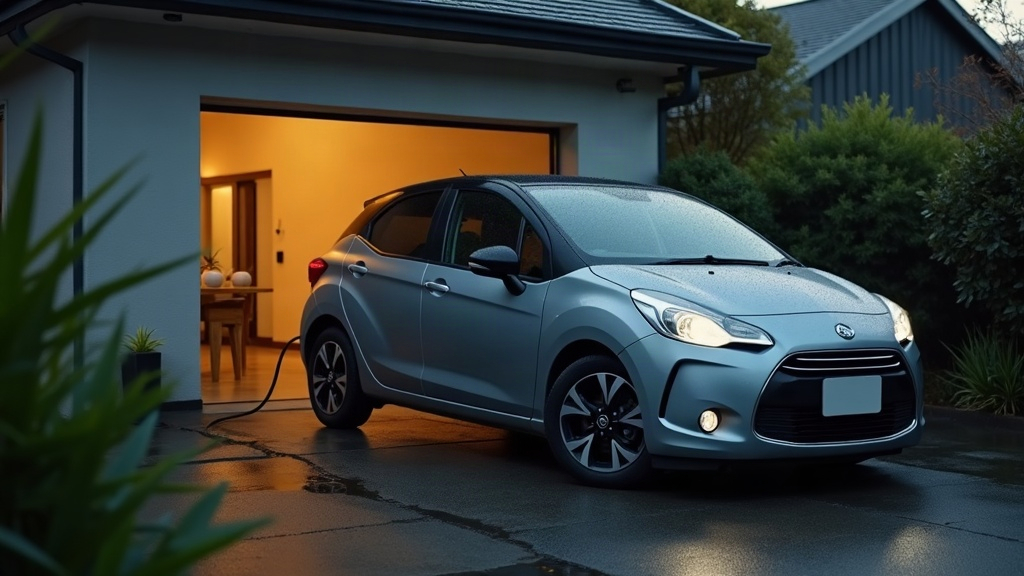
EVs under $25k: what Canterbury driving actually costs
RUC rates have settled, used Leafs and BYD Atto 3s are everywhere on Trade Me. Here's what the numbers actually look like for a South Island buyer.

Ex-lease Leafs and Atto 3s under $20k: what Canterbury buyers need to know
Used EVs are suddenly affordable, but battery health and RUC costs are the real variables. Here is what first-time electric buyers in Canterbury should check before signing anything.
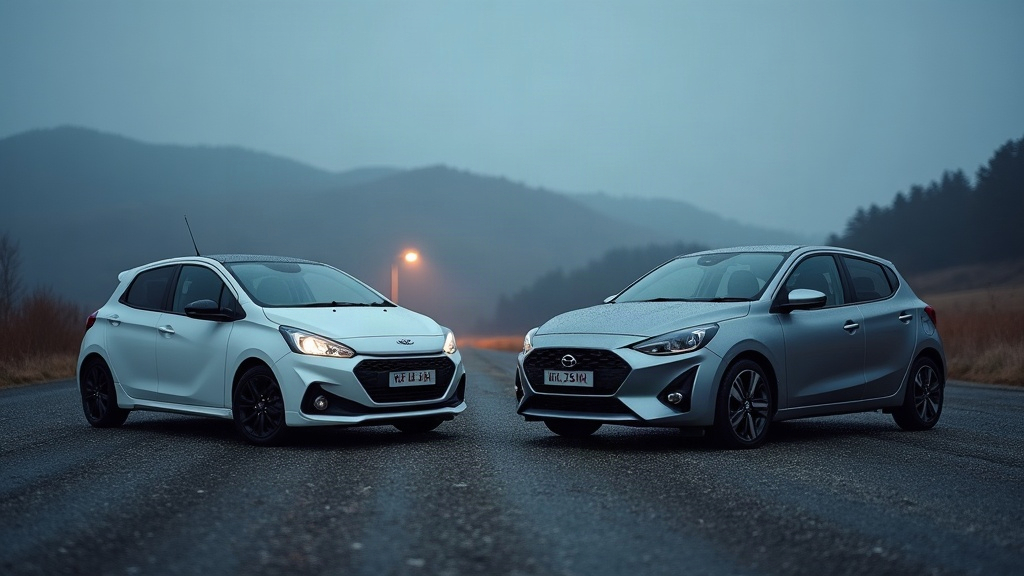
Leaf vs Aqua: what it actually costs to run each car in Canterbury
The Clean Car Discount is gone and light EV RUCs are here to stay. We crunch the real weekly numbers on a used Nissan Leaf versus a Toyota Aqua for Canterbury drivers.