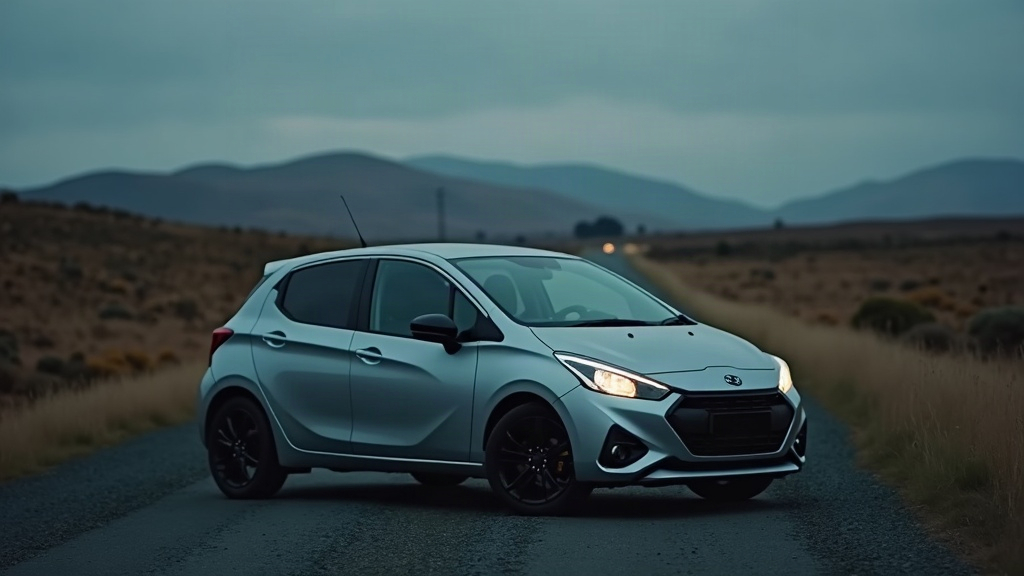
Do EVs still save Canterbury drivers money per kilometre?
The NZ Angle
Light EVs in New Zealand lost their RUC exemption in April 2024. The rate started at 2.5 cents per kilometre and sits at 3.5 cents per kilometre from 1 April 2025, with further increases signalled as uptake grows and the government looks to recover roading revenue lost from fuel excise. That charge sits on top of whatever you're paying to charge the thing. Residential electricity in Canterbury has crept toward 33-37 cents per kWh depending on your retailer and plan, and that's before time-of-use pricing starts punishing people who charge at peak hours. The Clean Car Discount ended in December 2023, so there's no upfront subsidy softening the purchase price anymore. What you're left with is a straight calculation: what does it actually cost per kilometre to run one of these cars, and does that figure beat a sensible petrol Japanese import when you factor in everything including tyres, servicing and the occasional repair? Canterbury adds a specific wrinkle. Winter driving on wet or snowed-up roads through the Port Hills or down to the ski fields will clip range figures noticeably, which affects your real-world charging costs relative to the official consumption numbers.
RUC charges are locked in, power prices keep climbing. We run the real per-kilometre numbers on the Leaf, Atto 3 and MG ZS EV against a petrol Japanese import to see if the savings case holds.
The pitch for used EVs has always leaned heavily on fuel savings. Buy the Leaf, skip the petrol station, pocket the difference. That argument made obvious sense when EVs paid no road user charges, electricity was cheaper, and the Clean Car Discount was handing buyers up to $8,625 back at the border. None of those conditions exist anymore.
So let's actually run the numbers for someone in Canterbury doing around 14,000 km a year, which is close to the national average. Three common used EVs against a 2018-2019 Toyota Aqua, which is about as sensible a petrol Japanese import as you can buy.
What it costs to charge versus fill up
The 2018 Nissan Leaf with the 40 kWh battery uses roughly 16-17 kWh per 100 km in real-world Canterbury driving. That figure goes up in winter. Call it 17 kWh average across the year. At 35 cents per kWh on a standard residential plan, that's $5.95 per 100 km in electricity alone, before RUCs. Add the current RUC rate of 3.5 cents per kilometre, which is $3.50 per 100 km, and your combined running cost for energy and road tax is $9.45 per 100 km. The Leaf is still the most affordable used EV on the market, with tidy 2018 examples sitting around $19,000-$22,000.
The BYD Atto 3 is a heavier car with a larger 60.5 kWh battery. Consumption sits around 18-20 kWh per 100 km in mixed driving. At 35 cents per kWh, that's $6.65-$7.00 for electricity, plus $3.50 RUC, putting you at $10.15-$10.50 per 100 km. Purchase price for used examples is $38,000-$48,000, depending on year and spec. That's a lot of car, and it's a lot of money.
The MG ZS EV, specifically the longer-range variant with the 72.6 kWh battery, uses around 17-19 kWh per 100 km. Similar sums: roughly $9.45-$10.15 per 100 km all-in. Used pricing is slightly softer than the Atto 3, with 2022-2023 models available around $32,000-$38,000.
Now the Aqua. A 2018-2019 model in good nick costs $13,000-$17,000. Real-world fuel consumption in mixed Canterbury driving, including some hills, is around 4.5-5.0 L per 100 km. At $2.70 per litre, that's $12.15-$13.50 per 100 km. No RUCs, because petrol excise is built into the pump price.
So the EV advantage is real: $9.45-$10.50 per 100 km versus $12.15-$13.50 for the Aqua. On 14,000 km a year, you're saving roughly $250-$560 in energy and road tax costs. That's genuine.
Where the savings case starts to lean
The problem is that per-kilometre running cost is only part of the equation.
The Leaf has a well-documented battery degradation issue on older units. A 2018 40 kWh Leaf with 80,000 km on it may show 80-85% state of health, which cuts your usable range to around 180-200 km in summer and under 150 km in a Canterbury winter. If you ever need a replacement battery, you're looking at $8,000-$15,000 depending on source. Tyres on heavier EVs wear faster than on a comparable petrol car due to the additional weight and the instant torque delivery. A Leaf or ZS EV will go through a set of 205/55 R16s or 215/55 R17s in 35,000-45,000 km where a lighter hybrid might stretch to 55,000 km.
Servicing on an EV is generally simpler, no oil changes, no timing belt on most, simpler braking due to regeneration. Budget around $250-$400 per year for a Leaf versus $400-$600 for a well-maintained petrol car. That gives the EV a small advantage back.
Insurance is worth checking before you commit. Comprehensive cover on a 2018 Leaf is broadly similar to a 2018 petrol hatchback. The Atto 3 and ZS EV cost more to insure because parts are dearer and repair times are longer. Get quotes before you buy, not after.
The actual verdict
On 14,000 km a year, the Leaf saves you roughly $300-$400 against the Aqua on running costs once you account for tyres and servicing. Over five years, that's $1,500-$2,000. The Leaf also costs $4,000-$7,000 more to buy than a clean Aqua. You are roughly breaking even over a five-year period, possibly slightly ahead, depending on electricity prices and how long the battery holds up.
For the Atto 3 and ZS EV, the running cost advantage per kilometre is similar, but the purchase premium over a petrol equivalent is much larger. You need to be doing significantly more than average kilometres, or keeping the car for a long time, for the maths to swing clearly in your favour.
The Aqua, for all its unglamorous ordinariness, costs less to buy, holds its battery indefinitely, is dead simple to service anywhere in New Zealand, and has a parts supply that won't keep you waiting. On 14,000 km a year, it is still a sensible choice and the EV savings case is narrower than it was two years ago. Higher electricity prices and established RUCs have taken a real bite out of it.
By Auto Luxe. See our editorial standards or email sales@autoluxe.co.nz with corrections.
More automotive
EVs vs petrol: does the maths still work for Canterbury drivers?
RUC charges on light EVs have bedded in and power prices have moved. We run the real numbers on a used Nissan Leaf and BYD Atto 3 against a comparable petrol car for someone driving average weekly kilometres around Canterbury.

Leaf vs Corolla: what it actually costs per km in Canterbury
RUC rates for light EVs are locked in for 2026. We run the real numbers on a used Nissan Leaf against a petrol Corolla, including electricity, fuel, and WoF costs.
What a Nissan Leaf actually costs per kilometre in Canterbury
RUCs, home charging rates, depreciation and WoF costs broken down against a comparable petrol import for Canterbury drivers doing real kilometres.