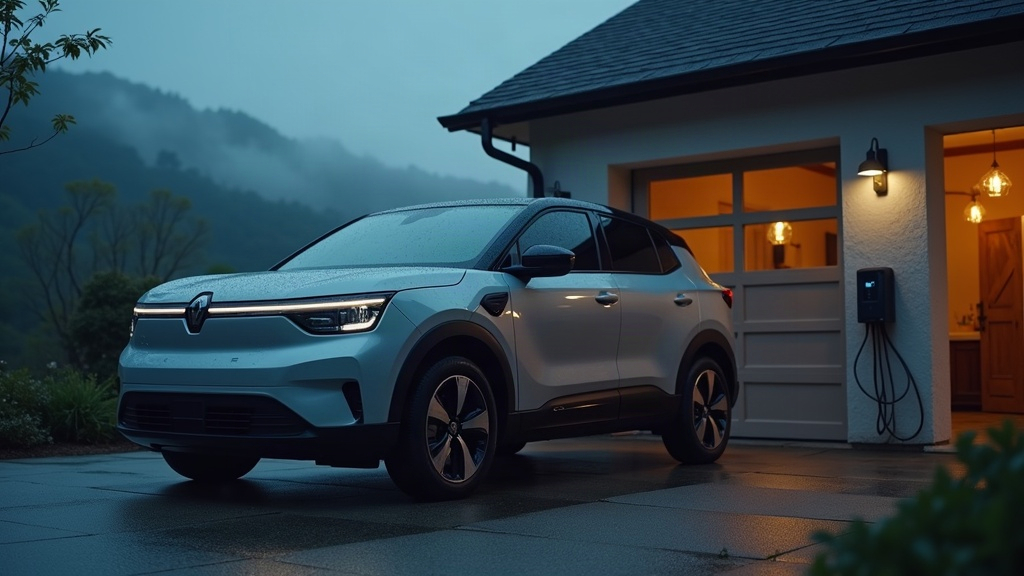
What EVs actually cost to run in NZ in 2025
The NZ Angle
New Zealand's EV incentives have dried up. The Clean Car Discount was scrapped at the end of 2023, and light electric vehicles have been paying road user charges since April 2024, currently set at $76 per 1,000km. That's not a rounding error when you're doing 15,000km a year — that's $1,140 annually before you've paid for a single kilowatt-hour. What that means in practice is that the EV running-cost case, which used to look very clean on a spreadsheet, now requires more careful arithmetic. Canterbury owners have a few extra variables to weigh. Home-charging on Orion's network is cheaper overnight than peak, and anyone on a controlled load or EV-specific plan from a retailer like Electric Kiwi or Meridian can get rates as low as 15-19 cents per kWh if they're willing to charge in the small hours. In winter, though, you're looking at real-world range dropping 15-25% depending on the car, which affects how often you charge and what you use. The south island also has enough altitude and open road running to make the Outlander PHEV's petrol fallback more than just a psychological comfort blanket. These numbers aren't projections. They're what current owners are actually paying.
The Clean Car Discount is gone, RUCs are locked in, and charging costs are rising. Here's what a Leaf, Outlander PHEV, or MG ZS EV will actually cost you per year in Canterbury.
The used EV market in New Zealand has changed shape over the past 18 months. With the subsidy gone and RUCs now a permanent fixture on the running-cost ledger, buyers shopping in the $15,000-$35,000 range need to do the sums properly rather than assume EVs are automatically cheaper to run than petrol cars. They often are — but not always, and not by as much as the marketing implied.
The three vehicles that dominate this conversation are the Nissan Leaf (typically the 40kWh ZE1 generation, 2018-2022), the Mitsubishi Outlander PHEV (2015-2019 units being the bulk of current used stock), and the MG ZS EV (2021-2023, 44kWh or 51kWh). Each one represents a different bet on how you want to use a car and how much uncertainty you can tolerate.
Nissan Leaf: the baseline case
A tidy 2019 Leaf 40kWh will cost you $16,000-$22,000 from a Canterbury dealer right now. At 50,000-90,000km, these are generally healthy cars, though battery degradation on early ZE1 units without active thermal management is a genuine concern. Check the SOH (state of health) figure before you buy — under 85% on a 40kWh pack means you're working with less than 34kWh of usable capacity, and real-world range in a Canterbury winter can drop to 180km on a good day.
Running costs per year, based on 15,000km:
RUCs at $76/1,000km come to $1,140. Home charging — assume 18kWh per 100km real-world — works out to 2,700kWh for 15,000km. At an average blended rate of 28 cents per kWh (mixing off-peak and shoulder), that's $756. WoF is annual after the third year, typically $60-80. Servicing on a Leaf is light — brake fluid, cabin filter, tyres — budget $400-500 per year. Comprehensive insurance on a $19,000 Leaf runs $1,000-$1,400 depending on your age and history.
Total annual cost: roughly $3,500-$3,800 excluding finance. That's a reasonable number, but it's no longer dramatically cheaper than running a 2018 Toyota Aqua hybrid doing 4.5L/100km at current petrol prices. The gap has narrowed.
Mitsubishi Outlander PHEV: the pragmatist's pick
The Outlander PHEV sits in a different category because it doesn't pay RUCs. PHEVs are currently exempt, which is a genuine financial advantage and worth noting clearly: at 15,000km per year, that's $1,140 back in your pocket compared to a full EV.
Used pricing is $22,000-$32,000 for 2016-2019 models in good order. The early 12kWh battery gives around 35-45km of real-world EV range before the 2.0-litre petrol takes over. Most owners who charge regularly will cover their daily commute on electricity alone, and then run petrol on weekends or longer trips. The system works, and it's been proven over a large fleet in NZ.
Known issues at 100,000km-plus: the high-voltage battery can show reduced range on older units, EV hose connections on the cooling system are worth inspecting, and the front diff actuator has caused headaches on some examples. Parts availability is decent given how many of these are on NZ roads.
Annual running costs at 15,000km, assuming 60% of driving on electricity:
No RUCs. Home charging for 9,000km of EV driving (roughly 2,000kWh) at 28c/kWh is $560. Petrol for 6,000km at 7.5L/100km (petrol-only mode is thirsty) is around 450 litres, or $1,200 at $2.65/L. Servicing is more involved than a pure EV — annual services, plugs, brakes, tyres — budget $700-900/year. Insurance on a $27,000 PHEV: $1,300-$1,700.
Total: roughly $3,800-$4,400 depending on your driving split. More expensive than the Leaf in pure running-cost terms, but the flexibility has real value, especially for South Island owners who occasionally do Christchurch to Queenstown or over the Lindis.
MG ZS EV: the value play with caveats
The ZS EV is the cheapest new EV money could buy in NZ for several years running, and used examples from 2021-2023 are now appearing at $23,000-$30,000. The 51kWh version (from late 2021) is the one worth having — the earlier 44kWh cars are fine but the range margin is tighter.
Real-world Canterbury range on the 51kWh is 280-320km in summer, dropping to 230-260km in winter. That covers most owners comfortably. The car itself is competent, with a proper heat pump from the 2022 update that helps with cold-weather efficiency.
The honest caveat is parts and servicing. MG in NZ is supported through the SAIC importer network, but it doesn't have the depth of coverage that Nissan or Mitsubishi does. If something goes wrong with the drivetrain outside warranty, you're potentially waiting on parts from Australia or China. That risk is manageable on a car under warranty, less comfortable at five years old and 90,000km.
Running costs mirror the Leaf closely. RUCs: $1,140. Home charging for 15,000km at roughly 17kWh/100km is 2,550kWh, so $714 at 28c/kWh. Servicing is light: $350-500. Insurance: $1,100-$1,500.
Total: $3,400-$3,700 per year. On paper the cheapest of the three, but the parts-supply asterisk is real and worth pricing into your thinking if you're planning to keep it past 100,000km.
What the numbers actually say
None of these cars are the no-brainer they were when the Clean Car Discount was adding $8,625 to the purchase equation and RUCs were still on the horizon. The annual running cost gap between a well-chosen EV and a frugal petrol hybrid is now $500-$1,500 depending on how much you drive and how cheap your overnight charging rate is.
For Canterbury owners doing genuine daily kilometres, the Leaf remains a solid proposition if the battery health checks out. The Outlander PHEV makes more sense than people give it credit for if you do mixed driving and value not having to think about charge planning on longer runs. The ZS EV is good value today; whether it stays that way at higher mileage depends on how MG's parts network matures in New Zealand.
The switch still stacks up for many buyers. Just don't expect the savings to feel as obvious as they did two years ago.
By Auto Luxe. See our editorial standards or email sales@autoluxe.co.nz with corrections.
More automotive

Nissan Leaf vs petrol hatch: what the 2026 RUC change actually costs you
NZTA's updated RUC rates for light EVs land 1 November 2026. We crunch the real per-kilometre numbers for Christchurch buyers weighing a used Nissan Leaf against a comparable petrol hatchback.
EV running costs are about to change: what Canterbury owners need to know
NZTA's updated RUC rates for light EVs kick in 1 November 2026. We run the numbers on a Leaf, MG ZS EV and BYD Atto 3 to see what actually changes.
EVs vs petrol: does the maths still work for Canterbury drivers?
RUC charges on light EVs have bedded in and power prices have moved. We run the real numbers on a used Nissan Leaf and BYD Atto 3 against a comparable petrol car for someone driving average weekly kilometres around Canterbury.