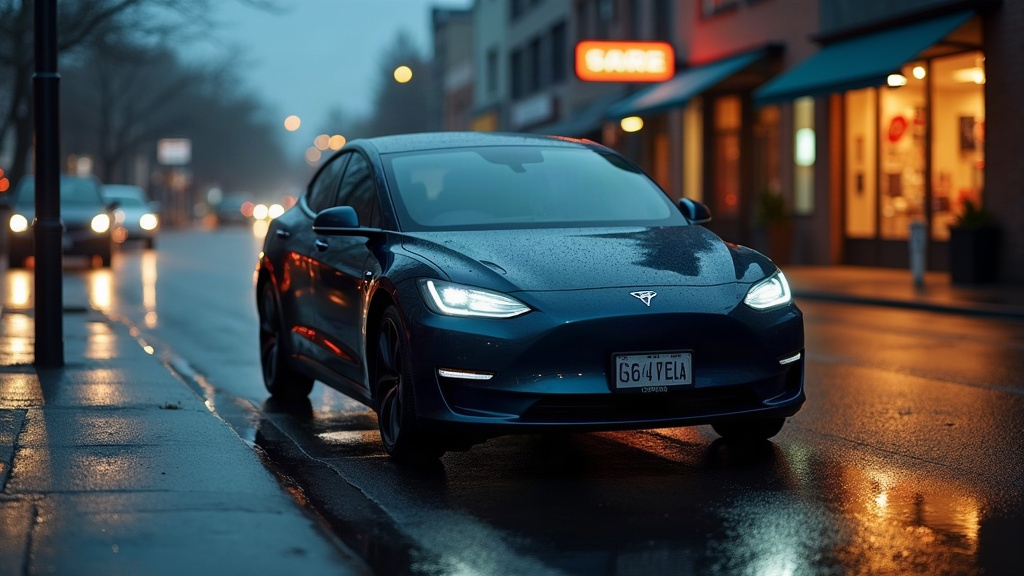
EV running costs in NZ: the real numbers after RUCs
The NZ Angle
Light EV road user charges landed in New Zealand in April 2024, set at $76 per 1000 km. For anyone who bought a used Leaf or Ioniq partly because they'd dodged RUCs for years, that changes the maths. The Clean Car Discount is also gone, so the purchase price premium on EVs no longer gets softened at the border. What's left is a straightforward question: does the lower cost-per-kilometre still hold up once you stack RUCs, home charging rates, WoF, registration and real-world depreciation against what you'd spend running a comparable petrol car? Canterbury adds a specific wrinkle. Cold Christchurch winters hit lithium battery range noticeably, sometimes 20 to 30 percent below the claimed figure, which affects the effective cost per usable kilometre. Older Leafs, particularly the 24 kWh generation, are the ones to watch closely. Their battery degradation on the second-hand market is well documented and a weak cell group means the range hit in July is meaningful. The numbers below cover the three EVs you're most likely to find on a Canterbury used-car yard right now: the Nissan Leaf, MG ZS EV and Hyundai Ioniq. Each is stacked against a petrol equivalent at similar purchase price points.
RUC charges for light EVs have been running long enough to get a clear picture. Here's what a Leaf, MG ZS EV or Ioniq actually costs per kilometre versus a comparable petrol car.
The conversation about EVs has shifted. A few years ago it was all payback periods and charging anxiety. Now, with RUCs bedded in and the subsidy gone, buyers want to know something simpler: is this thing actually cheaper to run, or did I talk myself into it?
The short answer is yes, EVs still win on running costs. But the margin is narrower than the EV community tends to admit, and it varies a lot depending on which car you buy and how old the battery is.
What the numbers actually look like
Take the Nissan Leaf. A solid 40 kWh example with reasonable battery health sits around $18,000 to $22,000 at a used-car dealer right now. Its real-world efficiency in mixed Canterbury driving is around 16 to 18 kWh per 100 km. At a typical home charging rate of around 28 to 33 cents per kWh, that puts your energy cost at roughly $5.00 to $6.00 per 100 km. Add RUCs at $7.60 per 100 km and you're sitting at $12.60 to $13.60 all-in for fuel and road tax combined.
A comparable 2018 to 2020 Nissan Sylphy or Toyota Axio on petrol, same price bracket, uses around 7.0 to 8.0 litres per 100 km. At $2.80 per litre, that's $19.60 to $22.40 per 100 km. The Leaf is still ahead by six to nine dollars every hundred kilometres. Over 15,000 km a year, that's $900 to $1,350 in your pocket.
The Hyundai Ioniq electric is a better car than the Leaf in almost every way that matters behind the wheel. The front end is more honest, weight transfer is predictable, and it settles into corners without the Leaf's tendency to push wide when you ask too much of it. Efficiency is also better, around 14 to 15 kWh per 100 km, so the energy cost drops to $4.00 to $5.00 per 100 km before RUCs. Total per 100 km: around $11.60 to $12.60. Problem is, good Ioniqs have climbed in price. You're paying $23,000 to $28,000 for a tidy one, which shifts the comparison bracket into Mazda 3 or Corolla sedan territory, both of which will drink more petrol but hold their value more predictably.
The MG ZS EV is the one that splits opinion. Purchase price is aggressive, often $19,000 to $24,000 for a 2021 to 2023 example, and the energy consumption is reasonable at around 17 to 19 kWh per 100 km. Running cost per 100 km lands close to the Leaf. But the ZS EV is a heavier car and you feel that through the steering. There's not much happening between your hands and the front tyres. It gets the job done, the range is genuine, and the interior space is useful. Whether that's enough depends on how much time you spend actually driving versus just arriving.
Where the EV argument gets complicated
Depreciation is the number most EV advocates skip past, and it's the one that matters most for total cost of ownership. Leaf values, particularly the older 24 kWh cars, have softened hard. That's partly battery anxiety, partly the sheer volume of them available. A Leaf that was $16,000 two years ago might realistically be $12,000 to $13,000 today. Fast depreciation cuts both ways: it makes entry cheaper for buyers, but it punishes owners who paid more and are now selling.
The 40 kWh Leaf has held better, and the Ioniq better still, partly because supply is tighter and partly because buyers who know EVs know the Ioniq's battery holds up well over time. The MG ZS EV is too new to have a long depreciation track record in New Zealand, which is itself a risk worth pricing in.
WoF costs are genuinely lower on EVs. No cam belt, no exhaust, fewer brake wear issues because regenerative braking does most of the work. In practice, WoF pass rates on well-maintained EVs are high and the bills are lighter. That's real money, not a talking point.
The plain verdict
If you're doing more than 12,000 km a year and you can charge at home overnight, the running cost case for a used EV still holds. The Ioniq is the pick of the three if you can stretch the budget, because it's efficient, it drives with some honesty, and the battery story is solid. The Leaf at the right price is still good value if you get a 40 kWh car with a health report you can trust. The MG ZS EV suits buyers who want the space and the savings and don't particularly care about what they feel through the wheel.
RUCs changed the maths, but they didn't break it. What they did was make the battery health question more important than ever. A degraded battery means less range, more charging stops, and a worse effective cost per kilometre. Get that checked before you sign anything.
By Auto Luxe. See our editorial standards or email sales@autoluxe.co.nz with corrections.
More automotive
EVs vs petrol: does the maths still work for Canterbury drivers?
RUC charges on light EVs have bedded in and power prices have moved. We run the real numbers on a used Nissan Leaf and BYD Atto 3 against a comparable petrol car for someone driving average weekly kilometres around Canterbury.

Leaf vs Corolla: what it actually costs per km in Canterbury
RUC rates for light EVs are locked in for 2026. We run the real numbers on a used Nissan Leaf against a petrol Corolla, including electricity, fuel, and WoF costs.

What a Nissan Leaf actually costs per kilometre in Canterbury
RUCs, home charging rates, depreciation and WoF costs broken down against a comparable petrol import for Canterbury drivers doing real kilometres.