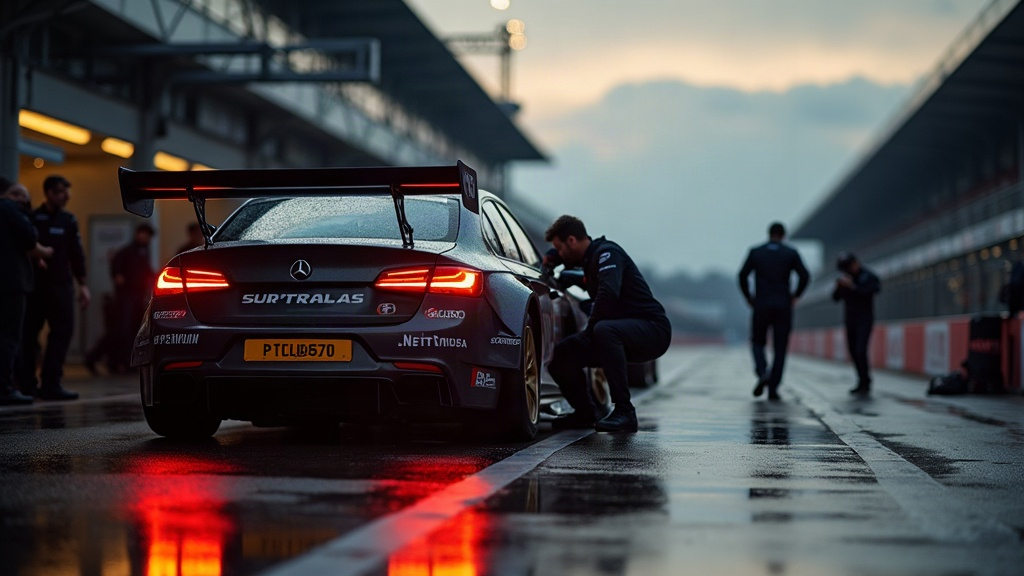
Van Gisbergen leads the points but the title is far from settled
The NZ Angle
For anyone following Supercars from this side of the Tasman, the 2026 season has been a study in patience. Van Gisbergen left New Zealand for NASCAR in 2023 and made his Supercars return with Triple Eight last year, and the question since then has been whether he could string a full season together the way he did in those dominant Holden years. The evidence from recent rounds suggests he can, though the series has changed enough around him that nothing is guaranteed. Liam Lawson's trajectory through Formula One has been the bigger local story in 2025 and into 2026, but SVG remains the Kiwi name that Supercars fans here actually watch on a Sunday morning. There are no other Kiwi regulars in the main field this season, which makes his results carry more weight than they might otherwise. Back home, the TRS calendar and the NZ Rally Championship occupy the summer months, but Supercars fills the gap through the New Zealand winter in a way nothing else quite manages, and a Kiwi running at the front of the standings makes that appointment viewing rather than background noise.
Shane van Gisbergen holds the Supercars championship lead after the most recent round, but the margins are tight and the calendar is running short.
Symmons Plains in the early 1990s. Pukekohe in its Supercars prime. Those are the venues one remembers when thinking about what this championship has meant to New Zealand audiences, a series that felt, for a long time, like it was partly ours. The cars were Australian, the teams were Australian, but the names at the front were often not. Greg Murphy. Craig Lowndes for a spell in our affections if not our passports. And then Shane van Gisbergen, who made the connection feel current and competitive in a way that kept the Sunday morning alarm justified.
The most recent round has SVG sitting at the top of the championship standings, though the gap is close enough that describing it as comfortable would be generous. He took a race win across the weekend and backed it with a podium finish, which is the kind of consistency that wins titles in a long season. The Triple Eight car has looked sorted across different circuit types in 2026, which was not always the case in the transitional period after Gen3 arrived and shuffled the competitive order.
What the round result actually showed
The race win itself came from a combination of clean pit work and van Gisbergen managing tyre wear better than his nearest rivals through the final stint. He did not dominate from lights to flag. He pressured, positioned himself, and was where he needed to be when the window opened. That is the version of SVG that has always been hardest to beat, the one who does not need to be fastest if he can be smartest.
The weekend was not without difficulty. A qualifying session that left him further back than the team would have liked meant the Sunday race required more overtaking than a clean weekend would demand. The pace was there, which matters more than the narrative. His championship rival, Cam Waters, had a difficult Sunday after a first-race result that had briefly closed the gap, and that swing in points was probably the most significant number to come out of the round. Broc Feeney, driving the second Triple Eight entry, had a mixed weekend but contributed nothing to close the gap on SVG, which is a useful result in itself when you are trying to manage a teammate relationship alongside a championship push.
The shape of the run home
With several rounds remaining, the championship is at the stage where each weekend starts to carry compounding weight. A driver who finishes second overall can afford two or three average weekends across a full season and still recover. With the calendar thinning out, that tolerance disappears. Van Gisbergen's lead is real but not commanding, somewhere in the range where a strong rival who strings two perfect weekends together can reverse it.
Waters has done this before, pushed deep into a season and kept delivering. The Ford Mustang has been competitive enough throughout 2026 that his results have been a genuine reflection of the car and the driver rather than circuit-specific fortune. The Bathurst 1000 looms, as it always does at this point in the season, as the round that reshapes everything. It rewards neither the fastest nor the most consistent, exactly, but the combination of both across seven hours with a co-driver variable added in. That is where championships can be handed over or cemented, and it is the round that SVG's career record already speaks to at some volume.
For all that the points table suggests a controlled championship campaign, there is still enough variance in the remaining calendar that the title is genuinely open. Endurance co-driver pairings will be confirmed shortly, and the choice matters at Triple Eight as much as anywhere. In previous seasons, that decision has been a signal about where the team's priorities sit.
The business end of a Supercars season has a particular rhythm to it. Teams that have been developing setup and understanding through the first half begin to consolidate. Drivers who have been managing points rather than hunting wins start hunting wins. The field compresses not because the slower teams get faster but because the attrition rate climbs and every contact or mechanical failure at this stage of the year costs something it cannot give back.
Van Gisbergen has been through this enough times to understand the arithmetic. So has his team. The next two rounds will tell more than any single result has so far.
By Auto Luxe. See our editorial standards or email sales@autoluxe.co.nz with corrections.
More motorsport
SvG leads the championship charge as Supercars heads for the finale
Shane van Gisbergen extended his points lead at the most recent Supercars round, with the standings tightening as the 2026 season enters its final stretch.
Van Gisbergen presses on as Supercars title race tightens
Shane van Gisbergen delivered a strong showing at the most recent Supercars round, keeping himself in championship contention as the 2026 season enters its final stretch.
Van Gisbergen and the Kiwi contingent at a crossroads in 2026 Supercars
The most recent Supercars round has reshuffled the championship standings with only a handful of events remaining, and New Zealand's drivers sit in very different positions heading into the run home.