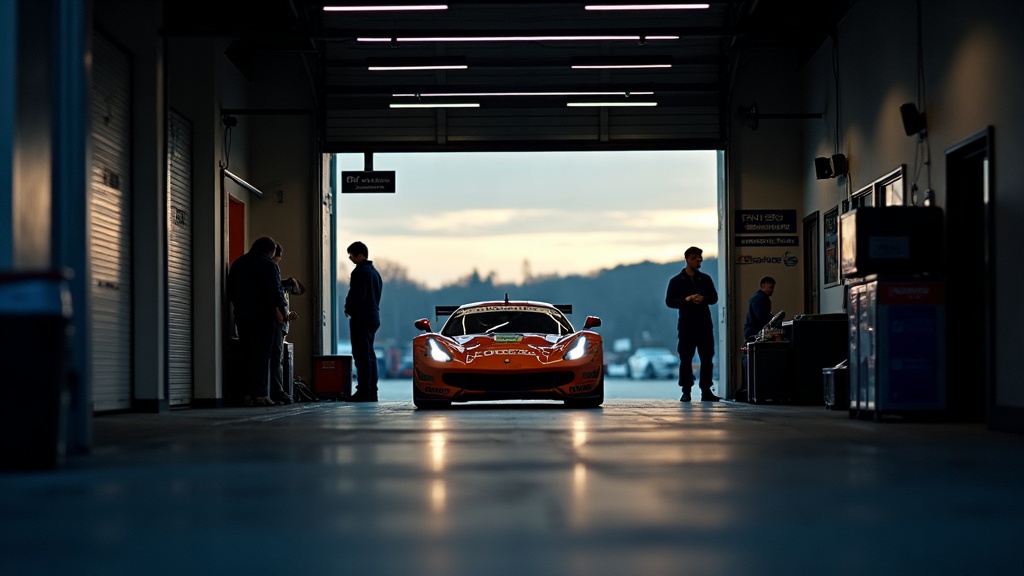
Van Gisbergen leads the independents as Kiwis hold their ground at mid-season
The NZ Angle
For a country that punches well above its weight in Australian touring car racing, the 2026 Supercars season is shaping up as one worth following closely from this side of the Tasman. Van Gisbergen is the obvious headline, running the Triple Eight-built Camaro under the Erebus banner this year and doing what he tends to do when given a competitive package: making life uncomfortable for people with bigger budgets. But beyond SvG, there are a handful of Kiwis scattered through the field whose results matter to the domestic scene. How those drivers perform internationally has a direct bearing on sponsor interest, team investment, and ultimately the health of local series like the Toyota Racing Series, which has historically served as the pipeline. Lawson's trajectory through Formula 2 and into the Red Bull senior programme is the more glamorous story, but the Supercars contingent is where the rubber meets the road for most New Zealand motorsport fans. Pukekohe's loss as a round venue still stings in the paddock. The conversation about a return, or a replacement round at Hampton Downs, surfaces every few months without resolution. In the meantime, Kiwis follow the series from afar and find reasons to stay invested through their own.
The most recent Supercars round added another chapter to Shane van Gisbergen's independents' title push, while the broader Kiwi contingent delivered a mixed but meaningful set of results.
The Supercars calendar has reached the point where the championship picture starts to mean something. Teams have enough data to know what they are, results are harder to paper over with excuses about setup or strategy, and the independents' battle, which rarely gets the coverage it deserves, begins to crystallise into something you can actually argue about.
The most recent round did not disappoint on any of those fronts.
Van Gisbergen and the independents' fight
Shane van Gisbergen finished in the top ten across both races, which for an Erebus Camaro running against the factory Triple Eight and Tickford operations is the kind of result that keeps a championship campaign alive rather than flatters to deceive. The gap to the leading independent has tightened. In the paddock, the sense is that van Gisbergen's race pace is there or thereabouts; qualifying has been the constraint, and that is partly a tyre compound conversation, partly track position on circuits where overtaking is a negotiation rather than a given.
He is not reinventing his approach. He rarely does. The style is the same one that won him three Bathurst 1000s and a Supercars title: manage the tyres, stay out of trouble in the first stint, then drive the second stint like the result depends on it, because it does. What has changed slightly is the context. Running as an independent means the resources around him are leaner. The engineering group is capable, but they are working harder for every tenth than the factory crews are.
Which is, of course, the whole point of the independents' category. It rewards relative performance, and van Gisbergen is doing enough to lead it with half a season remaining.
The broader Kiwi picture
Beyond van Gisbergen, the New Zealand representation in Supercars this season is thin by historical standards. The days of a half-dozen Kiwis spread across the top ten are gone, partly because the grid has contracted and partly because the pathways from New Zealand domestic racing into Australian touring cars have become harder to navigate financially.
What the round did confirm is that van Gisbergen remains the most compelling reason to watch the series if your primary interest is the New Zealand angle. The others in the field with Kiwi connections are either in results territory that is hard to spin positively, or in development roles that will take another season to evaluate fairly.
The championship standings for the main game are largely what they were before the round, which tells you something about the consistency of the front-runners. Chaz Mostert and the Walkinshaw operation have been solid without being dominant. The Triple Eight cars have shown speed in flashes. The familiar story of Supercars mid-season is that the gaps are smaller than the teams admit and larger than the TV graphics suggest.
What the standings mean from here
Heading into the second half of the season, the independents' title is van Gisbergen's to lose. That is not a prediction, it is a reading of the points table and the remaining rounds. The circuits coming up suit cars that are set up for mechanical grip over aerodynamic efficiency, and the Camaro platform has shown it can deliver on that kind of surface.
The risk is reliability. Erebus has had some gremlins this year, nothing catastrophic, but the kind of minor dramas that cost five or six points here and there. Over a full season that adds up. Van Gisbergen will know it, the engineers will know it, and the rival independents will be watching the pit wall data as closely as they watch the timing screens.
For the main championship, the realistic outcome is that the title fight is decided at or after Bathurst. The 1000 at Mount Panorama in October is where Supercars seasons either crystallise or collapse, and van Gisbergen's record there gives him a credibility that the standings alone cannot fully capture.
One hears that co-driver negotiations for the endurance rounds are largely settled within the main teams. For the independents, those conversations are more complicated. The pairing van Gisbergen gets for the long-distance races will matter. It always does.
The second half of the season starts soon enough. The paddock will have opinions. It usually does.
By Auto Luxe. See our editorial standards or email sales@autoluxe.co.nz with corrections.
More motorsport
SvG leads the championship charge as Supercars heads for the finale
Shane van Gisbergen extended his points lead at the most recent Supercars round, with the standings tightening as the 2026 season enters its final stretch.
Van Gisbergen presses on as Supercars title race tightens
Shane van Gisbergen delivered a strong showing at the most recent Supercars round, keeping himself in championship contention as the 2026 season enters its final stretch.
Van Gisbergen and the Kiwi contingent at a crossroads in 2026 Supercars
The most recent Supercars round has reshuffled the championship standings with only a handful of events remaining, and New Zealand's drivers sit in very different positions heading into the run home.