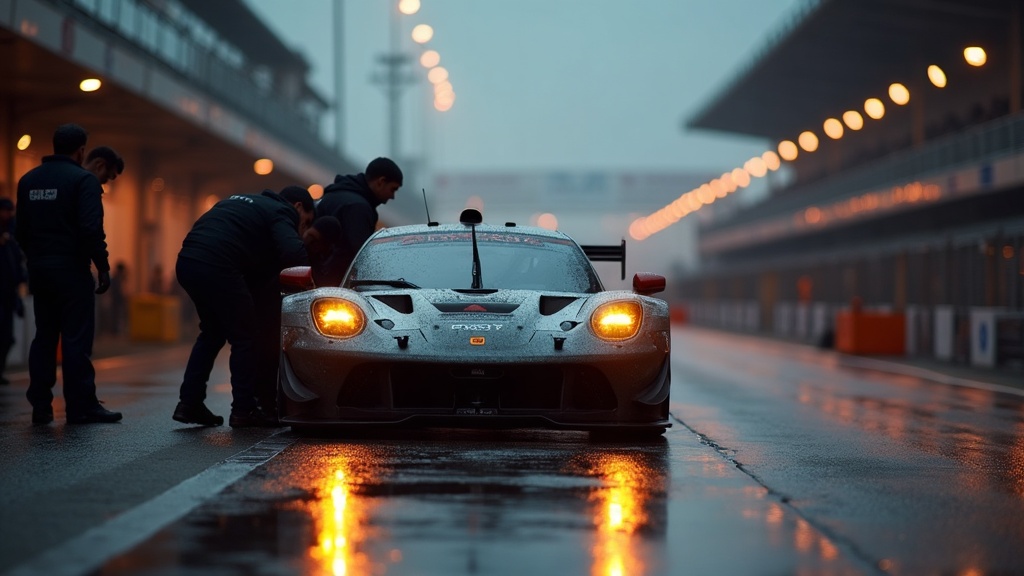
Van Gisbergen holds ground as Supercars reaches the midpoint
The NZ Angle
Shane van Gisbergen has spent most of his post-Supercars career in North America, and his absence from the main game has left a gap in the series that no other Kiwi has quite managed to fill with the same consistency. Liam Lawson's rise through Formula 2 and into Formula 1 machinery drew attention away from the touring car world, and rightly so, but the domestic conversation about New Zealand's place in Supercars has quietly narrowed. The Supercars calendar no longer visits Pukekohe, a loss that still registers with anyone who remembers the noise that circuit produced during a V8 weekend, and the lack of a home round makes it harder for local fans to feel the series as something that belongs to them. What remains is the investment in individual drivers: SvG's reputation, built across years of Bathurst wins and championship tilts, still carries weight in New Zealand. How he and any other Kiwis on the grid finish the 2026 season will determine whether that connection holds through to 2027, or whether Supercars continues its slow drift from being a sport New Zealanders follow closely to one they check results on Monday morning.
The most recent Supercars round has tightened the championship picture, with Shane van Gisbergen among the Kiwi contingent worth watching as the second half of 2026 approaches.
The paddock at the most recent Supercars round carried the particular atmosphere of a championship that knows it has entered serious territory. Points margins that felt comfortable in April have tightened through attrition and the occasional misfortune, and the leaderboard now requires more than a glance to read properly.
Shane van Gisbergen, whose relationship with Supercars since transitioning to North American racing has been one of periodic returns and guest appearances rather than full-season commitments, has been among the figures giving New Zealand followers reason to pay attention. His pace, when he has it, remains at a level that reminds the field what made him a three-time champion. The question, as it has been throughout any abbreviated campaign, is whether points hauls across selected rounds are enough to do anything meaningful in the standings, or whether the exercise is something closer to an exhibition.
What the results actually showed
The round itself produced the kind of racing Supercars does well when the circuits allow it: close competition, strategy variation between one-stop and two-stop approaches, and enough contact to create genuine drama without descending into farce. Whoever led the points coming in did not have an uncomplicated weekend, which is often how the second half of a season begins to separate itself from the first.
For van Gisbergen, the result was a function of where he started and what the car gave him. He is experienced enough to extract more from a difficult position than most, and that quality has not diminished with time away from the Supercars environment. A points finish in that context represents something, even if it does not dramatically reshape the championship order.
If other New Zealand-affiliated drivers were in the field in a competitive capacity, their results would need to be weighed against the level of machinery they are running. Supercars has always had a gap between the front-running teams and the remainder, and that gap does not flatter anyone outside the top organisations, regardless of ability.
The standings and what they suggest
Heading into the back half of 2026, the championship picture has a familiar shape: one or two drivers with a workable buffer, a cluster within striking range if they string results together, and the rest managing their own expectations. The rounds remaining tend to reward consistency over single-event brilliance, though Bathurst, when it arrives, has a habit of rewriting narratives that looked settled.
For any Kiwi driver in the mix, the back half of the season is where legacy points get accumulated or lost. Van Gisbergen's career at this level has been defined by his ability to treat each round as a discrete problem, not to carry the weight of a previous result into the next event. Whether that quality is easier to sustain across a full season than a partial one is something his recent history in the US has probably tested in different ways.
The teams chasing the championship will be running detailed simulations now about which tracks suit their cars and which do not. The Supercars calendar in the second half of the year tends to concentrate the pressure: fewer rounds mean fewer opportunities to recover from a poor day, and the mathematics become less forgiving as the total rounds completed rises.
Where this leaves the series
Supercars has spent several years managing a transition: from V8 engines to Gen3 machinery, from a schedule with a New Zealand round to one entirely on Australian soil, from a landscape where Ford and Holden rivalry defined the cultural stakes to something more diffuse. The racing quality has, if anything, improved under the new regulations, but the emotional architecture around the series has had to be rebuilt.
For New Zealand followers, the investment in the series increasingly runs through individual drivers rather than the broader product. When van Gisbergen won at Bathurst, it was a national result in a way that transcended the team or manufacturer. That kind of attachment is harder to generate at a distance and harder still when the driver's primary commitments lie elsewhere.
One remembers that the series has produced these moments of Kiwi prominence before, and that they have tended to arrive when least expected. The second half of a season, with its compressed pressure and its singular set-piece events, is where those moments have historically been made.
By Auto Luxe. See our editorial standards or email sales@autoluxe.co.nz with corrections.
More motorsport
SvG leads the championship charge as Supercars heads for the finale
Shane van Gisbergen extended his points lead at the most recent Supercars round, with the standings tightening as the 2026 season enters its final stretch.
Van Gisbergen presses on as Supercars title race tightens
Shane van Gisbergen delivered a strong showing at the most recent Supercars round, keeping himself in championship contention as the 2026 season enters its final stretch.
Van Gisbergen and the Kiwi contingent at a crossroads in 2026 Supercars
The most recent Supercars round has reshuffled the championship standings with only a handful of events remaining, and New Zealand's drivers sit in very different positions heading into the run home.