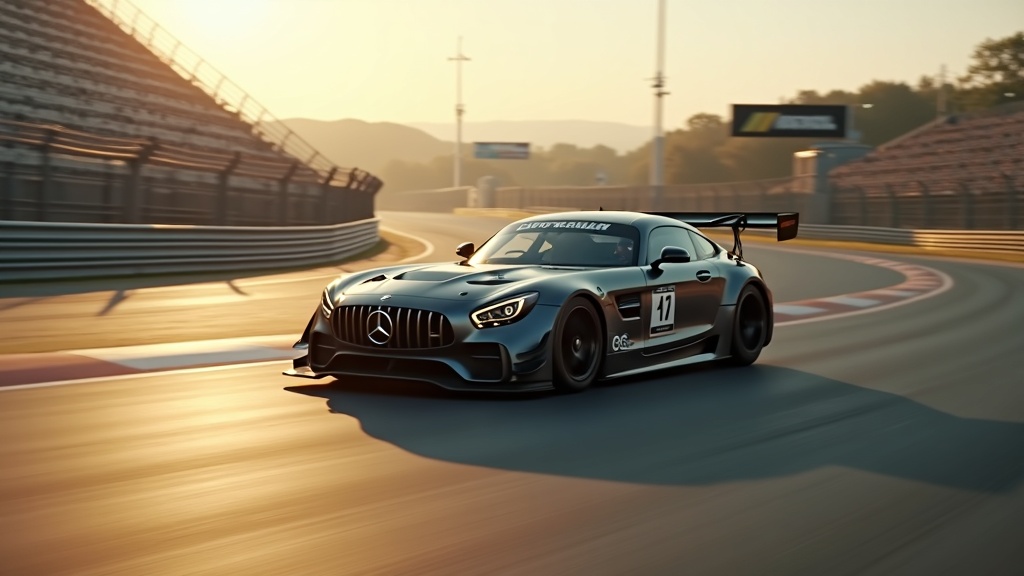
SvG leads the way as Supercars hits its midpoint
The NZ Angle
For a country that punches above its weight in circuit racing, the Supercars Championship has long been a proving ground for Kiwi talent. Shane van Gisbergen's dominance in the series over the past several seasons demonstrated what a technically astute driver operating at the top of his mechanical understanding can achieve in a spec-adjacent category where setup margins are thin. Liam Lawson's trajectory through Formula 2 and into Formula 1 showed a different path, but Supercars remains the most accessible elite series for a New Zealand fan base that can actually watch it live, follow the tyre strategies in real time, and understand the circuits. Hampton Downs has hosted international-calibre tin-top racing, and Pukekohe's history as a Supercars venue gave a generation of local fans a reference point for what these cars actually sound and behave like at the limit. The championship standings heading into the back half of 2026 matter here because van Gisbergen's career arc, whatever form it takes across different series, began in this category and any success he carries forward reflects directly on the depth of the New Zealand motorsport pipeline.
Shane van Gisbergen extended his championship lead at the most recent Supercars round, while the broader standings set up a tight contest through the second half of 2026.
Through the first half of the 2026 Supercars Championship, Shane van Gisbergen has been the most consistent points accumulator in the field. The margin at the top of the standings heading into the mid-season break is not enormous, but in a category where a bad strategy call or a pit-lane penalty can swing forty points in a single weekend, consistency across race one and race two formats has been the actual differentiator.
At the most recent round, van Gisbergen converted pole position into a race-one win with the kind of tyre management that the Triple Eight engineering group has refined over many seasons. The key moment was not the start, which he handled cleanly, but the middle stint, where he held a pace delta that kept the chase group close enough to stay in DRS range without triggering an early undercut from the pit wall. When the safety car came out on lap 24, the timing window for a free stop had already closed for his nearest rival, and van Gisbergen's lead extended to the point where the final restart was effectively a processional.
Race two was less straightforward. A slight push into turn one on cold tyres cost him two tenths in the first sector, and that early understeer put him behind a car he then had to work past over the next eight laps. He got the position back, finished third, and dropped minimal championship points. On balance, a solid weekend.
The gap and what it actually means
The championship lead van Gisbergen holds going into round nine is around 85 points, depending on final scoring confirmation. In real terms, that is roughly one and a half race wins. It sounds comfortable, but Supercars has a way of compressing standings through the Queensland and New South Wales rounds that tend to fall in the back half of the calendar. Track surfaces that generate more tyre graining, warmer ambient temperatures affecting aero balance, and the higher density of street circuits all tend to tighten the grid and reduce the mechanical grip advantage that smoother purpose-built circuits can expose.
His closest challenger at this point has been consistent without being dominant, picking up podiums in the rounds where van Gisbergen had safety car misfortune. The geometry of the title fight is straightforward: van Gisbergen needs to maintain his current finishing average, and his rival needs at least two rounds where the positions invert. Neither outcome is improbable.
There are no other New Zealand passport holders currently in the main Supercars field at this point in 2026, which is a shift from earlier years when the grid carried more Kiwi representation. The development pathway from Toyota Racing Series through to Supercars, which has historically funnelled talent from Hampton Downs and Teretonga through to Australian tin-tops, has not produced a new graduate at this level in the current season.
Technical picture for the second half
The car van Gisbergen is driving has shown its best form on circuits where mechanical grip loading is high. The Gen3 platform, now into its third full season, has settled into a known operating window for most teams, which means the performance gaps are narrowing at an engineering level. What separates the top runners now is more about driver-in-lap optimisation and pit stop execution than about setup differentiation.
Triple Eight's pit crew has been measurably quick this season. In the data that has come through from broadcast timing, their average four-tyre stop sits inside 2.6 seconds consistently. That is not an accident, and it is not peripheral to the championship. In a category where the undercut window is often only 1.5 seconds of delta time, a stop that is 0.3 seconds faster than the field average translates directly into track position retained.
The second half of the calendar includes the Bathurst 1000, which operates under its own logic. Co-driver pairing, fuel load strategy across a 161-lap race, and the specific grip behaviour of Mount Panorama's surface all mean the endurance round is as much a separate event as it is a championship round. Van Gisbergen's record at Bathurst is well documented. Whether 2026 adds to it will depend as much on his co-driver's pace in the early stints as on anything he does himself.
Outside of Bathurst, the rounds through to November will test whether the championship lead holds or compresses. The evidence from the first half of the season suggests van Gisbergen has earned it through process rather than fortune, which tends to be the more durable kind.
By Auto Luxe. See our editorial standards or email sales@autoluxe.co.nz with corrections.
More motorsport
SvG leads the championship charge as Supercars heads for the finale
Shane van Gisbergen extended his points lead at the most recent Supercars round, with the standings tightening as the 2026 season enters its final stretch.
Van Gisbergen presses on as Supercars title race tightens
Shane van Gisbergen delivered a strong showing at the most recent Supercars round, keeping himself in championship contention as the 2026 season enters its final stretch.
Van Gisbergen and the Kiwi contingent at a crossroads in 2026 Supercars
The most recent Supercars round has reshuffled the championship standings with only a handful of events remaining, and New Zealand's drivers sit in very different positions heading into the run home.